


Knowing what to look for when buying luggage starts with matching the bag to your trip and checking how well its construction can handle regular use. For domestic flights on major U.S. carriers, the standard carry-on size is 22x14x9 inches, including handles and wheels. A durable choice should also feel stable as you roll it and have components that operate smoothly.
It’s easy to focus on appearance or capacity, but the details shape your travel experience. Compare carry-on and checked-bag sizes, consider which material suits your needs, and assess the wheels, closures, handles, and compartments before deciding. This guide explains what to look for when buying luggage and why each feature matters, helping you choose a bag that balances practical function with lasting quality.
Key Takeaways
- Match bag size to your trip and airline’s rules, accounting for wheels and handles when considering carry-on dimensions.
- Compare exterior materials by how they balance durability, weight, and the demands of your travel routine.
- Test the practical details: wheels should roll smoothly, handles feel steady, and zippers and compartments should suit how you pack.
- Choose between a compact carry-on, a case with a suiter, or a pilot case based on what you need to carry and how you travel.
Airline size restrictions and baggage fees
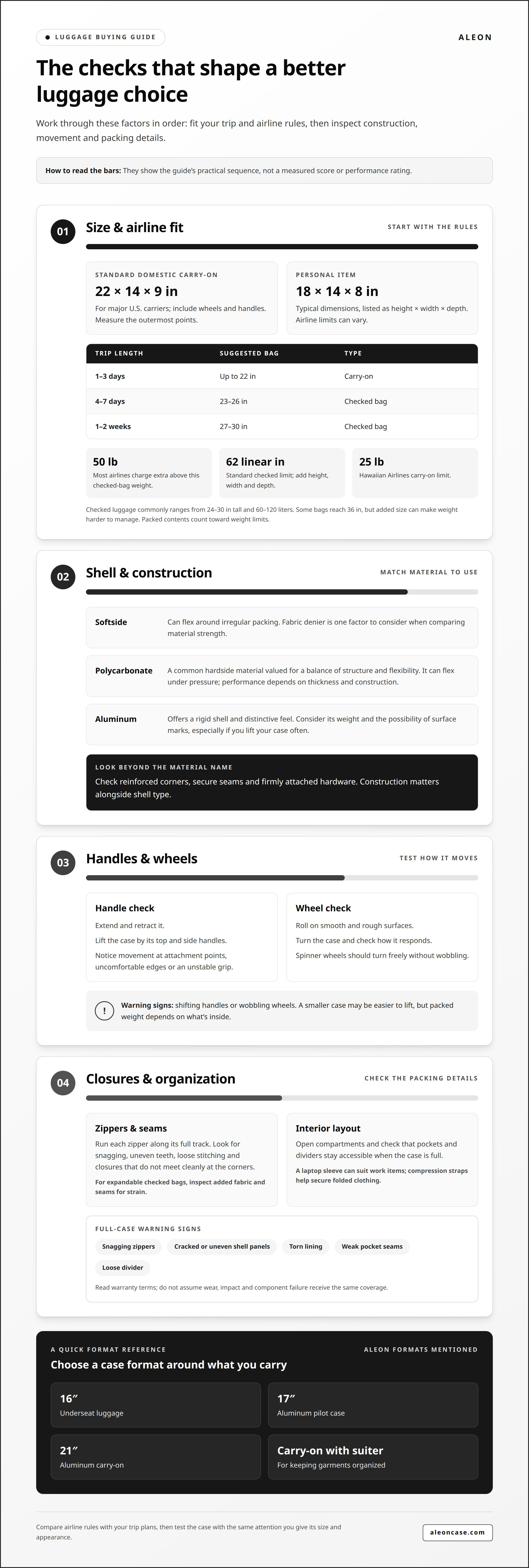
For domestic flights on major U.S. carriers, the standard carry-on size is 22x14x9 inches, including wheels and handles. Measure the suitcase from its outermost points, not just the case body. A personal item typically measures 18x14x8 inches, height by width by depth. Airline limits can vary, so dimensions matter before departure.
Match capacity to the trip. A carry-on up to 22 inches suits trips lasting 1-3 days; a 23-26-inch checked bag can fit 4-7 days. For 1-2 weeks, consider a 27-30-inch checked bag. Checked luggage commonly ranges from 24 to 30 inches tall and 60 to 120 liters. Some bags reach 36 inches, but added size can make weight harder to manage.
Most airlines charge extra when a checked bag exceeds 50 pounds. A standard checked-bag limit is 62 linear inches, calculated by adding height, width, and depth. Hawaiian Airlines sets a 25-pound carry-on limit. Pockets add useful organization, but packed contents still count toward weight limits. Aluminum and other hardside suitcases can protect belongings, so consider their empty weight before packing.
Compare the airline’s baggage rules with your trip plans before choosing a size or deciding whether to replace an older bag.
Which luggage brands offer the best warranty and repair service? The best fit is a brand with clear written coverage and practical repair support; compare what each warranty covers and excludes. For aluminum luggage, aluminum luggage options give travelers a way to consider a durable case alongside size and capacity.
2. What Is the Most Durable Luggage Material?
Durability depends on the shell, seams, hardware, and how you travel. For fabric luggage, denier can be one factor to consider when comparing material strength. A softside suitcase can flex around irregular packing, while a hardside case creates a structured exterior. Compare construction, not material names alone: reinforced corners, secure seams, and firmly attached hardware matter too.
Polycarbonate is a common hardside material valued for its balance of structure and flexibility. It can flex under pressure, which may help absorb impacts, though performance depends on thickness and construction. Aluminum offers a rigid shell and a distinctive feel; its weight and surface marks may matter to frequent travelers. Consider what you carry and how easily you need to lift the case.
Inspect the handle before choosing. Extend and retract it, then lift the suitcase by its top and side handles. Look for movement at the attachment points, uncomfortable edges, or a grip that feels unstable. Test the wheels on smooth and rough surfaces; spinner wheels should turn freely without wobbling. A smaller case may be easier to lift, but its packed weight depends on what’s inside.
Open a clamshell case and test its zippers along the full track. They should move without snagging, and the divider should organize items without straining the closure. Flexible fabric, an internal divider, and exterior pockets can make softside luggage adaptable; a rigid shell may suit travelers who prefer a defined structure. Compare aluminum carry-ons and checked bags by shell construction, handles, and wheel assembly, not appearance alone.
3. Luggage features, including zippers, handles, and compartments
Useful features make packing and airport transfers easier. Open and close each zipper along its full track; snagging, uneven teeth, or loose stitching can signal a problem. Check that zipper pulls are easy to grasp and that the closures meet cleanly at the corners. If you prefer an expandable checked bag, inspect the added fabric and seams, since extra capacity puts more strain on them.
Warning signs include a handle that shifts, wheels that wobble, zippers that snag, and cracked or uneven shell panels. Inside, look for torn lining, weak pocket seams, or a divider that won’t stay in place. Read the warranty terms to understand what the maker covers; don’t assume wear, impact, and component failure receive the same treatment.
Test the case before buying. Extend and retract the handle, lift it by the top and side grips, then roll it and turn. Open the compartments and check that pockets and dividers remain accessible when the case is full. These steps can reveal an awkward handle height, rough rolling, or closures that strain when packed.
Choose organization around your routine: a laptop sleeve suits work items, while compression straps help secure folded clothing. A lighter suitcase may be easier to lift, but fabric, shell structure, and hardware all affect durability. For aluminum luggage, explore aluminum luggage options and consider which interior layout suits your packing style.
ALEON
ALEON’s aluminum luggage helps travelers apply these buying criteria, with a focus on durability, security, and practical organization. The range includes compact underseat luggage, aluminum pilot cases, carry-ons, and a carry-on with a suiter. Choose a format for your routine: a smaller case for essentials, a carry-on for cabin travel, or a suiter when keeping garments organized matters.
As you compare options, consider how each case’s size and format suit your trip, then weigh features such as spinner wheels and TSA-approved locks against your priorities. ALEON’s aluminum luggage is a structured alternative to flexible fabric. Explore ALEON’s luggage range to find a format that fits your travel needs.
Choose a Case That Fits Your Next Journey
Use your travel routine to decide what to look for when buying luggage. Picture a typical departure: what you carry, how you move through the airport, and which details make packing easier. This practical perspective helps you choose a case for real needs rather than appearance alone.
ALEON offers 16" underseat luggage, a 17" aluminum pilot case, and a 21" aluminum carry-on. Each format serves different travel habits. As you consider what to look for when buying luggage, think about which configuration best supports how you organize essentials, work items, or other belongings.
When you’re ready to explore a case for your plans, contact ALEON for luggage help. A considered choice can make your next departure feel more composed.
Frequently Asked Questions
Luggage Features: Wheels or No Wheels?
Wheels can help with heavier loads and longer walks through a terminal; a compact, wheel-free bag may be easier to lift and carry. A wheeled suitcase is useful between gates, but stairs, crowded aisles, and uneven sidewalks can make carrying simpler. For a short work trip with a laptop and documents, a compact bag may be easier to manage than a larger rolling case.
Do I need a carry-on or a checked bag?
Choose a carry-on if you can pack your essentials comfortably and want to keep your bag with you. A checked bag suits bulkier clothing, equipment, or items you won’t need during the flight. For a mixed itinerary, consider whether one larger bag or separate bags will make transfers and arrivals easier.
How Much Should I Spend on a Good Suitcase?
Set your budget according to how often you travel and which features you’ll use, rather than assuming a higher price guarantees better performance. For frequent trips, prioritize sturdy construction, dependable hardware, and clear warranty terms. Occasional travelers may prefer a simpler design from general travel and lifestyle retailers like Orbit Goods. In either case, assess build quality and repair terms before weighing appearance or extra features.
Luggage Frame: Hard-Shell or Soft-Sided?
Choose a hard shell for a structured exterior and defined shape; choose soft-sided luggage if flexible fabric and exterior pockets suit your packing habits. The right option depends on what you carry and how you store the bag. For fragile items, consider whether the interior layout keeps them from shifting instead of relying on the frame alone.
What Is the Most Durable Luggage Material?
No single material suits every traveler, and durability also depends on construction and care. Aluminum is strong, lightweight, rust-resistant, recyclable, and naturally RFID-shielded; polycarbonate offers a structured shell with some flexibility. Compare the construction of seams, corners, handles, and wheel assemblies. For a case that travels often, those details can matter as much as the shell material.


