


At a crowded check-in line, the right case can make awkward stops and tight turns feel more manageable. Aluminum spinner luggage offers multidirectional movement on smooth terminal floors, but wheels alone don’t solve every airport challenge.
Spinner wheels make it easier to move a case beside you, steer around queues and reposition in tight spaces. They work best on smooth surfaces. They can’t lift a case over thresholds or make it comply with airline limits, so check dimensions and packed weight as well as wheel design.
This guide follows your airport journey from check-in and security through connections to boarding, with practical ways to handle spinner wheels and plan your carry-on. It also covers what to consider when choosing a case, including dimensions, organization and packing needs. ALEON’s 16-inch Aluminum Vertical Under-Seat Carry-On has 4-spinner wheels, while its 21-inch Aluminum Carry-On with Suiter features a High-Density Double Quad Dual Wheel System.
Key Takeaways
- Use aluminum spinner luggage to adjust direction through terminal spaces, while keeping your pace and case load manageable.
- Prepare documents and essentials before joining queues so check-in and security transitions feel more orderly.
- Follow connection signs after screening, then plan your route to the gate with time for changing airport layouts.
- Choose between under-seat organization and a suiter system according to how you pack and travel.
How Aluminum Spinner Luggage Can Make Airport Navigation Easier
Airport movement rarely follows a straight line. A queue shifts, a traveler stops to check a screen, or the route to a gate narrows. Spinner luggage has wheels that rotate in multiple directions, letting you change course without repeatedly tilting and pulling the case behind you. That flexibility can make aluminum spinner luggage easier to guide beside you across terminal floors and around other travelers.
Good maneuverability is useful, not automatic. In a check-in line, keep the case close and turn it into the space available. When you pause, position it so people can pass. On open stretches, steering beside you can feel more controlled than pulling a case at an angle. Smooth surfaces are where spinner wheels work most naturally, but your pace, the density of the crowd and how heavily the case is packed still shape the experience.
What should you expect from spinner wheels in a busy terminal?
Spinner luggage uses multidirectional wheels to help a traveler steer and reposition a case on suitable surfaces. The wheels support small adjustments through queues and brief stops, but they don’t reduce the case’s weight or make it smaller. Packing choices and dimensions remain part of handling. For background on the history and types of luggage, including materials, see Wikipedia’s overview.
ALEON’s 16-inch under-seat model has 4-spinner wheels; its 21-inch carry-on uses a High-Density Double Quad Dual Wheel System. These details describe specific models, not a promise that every airport transition will feel effortless. When comparing cases, consider your usual route, how much you carry and whether you prefer an under-seat format or a carry-on with a suiter. Explore ALEON’s aluminum luggage collection with those needs in mind. Spinner wheels help you steer; they can’t clear obstacles, manage crowds or compensate for an overpacked case.
How to Move Aluminum Spinner Luggage Through Check-In, Security, and Connections
A little preparation makes each transition easier to manage. Before joining a queue, keep your travel documents and anything you’ll need immediately within reach. Check your airline’s current carry-on rules before packing: accepted dimensions and policies can vary, so don’t assume a case will fit every flight. Compare the airline’s stated limits with the case’s exterior dimensions, including its wheels and handles.
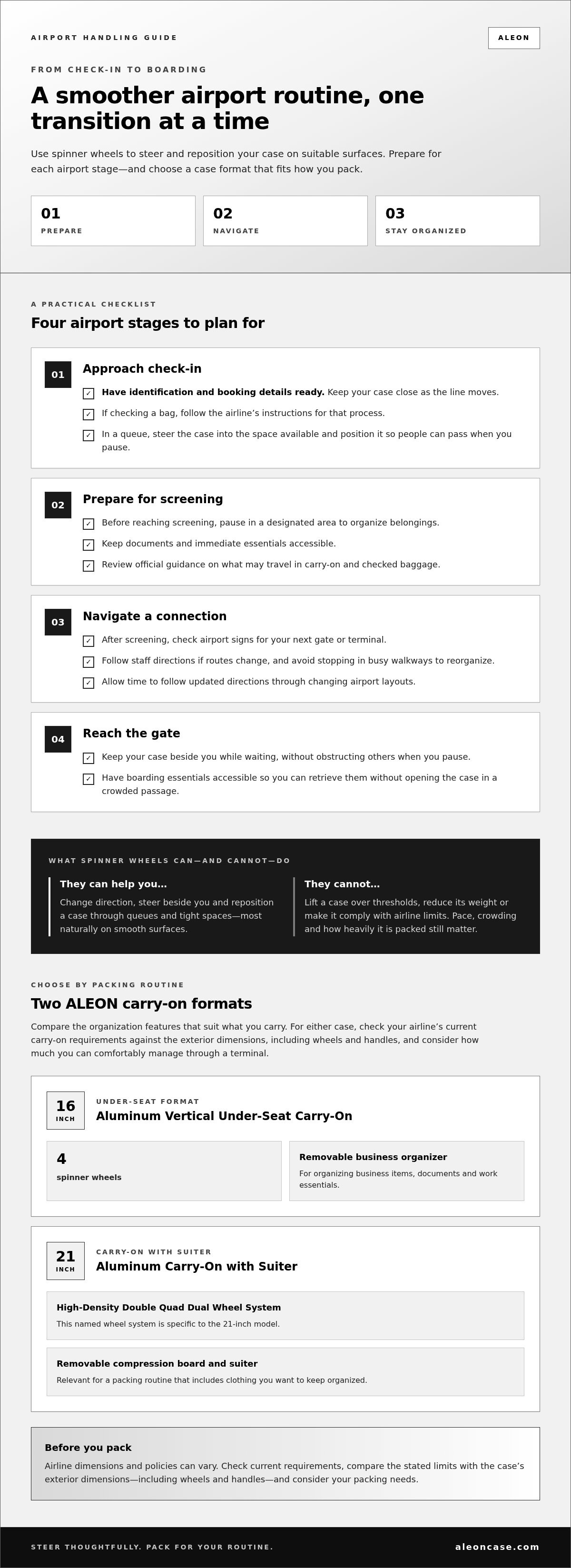
- Approach check-in: Have your identification and booking details ready, and keep your case close as the line moves. If checking a bag, follow the airline’s instructions for that process.
- Prepare for screening: Before reaching the screening point, pause in a designated area to organize belongings. Review the official TSA luggage regulations for guidance on what may travel in carry-on and checked baggage.
- Follow connection signs: Once through screening, check the airport’s signs for your next gate or terminal. Follow staff directions if routes change, and avoid stopping in busy walkways to reorganize.
- Reach the gate: Allow time to follow updated directions, then keep your case beside you while waiting. Have boarding essentials accessible so you can retrieve them without opening the case in a crowded passage.
How can you keep luggage manageable at security and during a connection?
Use a clear sequence: prepare before the queue, move forward when there’s space, and step aside in a designated area if you need to repack. Keep documents and immediate essentials accessible, follow signs and staff directions between gates, and position your aluminum spinner luggage without obstructing others when you pause. Spinner wheels support repositioning, but thoughtful timing and awareness of surrounding travelers matter just as much.
For a case suited to your airport routine, explore ALEON aluminum luggage.
Choosing Aluminum Spinner Luggage for Your Airport Routine
The most useful case is the one that fits the way you travel. Think about what needs to stay close at hand, how you organize work essentials, and whether you travel with clothing that benefits from a suiter system. Then compare the case’s exterior dimensions with your airline’s carry-on requirements and consider how much you can comfortably manage through a terminal. Wheel design matters, but so does choosing a format that suits your packing routine.
Which ALEON case details are relevant to airport handling?
The 16-inch Aluminum Vertical Under-Seat Carry-On has 4-spinner wheels and a removable business organizer. It suits a routine built around keeping business items organized in an under-seat case. Consider what you want within reach during the journey and whether the organizer fits the way you separate documents and work essentials.
The 21-inch Aluminum Carry-On with Suiter features a High-Density Double Quad Dual Wheel System and a suiter system. The suiter system includes a removable compression board and suiter, making it relevant if your packing routine includes clothing you want to keep organized. The named wheel system is specific to this model; it shouldn’t be assumed to describe the under-seat case.
To choose between them, weigh under-seat organization against the suiter system, then consider your usual packing needs and airline requirements. Compare the aluminum luggage options with the features that matter most to your travel in view.
Make Your Next Airport Journey More Intentional
A smoother travel routine begins before you reach the terminal. Choose a case around what you carry, how you prefer to organize it, and the airline’s current requirements. Then give yourself room to adapt when queues shift or plans change. The right aluminum spinner luggage can support that approach, combining aircraft-grade aluminum construction with wheel systems designed for specific case models.
As you plan your next trip, consider which case format fits your packing habits and day-to-day travel. Explore ALEON aluminum luggage to compare options and find a considered fit for the journeys ahead.
Frequently Asked Questions
Are spinner wheels useful for navigating crowded airports?
Yes. Their ability to roll in different directions can help you make small course changes without swinging a case behind you, especially when people or queue barriers limit turning space. Keep the case close and move deliberately. Spinner wheels won’t create room in a packed terminal, and thresholds or uneven flooring can still require a different approach.
Can aluminum spinner luggage be used as a carry-on?
Yes, if the specific case meets the operating airline’s current carry-on or under-seat limits. ALEON offers a 16-inch under-seat case and a 21-inch carry-on with suiter, but a product’s category or nominal size alone doesn’t guarantee acceptance. Compare the airline’s stated dimensions with the case’s exterior measurements, including wheels and handles, before travel.
What is the difference between spinner luggage and two-wheeled luggage?
Spinner luggage generally has wheels that turn in multiple directions, so it can roll upright and be steered beside or around obstacles. Two-wheeled luggage is typically tilted and pulled behind the traveler. That approach can feel controlled over some uneven stretches, but takes a wider turn. The better arrangement depends on your route, floor surfaces and preferred way to guide a case.
How should I choose aluminum spinner luggage for airport travel?
Choose around your itinerary, not just the wheel design. For an overnight work trip, consider whether keeping essentials organized under the seat matters more than a suiter system. For longer travel, assess your clothing and total packing needs. Compare the case’s exterior size and packed load with your airline’s current rules, then choose a format you can manage comfortably.


