


The hard-sided option isn’t automatically right for every trip. A 21-inch domestic carry-on is about 21 x 14 x 9 inches, a size that can fit within the listed carry-on limits for several major U.S. airlines, though the full dimensions matter. Hard-sided luggage offers a structured shell, while soft-sided bags can flex to accommodate your packing style.
The better choice depends on what you value most: a firm exterior, flexible packing space, or a case suited to frequent travel. This comparison explains how hard- and soft-sided luggage differ in capacity and durability, how trip length shapes what you can pack, and which travel styles suit each option. You’ll also see how to weigh airline size limits alongside construction, so you can choose a 21-inch case with confidence.
Key Takeaways
- Compare a bag’s full dimensions with your airline’s limit, not just its stated height; several major U.S. airlines list a 22 x 14 x 9-inch carry-on limit.
- Use trip length and packing habits to judge capacity: a 21-inch case is commonly suited to trips lasting 3-5 days, but what you pack matters too.
- Weigh the structured feel of hard-sided luggage against the flexible packing space of soft-sided options, then consider how each fits your travel routine.
- Explore ALEON’s 21-inch aluminum carry-on options, including a version with a suiter, if you prefer a hard-sided case.
Choosing luggage for different travel styles
Match the case to your route, packing habits, and how you handle luggage. American Airlines, Delta Air Lines, and United Airlines list a 22 x 14 x 9-inch carry-on limit.
Hard-Sided Luggage
Hard-sided cases provide a firm shell and hold their shape, which suits travelers who prefer structured packing. Soft-sided luggage can flex around items, making it useful when pockets or adaptable space matter more. Budget and premium options vary in materials and construction, not just appearance. For a business trip with neatly packed clothing, an aluminum carry-on offers a structured alternative; explore aluminum carry-on luggage.
Luggage Weight
Empty weight affects how much effort it takes to lift a case and how much of its total weight comes from your belongings. Shell material and construction influence that starting weight, so compare listed case weights rather than assuming all hard-sided or soft-sided models weigh the same. If you pack a laptop and work clothes, consider the case weight along with what you plan to carry.
Ease of Lifting
Think beyond rolling comfort: lifting matters when placing a case in an overhead bin or moving it into a car trunk. A compact case may be easier to position, but a densely packed one can still feel awkward. Try lifting the case by its handles with a realistic load, and consider how often your trip involves stairs, overhead storage, or tight spaces.
| Option | Structure | Packing flexibility | Best suited to |
|---|---|---|---|
| Hard-sided | Firm shell | Fixed shape | Structured packing |
| Soft-sided | Flexible exterior | Can accommodate varied items | Adaptable packing |
Choose a case by balancing your airline’s size limit, packing style, and lifting needs.
Trip length and packing capacity by bag size
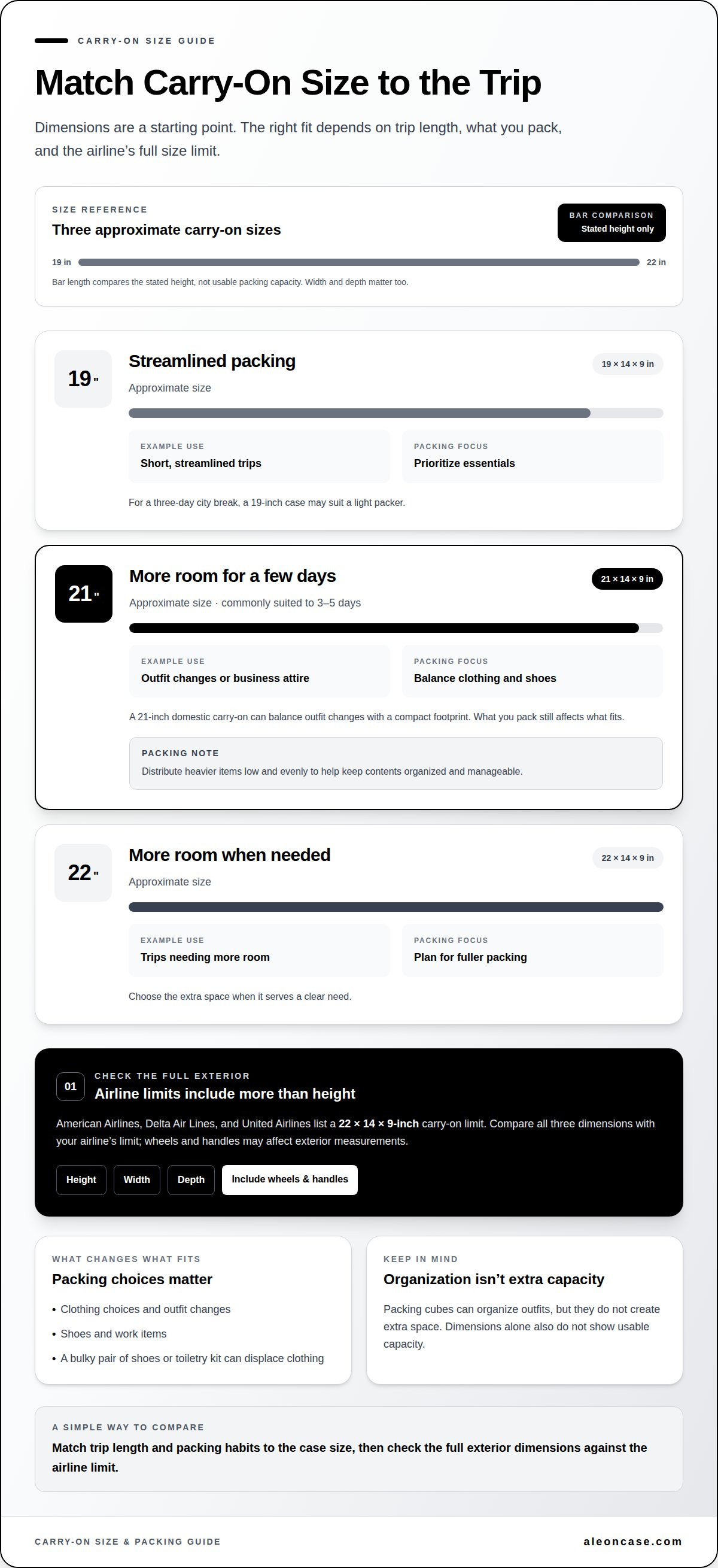
Bag dimensions offer a useful starting point, but they don’t show usable capacity alone. Approximate carry-on sizes include 19 x 14 x 9 inches, 21 x 14 x 9 inches, and 22 x 14 x 9 inches. A 21-inch case is commonly suited to trips lasting 3-5 days. Clothing choices, shoes, and work items all affect what fits. A 21-inch domestic carry-on can suit a traveler balancing outfit changes with a compact footprint.
| Approximate size | Example trip use | Packing consideration |
|---|---|---|
| 19 x 14 x 9 inches | Short, streamlined trips | Prioritize essentials |
| 21 x 14 x 9 inches | 3-5 days | Balance clothing and shoes |
| 22 x 14 x 9 inches | Trips needing more room | Plan for fuller packing |
Compare all three dimensions, not just height. Cases with the same stated height can differ in width or depth, and wheels and handles may affect exterior measurements. Packing cubes help organize outfits but do not create extra space. A bulky pair of shoes or toiletry kit can displace clothing, so plan around your essentials.
For a three-day city break, a 19-inch case may suit a light packer. A 21-inch case offers more room for outfit changes or business attire across a 3-5 day trip. Choose a larger option only when the extra space serves a clear need. For a 21-inch domestic carry-on, distribute heavier items low and evenly to keep contents organized and manageable.
Carry-on materials and durability
Material affects how a carry-on handles everyday use. Aluminum provides a rigid exterior, while soft-sided luggage has a flexible fabric body. Neither material alone determines durability. Seams, corner construction, handles, closures, and wheel assemblies also affect how well a case holds up over repeated trips.
For an aluminum case, examine the shell and its joins. A rigid surface holds its shape, but contact with hard surfaces may leave visible marks. Check that the corners feel secure and the handle extends and retracts smoothly. These details matter as a case moves between a car, airport floor, and overhead compartment.
Soft-sided luggage can flex around irregularly shaped items, but inspect its fabric and stitching closely. Check seams near handles and pockets, where pulling can strain the material. Zippers should move smoothly along their full length. A snag or strained seam can affect access and everyday use, even if the rest of the bag looks sound.
Durability also depends on how you use the case. Frequent flyers moving through busy terminals may value a structured shell, while travelers who need exterior pockets may prefer fabric construction. Before choosing, test the handle, roll the wheels across a smooth floor, and open each closure. TSA-approved locks and multidirectional spinner wheels are useful features, but they do not replace sound construction.
Compare the complete build, not just material labels. Assess the shell, seams, handles, wheels, and closures together, then choose the combination that suits your travel routine.
ALEON
ALEON offers aluminum luggage options for travelers weighing capacity, structure, and trip needs. Its range includes 16-inch underseat luggage and a 17-inch aluminum pilot case, alongside 21-inch carry-on choices. For travelers comparing a standard case with organized space for formalwear, the 21-inch aluminum carry-on and 21-inch aluminum carry-on with suiter provide two distinct formats.
Consider your usual packing list and how you travel. A compact underseat bag may suit essentials, while a carry-on gives more room for a longer trip. The suiter option is designed for travelers who want a dedicated place for clothing that needs to stay presentable. Comparing these formats can help narrow your choice by function, not appearance alone.
Explore ALEON’s aluminum carry-on options to find a case suited to your travel needs.
Choose a Case for Your Next Journey
Your next step is to match your luggage choice to the way you actually travel. Consider what you carry, how you move through airports, and whether you value a structured shell or flexible packing space. Then compare those priorities with the features that matter most for your routine. A well-chosen 21-inch domestic carry-on should support your plans without adding unnecessary complexity.
ALEON’s luggage range includes compact and carry-on formats, with options for different travel needs. If you’re ready to explore a case that suits your next trip, contact ALEON about your carry-on needs. A thoughtful choice today can make every departure feel more composed and convenient.
Frequently Asked Questions
Hard- or soft-sided?
Choose hard-sided luggage for a structured exterior, or soft-sided luggage if flexible packing space better suits your routine. For example, a traveler carrying neatly folded business clothes may prefer a firm case, while someone packing irregularly shaped items may value a bag that flexes. Compare handles, closures, seams, and wheels as well as shell material.
What are the standard domestic carry-on size limits for U.S. airlines?
There isn’t one identical size limit across major U.S. airlines. American Airlines, Delta Air Lines, and United Airlines list 22 x 14 x 9 inches; Southwest Airlines lists 24 x 16 x 10 inches. Compare each bag’s full exterior dimensions with the airline’s limit. A case that fits one carrier’s allowance may exceed another’s.
Does a 21-inch suitcase fit domestic airline carry-on requirements?
A 21-inch suitcase may fit the listed limits for several major U.S. airlines, provided its complete exterior dimensions stay within the allowance. For instance, the listed 22 x 14 x 9-inch limits leave room below the height maximum, but width and depth still matter. A 21-inch label alone doesn’t establish that the whole case fits.
Do airline carry-on measurements include wheels and handles?
For a useful comparison, include wheels and handles in the suitcase’s exterior measurements. Measure from the floor to the highest fixed point, then across the widest and deepest points. Wheels can add height, while a raised handle can affect the overall profile. Compare the complete dimensions with the airline’s stated allowance.
What are the carry-on size and weight limits for major U.S. airlines?
American Airlines, Delta Air Lines, and United Airlines list a 22 x 14 x 9-inch size limit, while Southwest Airlines lists 24 x 16 x 10 inches. Weight limits can vary, so check the airline’s allowance when planning a packed bag. Treat size and weight as separate limits, and use the relevant carrier’s allowance when planning a packed bag.


