


Your high-end laptop and camera gear are only as secure as the shell surrounding them. For the serious professional, a plastic case is often a liability waiting to happen. An aluminum travel case for electronics provides the structural integrity and electromagnetic shielding that synthetic materials simply cannot match. It's a sophisticated departure from industry standards. This material offers a level of protection that respects the value of your professional tools while maintaining a polished, executive aesthetic.
You've likely felt that surge of anxiety while watching a baggage handler mistreat a bag or worried about a cracked plastic corner compromising your equipment. We understand that your gear isn't just hardware; it's your livelihood. This guide explains why aerospace-grade aluminum is the definitive standard for protecting high-value electronics and how to choose the perfect case for your professional setup. We will examine the science of impact resistance, the security of zipperless latch systems, and the specific features that ensure your equipment arrives in pristine condition, ready for the boardroom or the field.
Key Takeaways
- Explore the technical advantages of aerospace-grade aluminum, specifically its ability to provide a superior strength-to-weight ratio while shielding sensitive components from environmental stressors.
- Evaluate your specific gear requirements to choose between specialized business units for mobile offices or dedicated camera cases for high-value photography equipment.
- Recognize the long-term value of investing in an aluminum travel case for electronics, focusing on a minimalist design that maintains a professional presence in any boardroom.
- Navigate airport security with confidence by prioritizing integrated TSA-approved locks and precision-engineered wheels designed for high-frequency travel.
The Science of Protection: Why Aluminum for Sensitive Electronics?
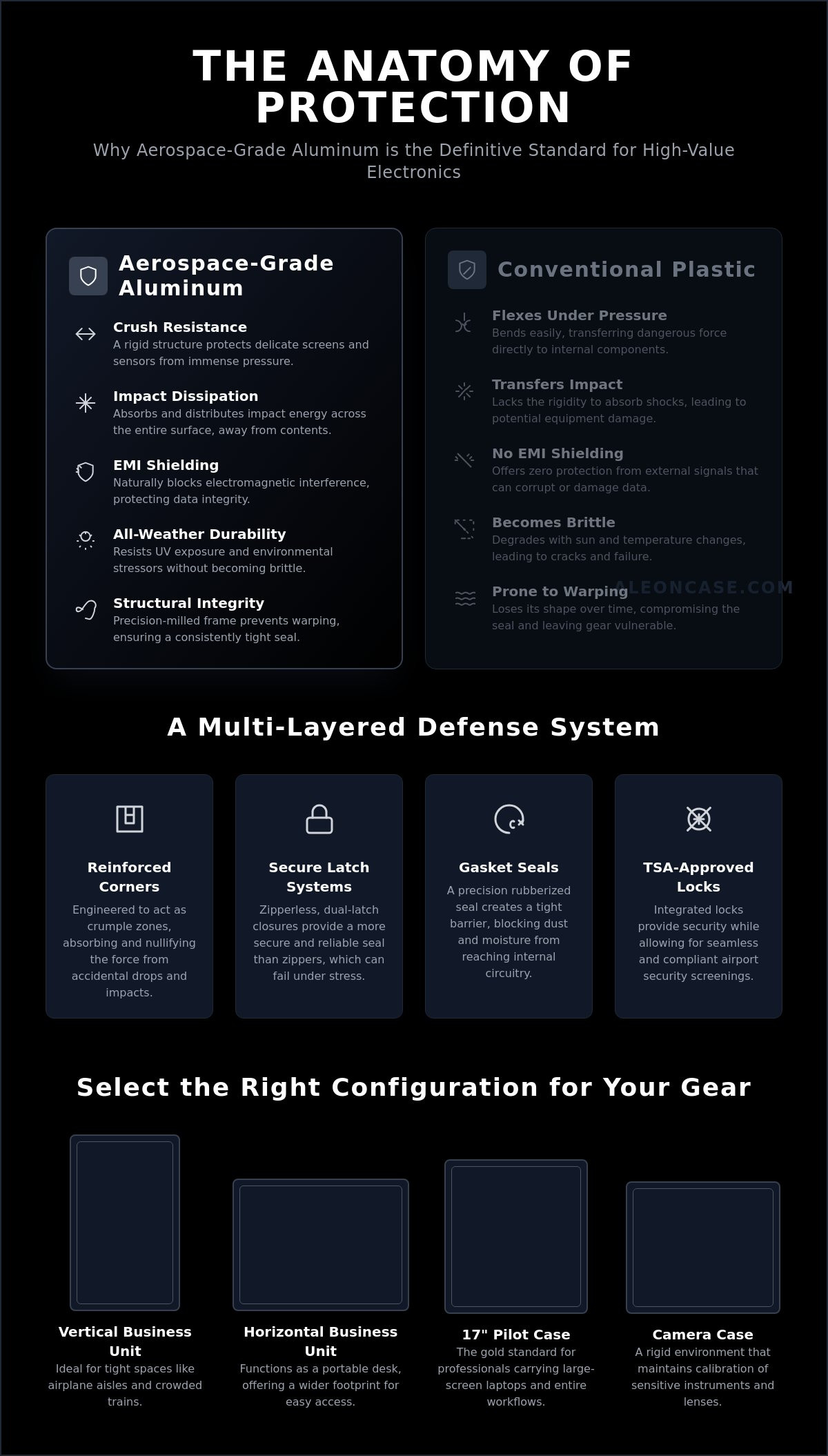
Professional hardware requires a defense system that exceeds the capabilities of standard consumer luggage. When you invest in an aluminum travel case for electronics, you aren't just buying a container; you're securing a high-performance shield. Aluminum possesses a unique atomic structure that offers incredible crush resistance. It protects delicate laptop screens and sensitive camera sensors from the immense pressure of stacked baggage. While plastic shells flex and transfer force to the contents, aluminum remains rigid. It absorbs and dissipates impact energy across the entire surface of the case.
Data integrity is another silent benefit of this material. Industrial designers frequently rely on the protective qualities of aluminum to block electromagnetic interference (EMI). This natural shielding prevents static discharge and external signals from disrupting your stored data. Choosing the right aluminum travel case for electronics means prioritizing both physical and electronic safety. Unlike synthetic materials that grow brittle and crack after years of UV exposure, metal endures. It’s a long-term investment in the safety of your digital life.
To better understand the practical application of these protective features, watch this helpful video:
Aerospace-Grade vs. Generic Alloys
Not all metal cases are created equal. Aerospace-grade aluminum is specifically engineered to maximize durability while minimizing weight. It's the same material used in modern aircraft construction. This high-end alloy prevents the structural warping that often leads to seal failure in lesser products. When a case warps, the alignment of the lid and base is compromised. This leaves your gear vulnerable. Precision-milled aluminum ensures that every closure remains tight and secure, flight after flight.
Security Beyond the Shell
Impact protection requires a multi-layered approach. Reinforced corners are essential. They act as crumple zones, absorbing the brunt of accidental drops during transit. This mechanical design works in tandem with specialized seals to create a barrier against the elements. Professionals who choose premium aluminum luggage gain a significant advantage in harsh environments. These cases effectively block dust and moisture, ensuring that fine particles never reach your internal circuitry or lens glass.
Selecting the Right Configuration for Your Gear
Selecting the right configuration begins with an honest assessment of your daily loadout. A single laptop requires a different spatial strategy than a mobile office suite or a set of professional lenses. Choosing a high-quality aluminum travel case for electronics allows you to move beyond the limitations of generic luggage. Professional-grade aluminum business cases provide structured organization that plastic alternatives simply cannot match. These units use dedicated compartments to prevent component-on-component friction, ensuring that your power banks, external drives, and cables remain separated from the delicate finish of your primary devices.
Orientation also plays a critical role in accessibility. A Vertical Business Unit is ideal for tight spaces like airplane aisles or crowded trains. Conversely, a Horizontal Business Unit offers a wider footprint that functions as a portable desk when you're on the move. Your choice of an aluminum travel case for electronics should reflect your specific transit style. When packing, always refer to the latest TSA guidelines for electronics to ensure your configuration allows for the easy removal of devices if required during screening. For professionals who need a versatile system that bridges the gap between heavy-duty travel and daily mobility, check out Tak-tical to explore how a purposeful everyday carry backpack can complement your gear setup.
The Professional Mobile Office
A 17-inch aluminum pilot case is the gold standard for tech professionals carrying large-screen laptops. These cases are designed to house more than just a screen; they organize your entire workflow. Internal dividers keep peripherals secure, preventing the chaotic tangling of cords that often leads to port damage. If you value a seamless transition from the terminal to the boardroom, exploring a specialized business unit is the logical next step for your professional toolkit.
Specialized Equipment: Cameras and Instruments
For photographers and engineers, an All Aluminum Camera Case provides a rigid environment that maintains the calibration of sensitive instruments. High-end sensors and lenses are susceptible to micro-vibrations and pressure changes during transit. A hard shell prevents external forces from compressing the internal padding. This ensures that your equipment stays exactly where you placed it, regardless of how many times the case is moved or stacked in a cargo hold.
Travel Integration: Security, Mobility, and Compliance
Security remains a non-negotiable requirement for professional transit. An aluminum travel case for electronics must offer more than just a sturdy shell; it must integrate seamlessly with global security standards. TSA-approved locks are the definitive standard for the modern traveler. These mechanisms allow security personnel to inspect your high-value gear without damaging the case or compromising the locking system. This ensures that your equipment remains protected from the moment you check in until you reach your final destination.
A common misconception is that metal construction adds prohibitive weight to your loadout. Modern aerospace engineering has largely solved this issue. By utilizing high-strength alloys, manufacturers can achieve maximum structural integrity with minimal mass. This efficiency allows for a lightweight aluminum travel case for electronics that doesn't sacrifice protection for portability. It's a logical evolution in design that prioritizes the physical well-being of your devices while respecting airline weight restrictions.
Seamless Transit with Spinner Wheels
Mobility features are just as critical as the shell itself. Multi-directional spinner wheels provide a level of stability that traditional two-wheel "drag" cases cannot match. A precision-engineered four-wheel system allows the case to glide effortlessly alongside you. This significantly reduces the physical strain on your wrist and shoulder during long walks through international terminals. When you're transporting a heavy mobile office, this fluid motion becomes an essential part of a seamless journey.
Underseat and Carry-On Optimization
Strategic packing often depends on immediate access to your most critical tools. Choosing a 16-inch underseat case ensures that your primary devices remain within arm's reach throughout the flight. These units are designed to meet strict airline dimensions for underseat storage, providing peace of mind during boarding. The minimalist aluminum aesthetic fits perfectly in both first-class cabins and professional studios. It's a sophisticated choice that reflects a commitment to quality and professional success.
Elevating Your Standard of Travel Protection
High-value gear deserves technical precision. Choosing an aluminum travel case for electronics is a proactive decision. It safeguards your livelihood against the physical and electromagnetic hazards of frequent transit. You've seen how aerospace-grade aluminum construction provides a rigid barrier that plastic cannot replicate. This material ensures your equipment remains calibrated and functional, regardless of the journey's intensity. It's a commitment to enduring quality that outlasts multiple device cycles.
Ready to upgrade your transit experience? Explore the ALEON Collection of Premium Aluminum Cases to find the perfect match for your professional gear. Secure your equipment today and travel with total peace of mind.
Frequently Asked Questions
Are aluminum cases safe for electronics during air travel?
Aluminum cases are exceptionally safe for air travel due to their high strength-to-weight ratio and rigid structure. Unlike soft-sided bags, an aluminum travel case for electronics protects delicate internal components from the crushing pressure found in overhead bins or cargo holds. These cases also feature TSA-approved locks. This allows security agents to inspect your devices without causing damage, ensuring your hardware remains secure throughout every leg of your journey.
Do aluminum cases provide RFID or EMI protection for my devices?
Aluminum naturally provides a high level of electromagnetic interference (EMI) shielding, which acts as a barrier against external signals. This property helps protect sensitive data and electronic components from static discharge and disruptive radio frequencies during transit. While many focus only on physical impact, this electronic shielding is a critical advantage for tech professionals. It ensures that your hardware arrives not just physically intact, but electronically sound.
How do I choose between a hard shell aluminum case and a soft-shell bag for my laptop?
The choice depends on your priority: protection or flexibility. A soft-shell bag offers lighter weight and expandable pockets, but it lacks the structural integrity to prevent screen compression or puncture damage. An aluminum travel case for electronics is the superior choice for high-value gear because it maintains its shape under pressure. It also projects a more professional image in executive environments. If your gear is an essential investment, the rigid security of a hard shell is indispensable.
Will an aluminum case dent, and does that affect the protection of my electronics?
Aluminum is a ductile metal, meaning it can sustain dents upon significant impact. These marks are purely aesthetic and often considered a patina that reflects the story of your travels. Critically, these dents don't compromise the structural integrity or the protective qualities of the case. The shell absorbs the energy of the impact, preventing that force from reaching your devices. It's a sacrificial defense that ensures your electronics remain unharmed inside.


