


A larger car won’t automatically make packing easier. The cargo area sets your limits, but smart car travel packing tips matter just as much: load bulky items first, keep essentials accessible, and assign clear packing roles. The goal isn’t to fill every space. It’s to keep the load orderly and the ride comfortable.
It’s easy to assume a smaller vehicle means leaving more behind, or that everyone can pack independently and sort things out at departure. A little coordination goes a long way. Adapt your packing to the car, use bags and containers to reduce clutter, and keep snacks and a change of clothes within reach. Dividing tasks in advance helps the final load feel planned rather than rushed.
Key Takeaways
- Match your luggage to the car’s cargo space, then load bulky items first and use smaller bags to fill gaps.
- Use compression bags for clothing and collapsible containers for items that need structure without taking up space when empty.
- Keep snacks, drinks, and a change of clothes easy to reach so you don’t need to unpack the trunk during the journey.
- Agree on packing roles and share a list so each person knows what to bring and who is organizing the car.
1. Using compression bags and collapsible containers
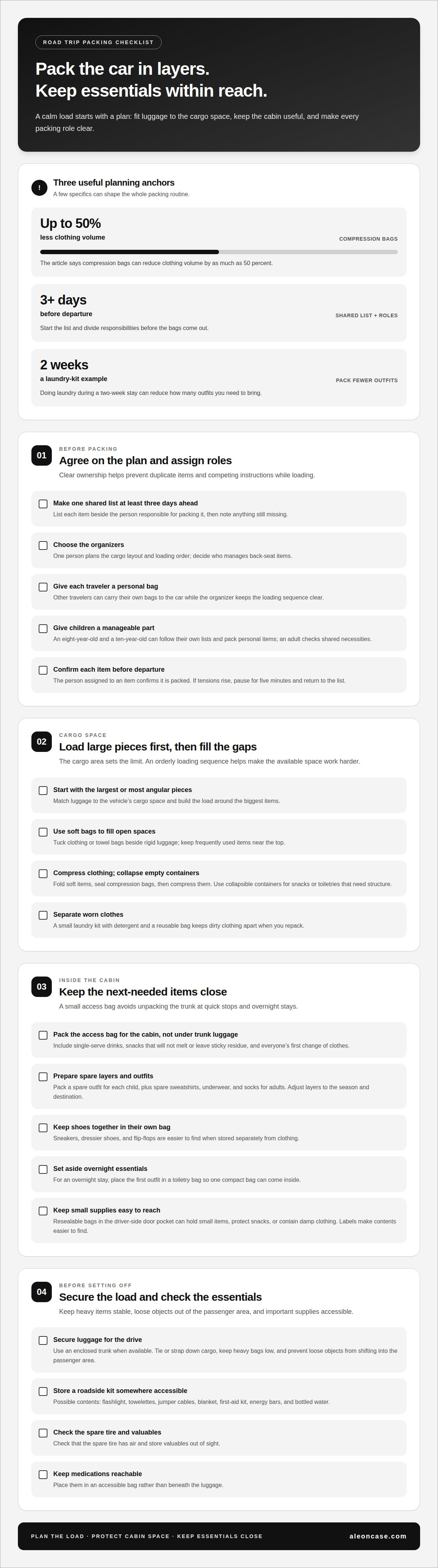
For a road trip, compression bags can reduce clothing volume by as much as 50 percent. Fold soft items, seal each bag, then compress it before loading. Use collapsible containers for snacks or toiletries that need structure; they take up less room when empty. These car travel packing tips help make the available cargo space work harder.
Load the largest or most angular pieces first, then fit smaller bags around them. Tuck soft bags, such as those holding clothing or towels, into gaps beside rigid luggage. Keep frequently used items near the top rather than buried under heavier bags.
Pack a small laundry kit with detergent and a reusable bag for worn clothes. On a two-week trip, doing laundry during your stay can reduce the number of outfits you need to bring. The separate bag keeps dirty clothing apart from clean items when you repack the car.
Keep snack-, quart-, and gallon-size resealable bags in the driver-side door pocket. They can hold small items, protect snacks, or contain damp clothing. Labeling each bag makes it easier to find what you need during a quick stop. This is one of the simplest car travel packing tips to use on the road.
Airline carry-on restrictions apply to flights, not ordinary car travel. Cars have no carry-on category, but you should pack potentially hazardous items securely and follow their handling directions.
To organize and secure luggage, use an enclosed trunk when available, then tie or strap down cargo. Keep heavy bags low, and prevent loose objects from shifting into the passenger area.
A roadside kit can include a flashlight, towelettes, jumper cables, a blanket, a first-aid kit, energy bars, and bottled water. Store it somewhere accessible.
Before leaving, check that the spare tire has air. Store valuables out of sight, and keep medications in a reachable bag rather than beneath the luggage.
2. Keeping snacks and extra clothes within reach
Keep a small access bag in the cabin, not under luggage in the trunk. Pack single-serve drinks, snacks that won’t melt or leave sticky residue, and everyone’s first change of clothes. This makes quick stops easier without shifting the rest of the load. For an overnight stay, put the first outfit in a toiletry bag so you can bring one compact bag inside.
Wear comfortable layers for the drive, such as a breathable shirt and a light sweatshirt. For children, collared shirts can help protect skin from seatbelt or five-point-harness straps. Pack spare outfits for children, plus spare sweatshirts, underwear, and socks for adults. These clothes come in handy if someone spills a drink or the temperature changes.
A practical checklist includes accessible snacks and drinks, a spare outfit for each child, and an extra layer, underwear, and socks for each adult. Each traveler can also pack sneakers, dressier shoes, and flip-flops. Keep shoes together in a separate bag so they’re easy to find without unpacking clothing.
Adjust extras to the season and destination. A rainy forecast calls for a compact poncho; a cool destination may require warm layers, while a beach stop calls for flip-flops. Keep likely-to-be-used items in the cabin bag and store less urgent clothing with the main luggage. This keeps legroom clear while essentials remain within reach.
3. Assigning packing responsibilities
Agree on roles before opening the car and bringing out the bags. Choose one person to plan the cargo layout, then decide who will manage back-seat items. This prevents competing instructions during loading. Start at least three days before the road trip to make a shared list and find any missing items. Clear assignments make these car travel packing tips easier to follow.
List each item beside the person responsible for packing it. For example, one adult can handle documents and snacks while another gathers shared supplies. Assign each traveler a personal bag. A clear list helps prevent duplicates and makes it easier to spot essentials nobody has claimed.
Give one person final responsibility for the loading order. The organizer can load larger bags first while keeping items needed during the drive accessible. Other travelers can carry their own bags to the car. This division keeps decisions clear without leaving every task to the person arranging the space.
Children can take part, too. An eight-year-old and a ten-year-old can each follow a packing list and take responsibility for their own bags. An adult can check each list for shared necessities, while children choose and pack personal items. This makes ownership clear without asking them to manage the whole family’s luggage.
Before departure, use the list for a final check: the person assigned to each item confirms it is packed. If tensions rise, pause for five minutes, then return to the list instead of reopening every bag. Among practical car travel packing tips, assigning one person to each task helps keep the routine coordinated.
ALEON
ALEON offers luggage options that help travelers match their bags to the car’s space and the items they need to access. A 16" underseat bag can keep compact essentials close, while a 21" aluminum carry-on suits a different packing arrangement. The 17" aluminum pilot case offers another format for organizing travel belongings.
Choose luggage around your packing plan: consider what needs to stay within reach, what can be stored in the trunk, and how much room the vehicle provides. For a longer trip, a 21" carry-on with suiter can accommodate a more structured packing approach. The right configuration supports an orderly load without replacing practical habits such as assigning roles and securing luggage.
For a considered travel setup, explore ALEON’s aluminum luggage. Contact ALEON to discuss a suitable luggage option for your journey.
Make your next drive feel more considered
The best car travel packing tips fit your vehicle, routine, and travel companions. Before your next trip, think beyond the bags: decide what should be easy to reach, what can stay packed, and how everyone can help keep the cabin comfortable. A setup that works for one journey can be a reliable starting point for the next, adjusted for your stops and belongings.
If you’re selecting luggage to support that approach, ALEON can help you explore options suited to your travel needs. Contact ALEON for packing help and take the next step toward a more composed journey.
Frequently Asked Questions
Does Car Size Matter?
Yes. The car’s usable cargo area affects how much luggage fits without taking up passenger space. Compare the space behind the seats with the dimensions of the bags you plan to bring. For example, a sedan’s trunk opening may limit access to bulky items, while a hatchback’s wider opening can make larger bags easier to load.
Why Does Packing for a Holiday Road Trip Feel Particularly Tense?
Holiday packing can feel tense when several people are making decisions at once, especially as departure approaches. Gifts, special-occasion clothing, and shared supplies can complicate the usual plan. Before loading, agree on what’s essential and what can be left behind. This helps prevent last-minute disputes over limited cargo space.
How do you pack food and drinks safely for car travel?
Use a small cooler for items that need to stay chilled, and place it where passengers can reach it during a stop. Close containers securely and keep bottles upright to reduce spills. Separate food from loose items that could crush it, and bring a dedicated bag for wrappers and empty containers to keep the cabin tidy.
What should you pack for children on a long car ride?
Pack a compact activity kit with a lap desk, paper, and art materials to keep children occupied between stops. For a longer stretch, an e-reader or suitable screen can provide another quiet option. Make sure each child rides in a car seat appropriate for their height and weight, and keep activity supplies within reach.
How can you pack efficiently to save space in a car?
Start by editing the packing list: remove duplicate shared items and separate essentials from optional extras. Choose compact alternatives where practical, such as an e-reader instead of several heavy books. Match bag dimensions to the vehicle’s cargo area, and leave bulky packaging behind if it serves no purpose during the trip. A considered list helps prevent overpacking.


