


The most effective minimalist packing strategies rely on a clear system, not simply a smaller suitcase. Choose neutral pieces that combine into complete outfits, dress for the forecast, and use packing cubes or compartments to keep items organized.
It’s easy to focus on what goes into your bag and overlook how you’ll find it once you arrive. A practical base wardrobe suits temperatures from 45 to 85 degrees Fahrenheit, with extra layers for colder conditions and lighter options for heat. In this guide, you’ll learn how to build mix-and-match outfits, refine your packing list for changing temperatures, and arrange clothing and smaller essentials so they’re easy to reach. The result is a streamlined approach that makes better use of your luggage and brings order to the journey.
Key Takeaways
- Build outfits around neutral pieces that work together, then add a small accent for variety.
- Adapt your clothing layers to the expected temperatures instead of packing for every possibility.
- Use packing cubes or compartments to group clothing and keep smaller essentials easy to find.
- Choose luggage that suits the way you organize and carry your travel wardrobe.
1. Choosing neutral clothing that mixes and matches
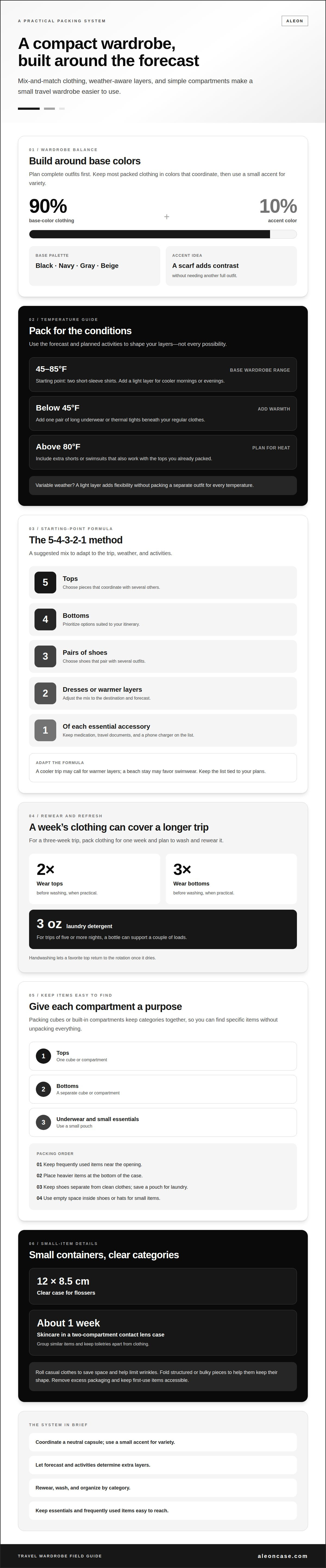
Plan complete outfits before choosing individual clothes. A neutral palette of black, navy, gray, or beige lets tops and bottoms work together. Keep about 90% of packed clothing in base colors and use an accent color for the remaining 10%. A scarf can add contrast without requiring another full outfit. These minimalist packing strategies help each piece earn its place.
Build a capsule around the trip’s expected conditions. A base wardrobe for 45 to 85 degrees Fahrenheit includes two short-sleeve shirts; add layers when mornings or evenings may be cooler. A light sweater over a neutral shirt can suit daytime exploring and dinner. Set aside one outfit for the travel day, then select each remaining piece to coordinate with several others.
Choose clothes that work for the activities on your itinerary. Trousers suitable for walking and a casual meal can replace separate pairs. Lay out each outfit, then remove anything that does not coordinate or serve a clear purpose. Applying minimalist packing strategies to outfit planning keeps your capsule focused without making it inflexible.
For a three-week trip, pack clothing for one week and plan to wash and rewear it. Wear tops twice and bottoms three times before washing, when practical. For trips lasting five or more nights, a 3-ounce bottle of laundry detergent can support a couple of loads. Handwashing lets a favorite top return to the rotation once it dries.
Carry-on size limits vary by airline, so check your carrier’s rules before choosing a bag. TSA screening rules also apply to liquids at security, so pack toiletries according to current guidance.
Choose shoes that suit your itinerary and pair with several outfits. Streamline toiletries by selecting multipurpose essentials, such as one moisturizer for both morning and evening routines.
2. Adjusting a packing list for different temperatures
Build the list around the forecast and the activities planned for each day. Below 45 degrees Fahrenheit, add one pair of long underwear or thermal tights beneath your regular clothes. Above 80 degrees Fahrenheit, include extra shorts or swimsuits, choosing pieces that also work with your existing tops. For variable weather, a light layer adds flexibility without requiring a separate outfit for every temperature.
Keep a packing list and mark the items you actually wear. After each trip, remove unused pieces and note what you wished you had brought. This record makes your next list easier to plan, especially for destinations with similar weather. Before packing, lay everything out and remove items that do not support a planned activity.
For a starting point, the 5-4-3-2-1 method suggests five tops, four bottoms, three pairs of shoes, two dresses or warmer layers, and one of each essential accessory. Adapt the mix to your itinerary: a cooler trip may call for warmer layers, while a beach stay may favor swimwear. Keep essentials such as medication, travel documents, and a phone charger on the list rather than cutting them to save space.
Whether to roll or fold depends on the garment. Roll casual clothes to save space and help limit wrinkles; fold structured or bulky pieces to help them keep their shape. Packing too little can leave you without a suitable layer or clean clothes if plans change. A short list based on the forecast and itinerary helps balance light packing with practical needs.
3. Using packing compartments or packing cubes
Give each compartment a purpose: use one cube for tops, another for bottoms, and a small pouch for underwear. If your luggage lacks dedicated compartments, packing cubes keep categories together and make specific items easier to find without unpacking everything. Keep frequently used pieces near the opening for quick access at the airport.
Pack each cube consistently. Roll casual clothes to use space efficiently, then place heavier items at the bottom of the case. Tuck small items inside shoes or hats to use empty space. Keep shoes separate from clean clothes, and save a pouch for laundry during the trip.
Small essentials benefit from their own containers. For example, flossers can sit in a clear case measuring 12 by 8.5 centimeters. A two-compartment contact lens case filled with skincare products usually lasts about a week. Group similar items together, and keep toiletries apart from clothing to make daily routines easier.
To fit more in a carry-on, remove excess packaging, roll soft garments, and use the empty spaces inside shoes and hats. Arrange compartments so the items you need first stay accessible rather than buried beneath the rest.
A simple system is more useful than adding extra organizers. Choose compartments that match your actual categories, and leave unused space for items picked up during travel. For a case that supports a structured carry-on setup, explore aluminum carry-on luggage.
ALEON
ALEON offers carry-on options for travelers who want a practical home for a carefully organized wardrobe. Choose from 16" underseat luggage, a 17" aluminum pilot case, a 21" aluminum carry-on, or a 21" aluminum carry-on with suiter. The right format depends on what you plan to pack and how you prefer to arrange clothing and travel essentials.
Once your list and packing system are ready, consider which carry-on suits your travel routine. A streamlined wardrobe works best when every item has a place and the case fits the way you travel. Explore ALEON’s carry-on luggage to find an option for your next trip.
Make Your Next Trip Feel More Effortless
Let each journey refine your routine. Notice which choices make mornings simpler, which items support your plans, and where your carry-on is difficult to manage. Over time, minimalist packing strategies can become a personal routine rather than a rigid checklist, shaped by the destinations and experiences you value.
The right luggage can support that routine by giving your travel essentials a dependable place. If you’re considering a carry-on for your next trip, contact ALEON about your carry-on.
Choose a system that suits the way you travel, then set out with confidence and room to enjoy the journey.
Frequently Asked Questions
What’s in My Bag?
A useful carry-on holds items that support your itinerary, not every possible scenario. Keep travel documents, medication, and a phone charger easy to reach; pack a change of clothes and personal care essentials together. For a work trip, add a laptop and the papers needed for scheduled meetings. Store small items in a pouch so they do not disappear among larger belongings.
What is minimalist packing and how do you decide what to bring?
Minimalist packing means choosing belongings for specific activities instead of every imagined possibility. Start with your itinerary, identify what each day requires, and select pieces that serve more than one purpose. A jacket worn for both a flight and an evening outdoors earns its space. Leave out items that duplicate another item’s function or do not suit a planned activity.
What is a minimalist packing checklist for a week-long trip?
Build a checklist by category: clothing, footwear, toiletries, documents, electronics, and activity-specific gear. Under clothing, note the pieces needed for planned occasions, such as comfortable trousers for sightseeing and a smarter top for dinner. Add essentials like medication and charging cables, then mark each item as packed. This format makes omissions easier to spot without turning the list into a wardrobe inventory.
How many outfits should you pack for a 7-day trip?
For a 7-day trip, consider planning clothes for 3 or 4 days, then choose pieces you can wear again. The right number of complete outfits depends on your schedule, access to laundry, and whether any event requires a specific look. Separate planned activities by day first; this helps distinguish genuinely different outfit needs from simple changes in styling.
How can you pack light using a capsule wardrobe?
Choose a compact set of garments that coordinate across your itinerary, then test combinations before packing. For example, a neutral overshirt can work over a T-shirt during the day and with cleaner trousers for dinner. Give specialty pieces a clear purpose, such as formalwear for a scheduled event. This keeps your capsule adaptable without requiring a separate outfit for every occasion.


