


The easiest items to leave behind are often duplicates you can share with your travel companions. Learning how to avoid overpacking starts with checking your airline’s limits, planning outfits around your itinerary, and keeping footwear to three pairs or fewer. A focused packing list leaves room for what you’ll actually use.
It’s tempting to pack for every possibility, especially when a carry-on has to hold your wardrobe and travel essentials. This guide explains how to avoid overpacking by choosing a carry-on that meets airline limits, using packing cubes to organize and edit clothing, and coordinating shared essentials with companions. These steps help you pack thoughtfully without sacrificing comfort.
Key Takeaways
- Choose a carry-on around your airline’s permitted dimensions and weight, then leave space for essentials you’ll use in transit.
- Use packing cubes to group clothing by category and make it easier to spot what you can leave behind.
- Coordinate with travel companions before packing bulky shared essentials to avoid bringing duplicates.
- Build your list around the itinerary, forecast, and available amenities rather than packing for every hypothetical situation.
1. Choosing a carry-on that meets airline size limits
Start by checking your airline’s baggage allowance, including size and weight limits. Allowances vary, so choose a carry-on that fits the maximum dimensions your airline permits. Many airlines allow a personal item and one carry-on bag. A lightweight case also leaves more of your weight allowance for its contents.
Watch this carry-on packing demonstration for practical ways to plan outfits and sort gear:
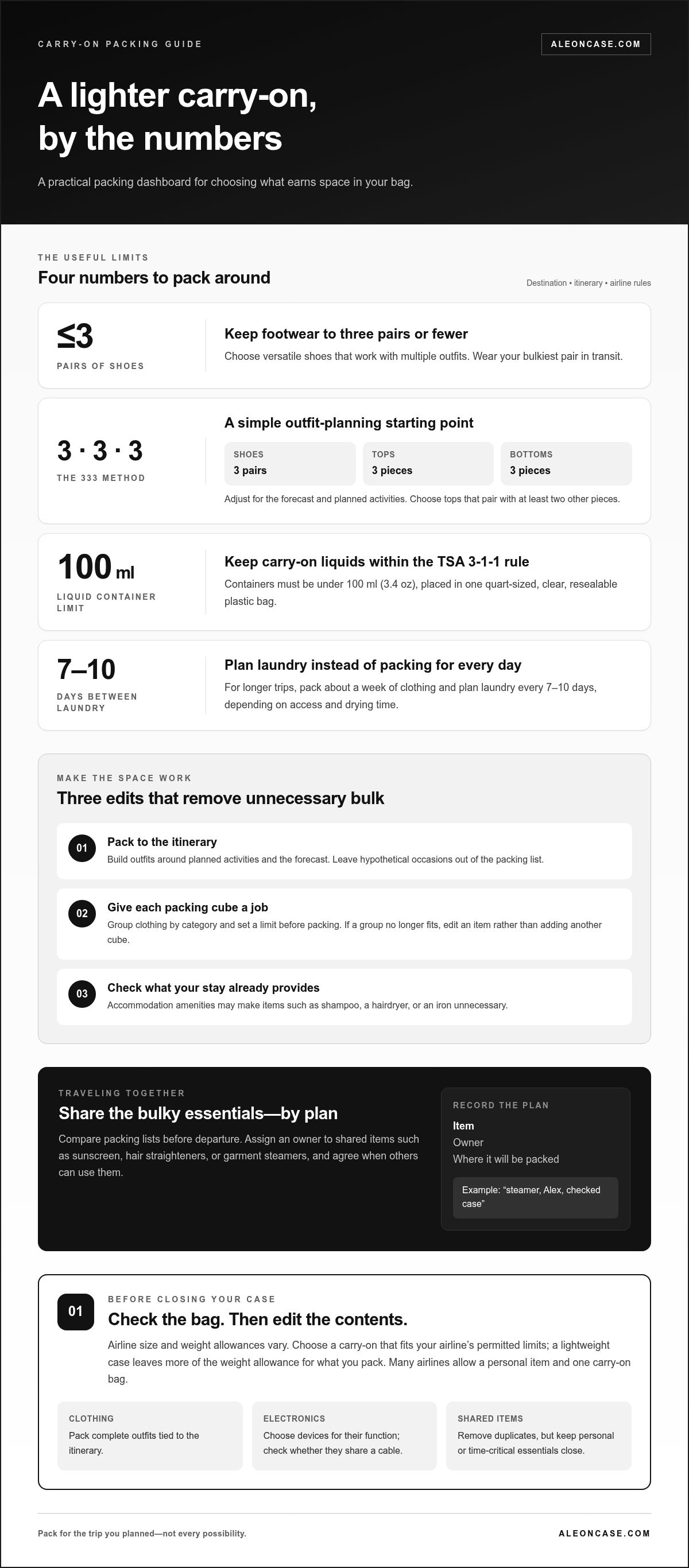
Pack for your destination and planned activities. Limit footwear to three pairs or fewer, choosing versatile shoes that work with multiple outfits. Wear your bulkiest pair in transit, and choose comfortable footwear suited to your itinerary rather than packing for hypothetical occasions.
Reduce toiletry space with solid alternatives to bottled products. For liquids in U.S. carry-on travel, the Transportation Security Administration’s 3-1-1 rule requires containers under 100 ml (3.4 oz) in one quart-sized, clear, resealable plastic bag. Check accommodation amenities before packing items such as shampoo or a hairdryer.
Choose electronics for their function, not out of habit. An iPad may replace a laptop, e-reader, and gaming console if one device meets your needs. Bring only the chargers you need, and check whether several devices use the same cable. These small edits help you avoid overpacking without leaving useful essentials behind.
2. Organizing clothes with packing cubes
Give each packing cube a purpose, such as tops, bottoms, underwear, or sleepwear. Set a limit for each category before packing, then keep each group inside its cube. The containers make excess visible: if tops no longer fit, remove an item instead of adding another cube. Roll soft garments to fill gaps and keep clothing grouped together.
Build outfits around a neutral palette, such as navy, white, and denim. Choose tops that pair with at least two other pieces, then add bottoms that work across several days. The 333 method offers a simple starting point: three shoes, three tops, and three bottoms. Adjust the selection to suit the forecast and planned activities, rather than packing clothes for imagined occasions.
Plan layers that work together rather than packing separate outfits for every temperature. A base layer, shirt, and versatile jacket can adapt to changing conditions. Place the pieces you expect to wear first near the top of their cubes. Rolling shirts and casual pants can also help them fit into narrow spaces.
To make a packing list and stick to it, write complete outfits against each day’s itinerary, then pack only those clothes and necessary alternatives. Assign every listed item to a cube; leave anything without a planned use at home. For longer trips, plan laundry before departure: packing about a week of clothing and washing during the trip can keep the load manageable. A practical rhythm is laundry every 7-10 days, depending on access and drying time.
3. Sharing items with travel companions
Coordinate shared essentials before everyone closes their suitcase. Compare packing lists and assign an owner to bulky items such as sunscreen, hair straighteners, or garment steamers. If one companion packs the straightener, the others can leave theirs behind. A shared phone note makes the plan easy to review before departure.
Choose shared items based on the itinerary and who will use them. For a beach stay, companions might bring sunscreen to share; for a trip with planned styling, decide who carries the hair tool. Don’t share items that each person needs at the same time. A shared item saves space only if everyone can access it when needed.
Make the plan practical by recording each item, its owner, and where it will be packed, such as “steamer, Alex, checked case.” Agree on when the item will be available, especially during busy mornings. Keep personal toiletries and devices in each traveler’s own bag. Clear arrangements prevent a shared packing plan from becoming an inconvenience.
Before leaving, review the list together and remove duplicates. Revisit it when plans change: a hotel room with an iron may make a garment steamer unnecessary, while separate schedules may mean companions need separate chargers. The takeaway is simple: share bulky items when the group can use them in turn, but keep personal or time-critical essentials within reach. Clear ownership helps everyone pack less without relying on guesswork.
ALEON: 16" underseat luggage
ALEON offers 16" underseat luggage for travelers who want a compact option for carefully edited essentials. If your itinerary calls for a larger carry-on, consider the 21" aluminum carry-on or 21" aluminum Carry-on with suiter. The 17" aluminum pilot case is another option for travelers whose packing needs suit that format.
Choose luggage that fits your airline’s size and weight limits, rather than picking a case simply because it has more room. The right bag supports a lighter packing plan, but the contents matter too. Focus your list on clothing and gear you expect to use, then choose a case suited to those items and your journey.
Visit ALEON’s aluminum luggage to explore the carry-on options.
Make room for a more considered journey
A lighter carry-on starts with a useful question: what will make this trip easier? Let your destination, schedule, and travel companions guide your final choices. This makes how to avoid overpacking less about strict limits and more about carrying what genuinely serves the journey.
Before your next departure, review your packing plan and choose luggage that suits how you travel. ALEON offers carry-on options for different needs, so you can explore a case that fits your approach. A thoughtful setup can make each transition feel more composed, from the airport to your destination.
Contact ALEON about your travel needs and take the next step toward a more streamlined trip. Travel well, with only what you need close at hand.
Frequently Asked Questions
How many outfits should I pack for a week-long trip?
Plan seven daily outfits using about five tops and three coordinating bottoms, rather than packing seven unrelated looks. Add a layer for changing temperatures and set aside a fresh outfit for travel or an unexpected spill. For example, dark trousers can work with several tops, while one dress can serve as an evening option.
How to choose versatile clothes for travel?
Choose pieces that work in more than one setting and pair with the same shoes and accessories. A neutral shirt, for example, can suit a daytime walk with casual trousers and look more polished under a jacket at dinner. Check the forecast and planned activities first, then favor comfortable fabrics that layer easily and don’t require special care.
How to pack light using the capsule wardrobe method?
To understand how to avoid overpacking with a capsule wardrobe, choose a small color palette and make sure each top works with at least two bottoms. Lay out complete looks, including shoes, before packing to spot gaps. Remove anything meant for only one unlikely occasion, and wear your bulkiest suitable layer in transit instead of packing it.
How to use a carry-on size and weight limit efficiently?
Check your airline’s current carry-on dimensions and weight allowance before choosing a bag, since limits can vary by carrier and route. Measure the packed case, including wheels and handles, and weigh it after packing. Keep heavier items close to the case’s center, and leave space for essentials you may need in transit. ALEON’s 21" Aluminum Carry-On with Suiter is one option to consider.
How to pack a suitcase with packing cubes or rolling clothes?
Use packing cubes to group items by purpose, such as tops, workout wear, or undergarments, then place them in the case without forcing it closed. Rolling casual knits can make them easier to arrange; fold structured garments to reduce creasing. Keep frequently needed items near the opening, and put shoes in separate bags so their soles don’t touch clothing.


