


If you think a layer of foam and ballistic nylon is enough to save your laptop from a shifting suitcase in a crowded overhead bin, you're betting your livelihood on a very thin margin of error. It's a common dilemma when choosing between an aluminum laptop case vs fabric. We've all felt that momentary panic when a zipper sticks or a bag looks frayed and unprofessional after just a few months of use. You deserve a solution that reflects your success and protects your most valuable tool.
In this article, you'll discover why aerospace-grade aluminum is the definitive choice for professionals who prioritize security and a sophisticated aesthetic over disposable alternatives. We'll explore how structural deflection creates a safe room for your tech, ensuring your hardware remains pristine. From the precision of TSA-approved locks to the enduring elegance of a Vertical Business Unit, we compare every detail to help you invest in a case that commands respect and lasts a lifetime.
Key Takeaways
- Understand how aerospace-grade aluminum creates a structural "safe room" that deflects impact energy away from your screen. Fabric padding often compresses under pressure; this leaves your hardware vulnerable to crushing forces.
- Evaluate the long-term professional ROI of an aluminum laptop case vs fabric. While soft bags frequently fray or stain, aluminum maintains a crisp and commanding silhouette that is designed to last a lifetime.
- Explore the advanced security features of hard-shell units, including integrated TSA-approved locks that resist tampering. You'll also learn how aluminum's natural properties provide a layer of RFID shielding for your sensitive data.
- Identify why specialized tools like the Vertical Business Unit are the logical choice for frequent travelers. These cases offer total peace of mind by ensuring your tech survives the unpredictable environment of crowded overhead bins.
Structural Integrity: Why Aluminum Offers Superior Impact Protection
The Crush Test: Hard Shell vs. Soft Shell Reality
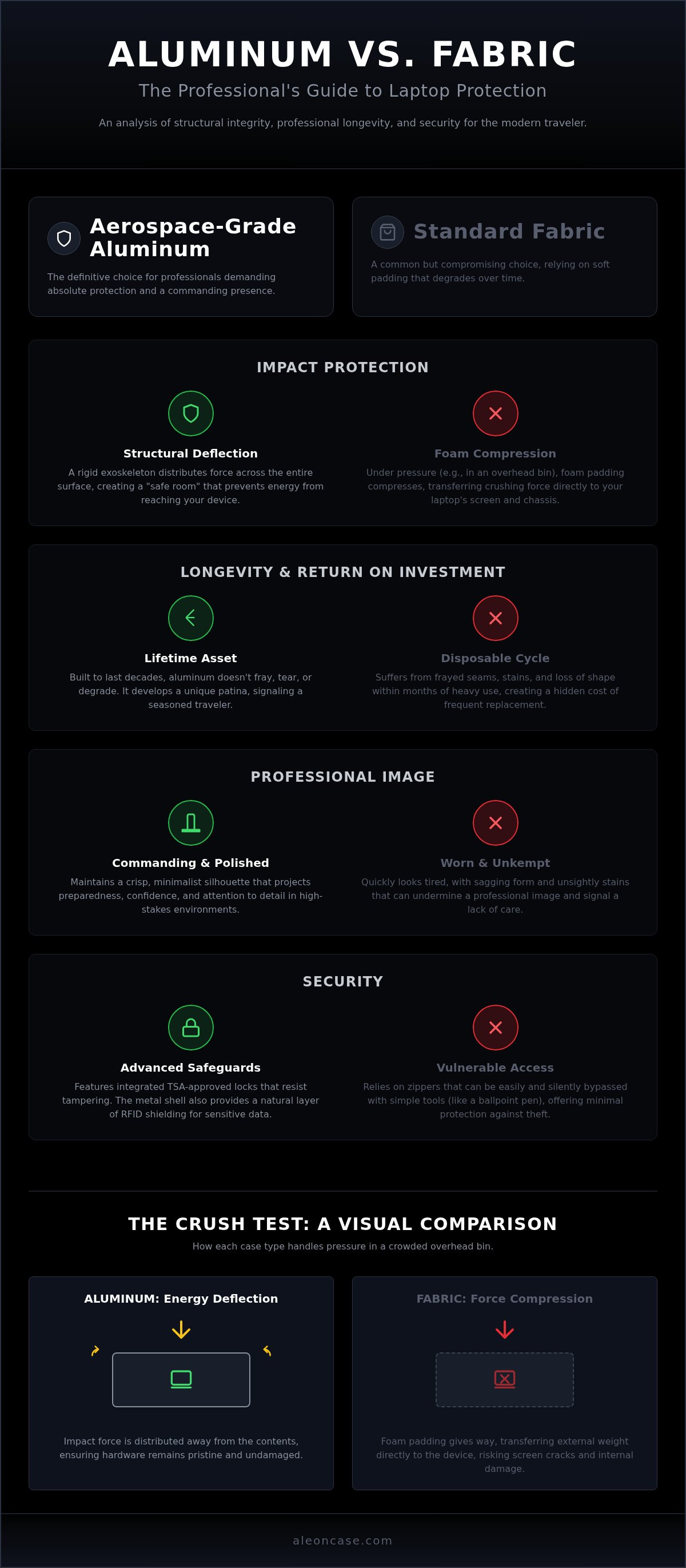
Fabric bags are vulnerable in high-pressure environments like airplane overhead bins or stacked luggage carts. When a heavy suitcase rests on a soft bag, the foam compresses and transfers the weight directly to your laptop's screen or chassis. This can lead to hairline fractures or motherboard flex. By contrast, aerospace-grade aluminum shells distribute impact energy across the entire surface area. This prevents localized pressure points from causing catastrophic damage. A review of the history of suitcase materials shows that the evolution toward hard-shell protection was a direct response to these specific mechanical failures in traditional soft-sided luggage.
Protection is also about puncture resistance. Nylon and polyester can tear when caught on sharp edges or metal hardware from other bags. An All Aluminum laptop case provides a barrier that fabric simply can't replicate. This "safe room" concept shields your tech from external torque and bending, which are the silent killers of modern, thin-profile laptops. Whether you choose a Vertical Business Unit or a Horizontal Business Unit, the goal remains the same: total structural immunity.
Professionalism and Longevity: The ROI of a Premium Business Case
Investing in a business tool shouldn't be a recurring subscription to mediocrity. Fabric bags often fray at the seams, collect unsightly stains, and lose their structural integrity within months of heavy use. This cycle of replacement is the hidden cost of choosing a soft-shell option. When comparing an aluminum laptop case vs fabric, the return on investment becomes clear through sheer longevity. Aluminum doesn't degrade; it endures. Research regarding the impact resistance of aluminum confirms that these alloys maintain their protective properties even after significant stress, ensuring your case remains a functional asset for decades rather than a disposable accessory.
A professional image is built on details. A sagging, stained fabric bag signals a lack of attention to detail that can undermine your authority in high-stakes environments. Aluminum cases maintain a crisp, commanding silhouette that projects preparedness and confidence. While fabric looks "worn out" as it ages, high-end metal develops a unique patina that speaks to a "seasoned traveler" persona. It's incredibly easy to maintain; a simple wipe restores its luster, ensuring you always arrive looking polished and ready for the boardroom.
This attention to detail should extend to your entire tech ecosystem; for example, pairing your aluminum case with premium leather accessories from O2 Leather ensures that your phone and watch reflect the same high standard of professional elegance.
Maintenance and Aesthetics in High-Stakes Environments
A minimalist aesthetic serves as a silent partner in your professional success by removing visual clutter and emphasizing functional precision. This design philosophy ensures your gear never distracts from your performance during a presentation. Beyond the boardroom, choosing a lifetime All Aluminum laptop case reduces the environmental footprint caused by the constant disposal of synthetic textiles. It's a choice that values both personal excellence and global responsibility. Consider how a Vertical Business Unit might streamline your next journey and provide the lasting image you deserve.
Choosing Your Shield: When Aluminum is the Only Logical Choice
Security isn't just about padding; it's about access. Most fabric bags rely on zippers that a simple ballpoint pen can bypass in seconds. When evaluating an aluminum laptop case vs fabric, metal cases provide a physical barrier that zippers cannot match. Integrated TSA-approved locks ensure your data stays private while meeting airline regulations. This physical security aligns with federal guidelines on protecting devices, which emphasize the importance of robust hardware safeguards. Additionally, aluminum's natural properties offer a layer of RFID shielding to help protect sensitive data from unauthorized remote scanning during transit.
Internal organization also benefits from structural rigidity. Fabric dividers often sag or shift, leading to a cluttered interior that risks scratching your tech. ALEON business units utilize rigid internal walls to keep documents and devices perfectly separated. While some worry about weight, modern aerospace-grade alloys offer exceptional protection without the bulk of traditional steel. You get the strength of a vault with the portability required for modern travel—and if you are looking for high-performance hardware to fill that vault, you can learn more about Computech-Solutions for a wide range of professional IT equipment.
Integrating Aluminum into Your Professional Travel Routine
Selecting the right tool depends on your specific workflow. A Vertical Business Unit is ideal for those who navigate tight commuter aisles or prefer a slim profile. Horizontal models offer a traditional briefcase orientation that suits classic corporate environments. Transitioning to a hard-shell system means moving away from disposable gear and toward a permanent, secure solution for your professional assets.
Elevate Your Professional Protection
Choosing between an aluminum laptop case vs fabric is more than a style preference; it's a commitment to your tech's survival. Aluminum doesn't just cushion; it defends. You've seen how aerospace-grade aluminum provides a rigid safe room that fabric padding simply can't match. Beyond pure impact resistance, these cases offer a permanent professional image that won't fray or sag over time. With integrated TSA-approved security and a durable minimalist design, you're investing in a tool that respects the value of your work.
It's time to stop replacing disposable bags and start carrying a case that lasts a lifetime. Whether you're navigating international terminals or daily commutes, your hardware deserves the highest standard of defense. Explore the ALEON collection of all-aluminum laptop and business cases today and travel with total peace of mind. Your next journey starts with a better shield.
Frequently Asked Questions
Is an aluminum laptop case too heavy for daily commuting?
No, modern aerospace-grade alloys are engineered to provide a high strength-to-weight ratio that doesn't hinder mobility. While the weight difference in an aluminum laptop case vs fabric is present, it's often negligible compared to the peace of mind you gain. Most professionals find that a rigid case is actually easier to handle in tight spaces because it doesn't shift or sag.
Does an aluminum case offer better RFID protection than a fabric bag?
Yes, aluminum is a natural conductor that creates a Faraday cage effect to shield your devices. This physical property blocks electromagnetic fields, protecting your credit cards and passports from unauthorized scanning. Most fabric bags require specialized, secondary linings to achieve this, which can wear out. A hard-shell case provides this security as a permanent, inherent feature of its construction.
Will an aluminum case scratch my laptop on the inside?
No, premium business units feature high-quality internal linings designed specifically to protect delicate finishes. While the exterior is a rugged shield, the interior uses soft materials and secure straps to keep your tech stationary. This ensures your hardware remains pristine and free from abrasions. You get the benefit of a vault-like exterior without sacrificing the gentle care your laptop requires.
How do TSA-approved locks on aluminum cases compare to luggage padlocks?
Integrated TSA-approved locks are far more reliable because they're built directly into the case's frame. External padlocks are vulnerable to being snipped or caught on transit machinery, which can damage your bag. An integrated system is flush with the shell, removing snag points and eliminating the security gaps found in traditional zipper closures. It's a streamlined solution for high-stakes professional travel.


