


A rigid shell is a protection-first choice, not an automatic upgrade. An aluminum backpack can offer a structured, distinctive way to carry essentials, but its fixed shape may feel less forgiving than a conventional flexible bag. The key question isn’t whether metal looks impressive. It’s whether the design suits what you carry and how you move through your day.
This guide explains how to weigh structure against comfort, weight, and everyday usability. You’ll learn the difference between a full aluminum shell and a backpack with an aluminum frame, and what to compare before choosing. ALEON offers an all-aluminum backpack as a full-shell option.
Key Takeaways
- Decide whether you need a fully rigid shell or a pack with internal structural support.
- Consider how a fixed shape will fit your routine, especially if your load changes or you carry bulky items.
- List your everyday essentials before comparing a backpack’s usable space and organization.
- Use the stated dimensions, weight, storage layout, and carrying features to compare options, rather than choosing on appearance alone.
What Is an Aluminum Backpack, and How Does Its Rigid Shell Change Everyday Carry?
The main difference is the exterior. An aluminum backpack has a rigid metal shell that holds a defined shape, unlike a flexible fabric body. An aluminum backpack is defined by its shell material, not by whether it’s designed for commuting, travel, or everyday carry. That distinction matters: a fabric backpack with an aluminum frame uses the metal for internal support, while a full-shell design uses aluminum as the exterior.
How an aluminum shell changes the carry experience
A rigid shell helps a backpack keep its shape and creates a firm barrier around its contents. That structure may appeal if you prefer a defined profile or want less direct contact between your belongings and the outside of the bag. It does not make the contents impact-proof. Protection depends on the full construction and how the backpack is handled.
A flexible backpack can compress and adapt around changing or irregular loads. A metal shell gives less, which can make bulky items harder to pack and the bag less adaptable in tight storage spaces. Neither format suits every routine. The properties of aluminum help explain its appeal as a rigid material, but the material alone doesn’t determine how a backpack performs.
Comfort, weight, storage, and access depend on the specific design. Before prioritizing appearance or shell material, consider what you carry and how the backpack sits against your body. ALEON offers an all-aluminum backpack within its range of aluminum travel goods, which pairs a structured format with the brand’s minimalist aesthetic.
Is an Aluminum Backpack Practical? Weigh Everyday Use Against Its Trade-Offs
A rigid shell maintains a clear profile, but it won’t adapt to your load like a flexible pack. If you regularly carry different combinations of items, pack bulky objects, or need to squeeze your bag into tight spaces, that fixed shape may be less convenient. To judge practicality, think about your usual load and surroundings, not just the material.
| Consideration | Rigid aluminum shell | Flexible backpack |
|---|---|---|
| Structure | Holds a defined shape | Can compress or shift with its contents |
| Flexibility | Less adaptable to bulky or changing loads | Often gives more as packing needs change |
| Comfort | Depends on the specific fit and carry design | Also varies with fit, straps, and construction |
| Daily use | May suit a consistent, selected load | May suit routines with varied items or tight storage |
Which routines may suit a rigid aluminum backpack?
For commuting, consider how often you need to reach your essentials and whether you carry roughly the same items each day. If you carry specific equipment, check whether its shape and storage needs work with a fixed exterior. For travel, compare the backpack’s dimensions with the space you have for packing and storage, and consider how it will fit alongside your other luggage.
An aluminum backpack is a practical choice when its structure fits your carry habits and its design works for your routine. Don’t treat the material as proof of comfort or protection. Those depend on the backpack’s construction and how you carry it. To compare formats, browse ALEON’s aluminum travel goods and consider how each suits the way you travel.
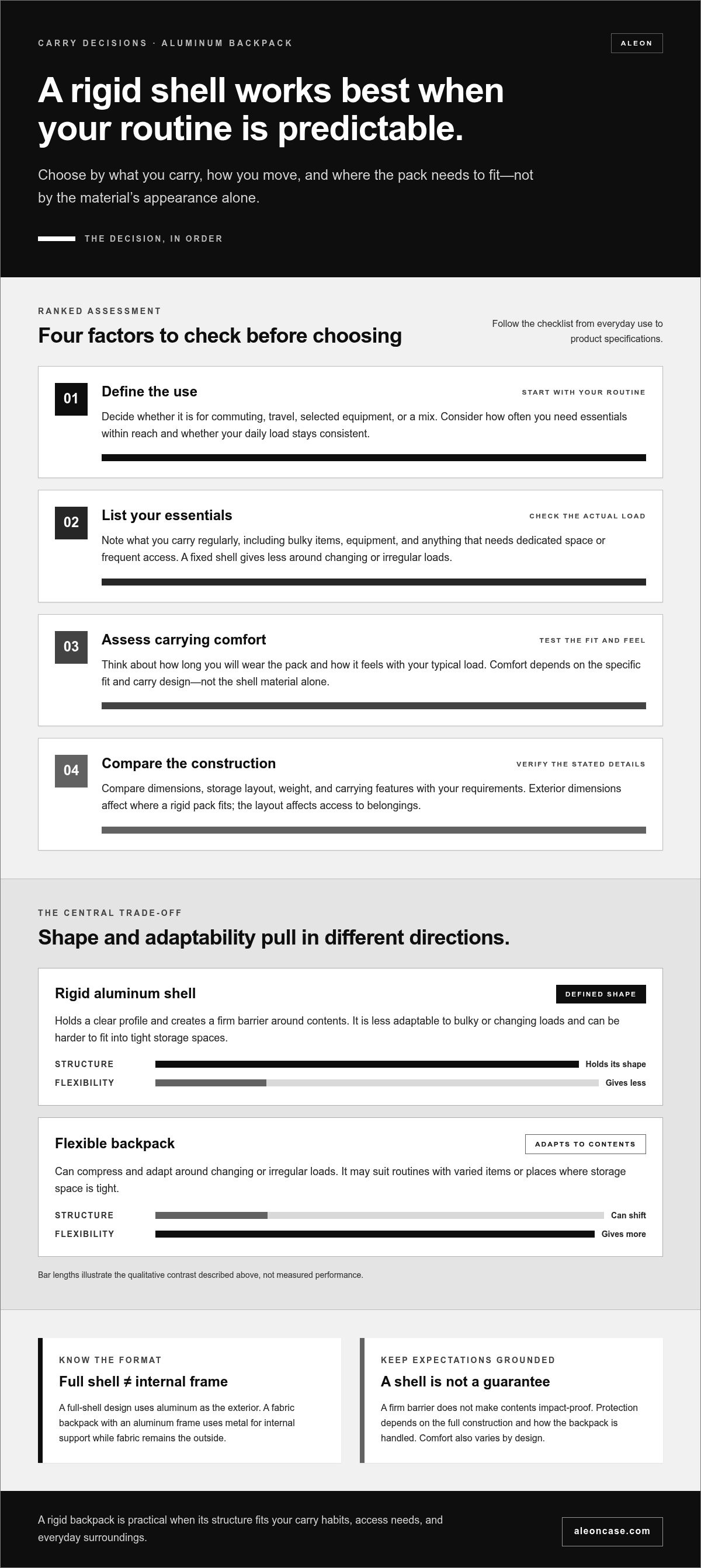
How to Choose an Aluminum Backpack for Your Carry Needs
Start with your routine, not the finish. A few practical checks can help you decide whether a rigid pack works for what you carry, how you move, and how often you’ll use it.
A quick checklist before choosing your pack
- Define the use. Decide whether you need the pack for commuting, travel, selected equipment, or a mix of uses.
- List your essentials. Write down what you carry regularly, including items that need dedicated space or frequent access.
- Assess carrying comfort. Think about how long you’ll wear the backpack and how it feels with your typical load. The shell material alone doesn’t determine comfort.
- Compare the construction. Check the stated dimensions, storage layout, weight, and carrying features against your requirements.
Use product specifications rather than assumptions. Exterior dimensions affect where a rigid backpack fits, while the storage layout affects how easily you can reach your belongings. Compare the stated details with the items you plan to carry. Don’t assume that features found on a suitcase also apply to a backpack just because both use aluminum.
ALEON offers an all-aluminum backpack as part of its range of aluminum travel goods. Explore the aluminum luggage collection and compare the available formats against your checklist. The right choice is the one that fits your carry needs, not simply the one with the most striking material.
Choose the Carry That Fits Your Day
A rigid shell offers a distinctive, structured way to carry essentials, but it won’t suit every routine. Before choosing an aluminum backpack, consider what you carry, how often you need to access it, and whether a fixed shape works for your daily movements. Compare dimensions, organization, and carrying features rather than relying on appearance alone.
ALEON specializes in premium aluminum travel goods, including an all-aluminum backpack. A portion of every sale supports solar energy initiatives in Honduras. Explore ALEON’s aluminum luggage and find a carry format that fits the way you travel.
Frequently Asked Questions
What is an aluminum backpack?
An aluminum backpack has a rigid aluminum exterior rather than a flexible fabric body. Its shell holds a defined shape, while a conventional soft-sided backpack can flex around its contents. This differs from a backpack that uses aluminum only in its internal frame: the fabric remains the exterior, and the metal provides structural support.
Are aluminum backpacks practical for everyday use?
They can be practical if a structured shape suits your routine and you usually carry a consistent selection of items. Consider what you need to access, how you pack, and where you store the backpack. A rigid exterior may be less adaptable for bulky or changing loads. Comfort and organization depend on the individual backpack’s design, not the material alone.
Are aluminum backpacks heavier than regular backpacks?
A full metal-shell backpack may weigh more than a fabric pack, but the difference depends on each bag’s construction and size. Check the stated empty weight instead of assuming all designs weigh the same. Also consider the total load you’ll carry, since both the backpack and its contents affect how manageable it feels during a commute or while travelling.
How do you choose an aluminum backpack?
Start by defining how you’ll use it, then list the items you need to carry. Consider how the backpack feels with that load, and compare its stated weight, exterior dimensions, storage layout, and carrying features with your needs. Review the specific product details rather than assuming a rigid shell guarantees comfort or that suitcase features also apply to backpacks.


