


A lighter suitcase is not always the better fit when you value a rigid shell and a polished, professional look. A luxury metal suitcase made from aerospace-grade aluminum offers those qualities, with trade-offs to weigh: aluminum is heavier than polycarbonate and can dent, while polycarbonate is lighter and can flex under impact but may crack.
Consider those differences alongside what you carry and how you travel. Fragile electronics, frequent business trips, and the weight limits on your itinerary can all affect which material makes sense. This guide compares aluminum and polycarbonate, explains which case details matter, and offers practical ways to choose a size and format. You’ll find guidance on construction, TSA-approved locks, and packing, so you can decide whether an aluminum case suits your travel routine.
Key Takeaways
- Learn what distinguishes a luxury metal suitcase, from aerospace-grade aluminum to a reinforced, zipperless frame.
- Compare aluminum with polycarbonate and weigh the trade-offs in rigidity, weight, and protection for your travel essentials.
- Understand how TSA-approved locks and a rigid frame can add a layer of security for equipment and valuables in transit.
- Match your travel routine to the range of options, from 16" underseat luggage to a 17" aluminum pilot case and business units.
Defining the Luxury Metal Suitcase: Beyond the Aesthetic
A luxury metal suitcase is defined by more than its polished shell. Aerospace-grade aluminum and a reinforced, zipperless frame create a rigid structure with a clean, professional profile. “Aerospace-grade” refers to aluminum alloys selected for demanding applications, but it does not describe one universal alloy or mean that a suitcase cannot dent.
Pay attention to how the case closes and moves, not just how it looks. A frame secured with TSA-approved locks eliminates a conventional zipper track, reducing one potential point of access without making a case theft-proof. Multi-directional spinner wheels make it easier to steer through terminals and narrow aisles. ALEON’s aluminum luggage combines these practical details with clean lines and metallic finishes. The restrained design suits travel and business settings, with its appearance shaped by material and proportion rather than prominent branding.
Aerospace-Grade Aluminum vs. Standard Alloys
“Aerospace-grade” is not a single alloy designation, and the phrase alone does not tell you how a suitcase will perform. Aluminum is valued for its relatively low density, while alloying can change its strength and other properties. Properties of Aluminum offers broader background on the material. For luggage, the useful question is how the complete case balances strength and weight, rather than whether the shell carries a particular label.
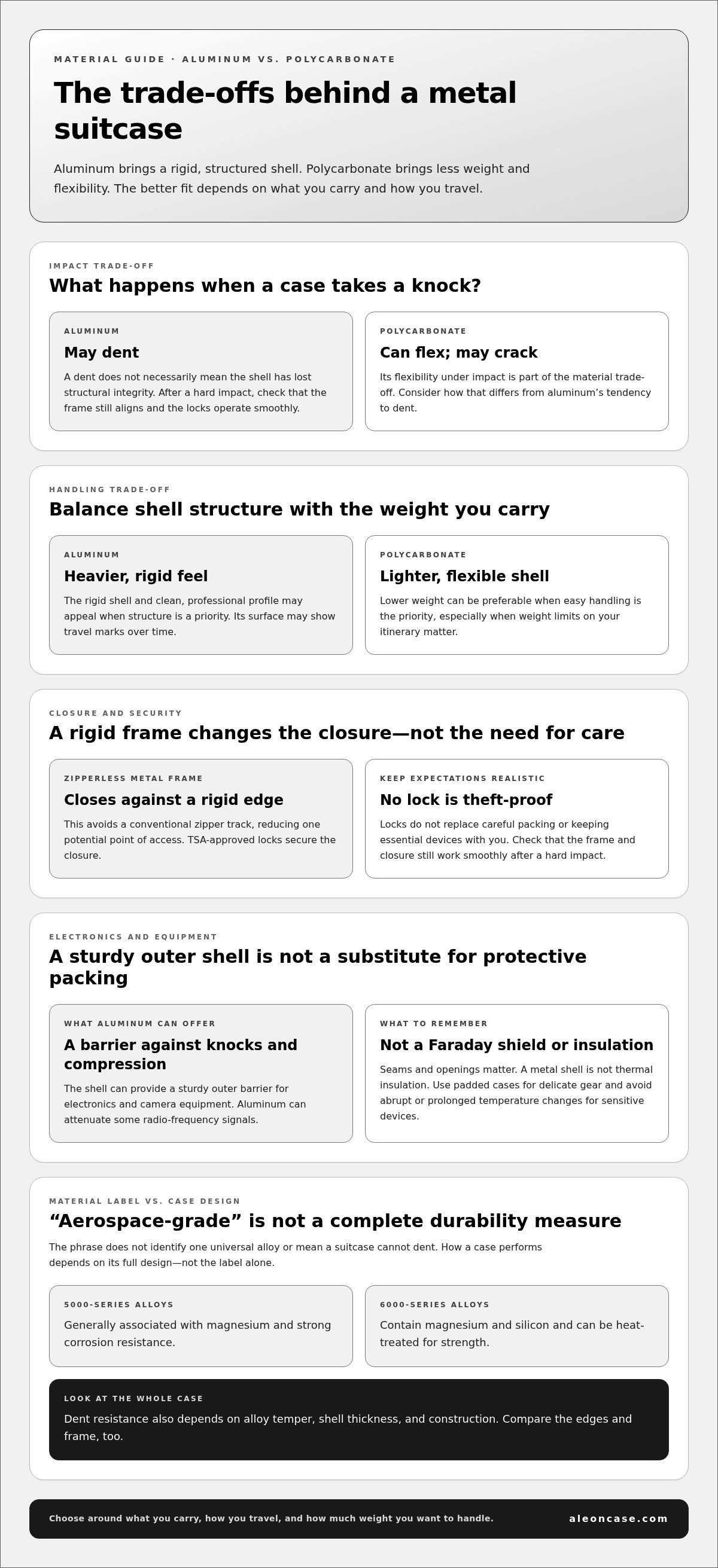
Alloy series offer some context, but they do not tell the whole durability story. 5000-series alloys are generally associated with magnesium and strong corrosion resistance, while 6000-series alloys contain magnesium and silicon and can be heat-treated for strength. Dent resistance also depends on alloy temper, shell thickness, and case construction. Compare the full design, including its edges and frame, rather than treating an alloy number as a stand-alone measure of toughness.
The Tactical Advantages of Aluminum Over Polycarbonate
Aluminum and polycarbonate respond differently to impacts. A zipperless metal frame closes against a rigid edge, avoiding a zipper track that could be manipulated to reach a case’s contents. TSA-approved locks secure the closure, but no lock makes luggage theft-proof. Polycarbonate weighs less and can flex under impact, though it may crack; aluminum is more likely to dent. A dent does not necessarily mean the shell has lost structural integrity, but damage to the frame or closure should be checked before your next trip.
Security and Electronics Protection
A luxury metal suitcase gives electronics and camera equipment a sturdy outer barrier against knocks and compression. Aluminum is electrically conductive and can attenuate some radio-frequency signals, but seams and openings mean a suitcase should not be treated as a Faraday shield. A metal shell is not thermal insulation, either. Use padded cases for delicate gear, and avoid exposing temperature-sensitive devices to abrupt or prolonged temperature changes. TSA-approved locks help secure the case during transit, but they do not replace careful packing or keeping essential devices with you.
Factor weight and surface wear into your choice. Aluminum weighs more than polycarbonate, and its surface may show travel marks over time. Dents can become part of its patina, but they do not automatically indicate damage to the case’s structure. After a hard impact, check that the frame still aligns and the locks operate smoothly.
Aluminum is recyclable, though recovering the material at the end of a case’s useful life depends on local collection and processing. A durable case may suit travelers seeking a long-term option, while polycarbonate’s lower weight can be preferable if easy handling is the priority. Broader interest in enduring design features in Luxury Goods Market Trends 2026. To compare the metal-case approach with your travel needs, browse ALEON’s aluminum luggage options.
Navigating the ALEON Collection: Precision for Every Journey
Start with what you carry and where you want to keep it during the trip. A 16" underseat case keeps short-trip essentials close at hand. A 17" aluminum pilot case or vertical business unit offers a structured format for work materials and equipment. For longer journeys, ALEON’s sizes range from a 21" carry-on to a 32" aluminum check-in case. Compare the aluminum luggage options against your packing habits, trip length, and need for cabin access.
Selecting the Right Size for Your Travel Profile
Choose a 21" carry-on with a suiter if you want a dedicated way to organize garments for meetings. A standard carry-on may be a better fit if you pack fewer formal pieces. Before traveling, compare the case’s full dimensions with the current carry-on rules for each airline on your itinerary. For a week-long business trip, a 26" check-in case can provide room for clothing and work essentials without moving up to the largest checked sizes. Let your wardrobe, equipment, and packing style guide the decision.
Think of each size as a different tool. The 16" underseat option suits efficient short trips, while the pilot case and vertical business unit can help keep professional essentials together. For extended trips or more substantial packing needs, consider the 30" and 32" check-in cases. A 21" case keeps the load more compact, but a compact size does not guarantee that it will meet an airline’s cabin requirements. Check dimensions and weight separately.
There’s purpose beyond the case itself. ALEON donates a portion of every sale to solar energy initiatives in Honduras, connecting travel gear with support for renewable energy. Choosing a luxury metal suitcase can bring together practical priorities and an appreciation for considered design.
Choose a Travel Companion for the Journeys Ahead
The right case should fit more than your next itinerary. Think about what you carry, how you move through airports, and how much weight you want to handle. A luxury metal suitcase offers a structured, refined option for travelers who value aluminum construction, particularly when work materials or equipment need a sturdy outer case in transit.
ALEON brings together aerospace-grade aluminum construction, TSA-approved locks, and a minimalist aesthetic. A portion of every sale also supports solar energy initiatives. To choose a format, consider what you need close at hand, how much you pack, and whether a compact cabin case or a larger checked case suits your trips.
Explore the collection to find a case that fits the way you travel. Explore the ALEON Aluminum Luggage Collection.
Frequently Asked Questions
Are aluminum suitcases too heavy for international carry-on limits?
Not necessarily, but aluminum cases can weigh more than comparable polycarbonate options, leaving less room under an airline’s weight allowance for packed items. Weigh your packed luxury metal suitcase before departure, and check both size and weight rules for every airline on your itinerary, including connecting carriers. A compact carry-on can help keep the total manageable, especially when you’re also carrying a laptop or other essentials.
Do luxury metal suitcases dent easily during airline handling?
They can dent after a hard impact, though visible marks depend on the force and where the case is struck. After a rough flight, check that the lid or frame closes evenly and that the locks still engage. If you pack camera equipment or other delicate items, place them in a fitted protective case inside the suitcase rather than relying on the outer shell alone.
Why do luxury metal suitcases use latches instead of zippers?
Latches secure the case through its frame, avoiding a zipper track and its teeth as the primary closure. They also make it easy to see whether the case is properly shut before you move through a terminal. Close each latch fully and avoid forcing an overpacked case, since pressure can make alignment harder and may interfere with a secure closure.
How do I maintain the finish of an aluminum suitcase over time?
For routine care, wipe the exterior with a soft, lightly damp cloth, then dry it to prevent water marks. Avoid abrasive scrubbers and harsh cleaners that could alter the finish. Clear dust and grit from around the locks, frame, and wheels, and check those areas periodically for debris. If the case gets scuffed, clean it gently rather than trying to polish away every sign of travel.


