


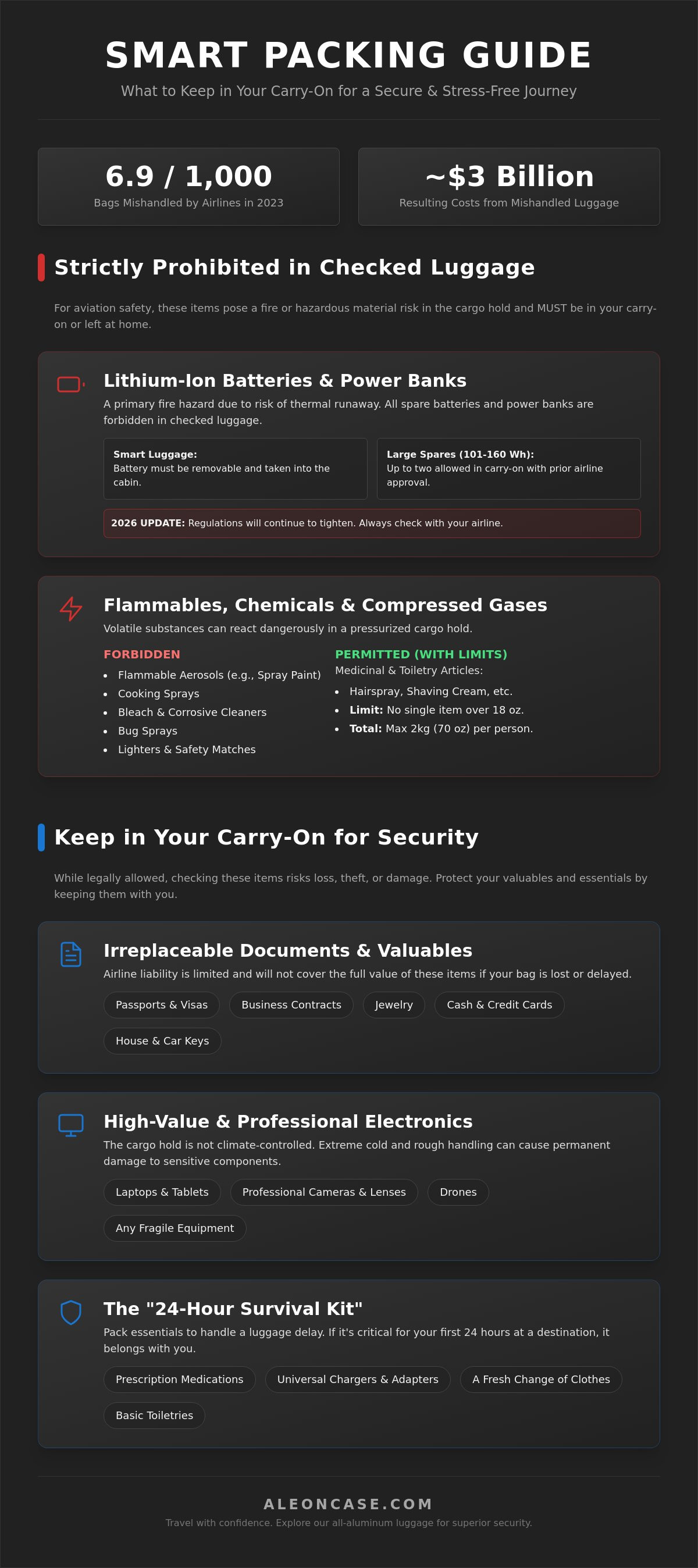
The global airline industry mishandled 6.9 bags per 1,000 passengers in 2023, resulting in nearly $3 billion in costs. While these figures are striking, the personal frustration of losing essential documents or expensive electronics is far more significant. Mastering what not to pack in checked luggage is the first step toward a sophisticated and stress-free travel experience. It’s natural to feel a sense of hesitation when your belongings disappear behind the check-in counter, especially as security regulations continue to evolve.
We understand that you value both reliability and order. This guide will help you navigate the complexities of modern travel by identifying exactly which items belong in the cabin and which are safe for the cargo hold. Whether you are traveling solo or looking to explore Art & Culture Group Tours in the Benelux region and Paris, you’ll gain the confidence that your checked bag will arrive at your destination safely and unopened, reflecting the care you put into your preparations.
We will provide a precise checklist of prohibited items, including the latest 2026 updates on lithium batteries and restricted liquids. This article also outlines a logical strategy for protecting your high-value electronics and important documents. By the end of this guide, your packing process will be as refined and efficient as the journey itself.
Key Takeaways
- Mitigate fire risks by identifying why lithium-ion batteries and specific aerosols are strictly restricted to the aircraft cabin.
- Protect the integrity of your journey by keeping irreplaceable documents and high-end electronics within your immediate reach.
- Master the strategic list of what not to pack in checked luggage to ensure your bag passes through security without being opened or flagged.
- Learn how aerospace-grade aluminum construction and integrated TSA-approved locks offer a superior defense against unauthorized access.
Prohibited and Hazardous Materials: The TSA "Must-Nots"
Safety is the cornerstone of every successful journey. When you consider what not to pack in checked luggage, the focus shifts from mere convenience to the strict parameters of aviation safety. The pressurized environment of an aircraft cargo hold isn't a place for volatile substances that could compromise the integrity of the flight. Many of these restrictions fall under international Dangerous Goods Regulations, which classify materials based on their potential to cause harm during transport.
To better understand how to organize your belongings for maximum security, watch this helpful video:
The Lithium Battery Rule
Spare lithium-ion batteries and power banks are strictly prohibited in the cargo hold because they pose a risk of thermal runaway. If a battery malfunctions, the resulting fire is nearly impossible to extinguish in a sealed luggage compartment. As of February 2026, all spare batteries must remain in your carry-on luggage where the crew can respond to any incidents. For those using smart luggage, the battery must be removable. If you're required to gate-check your bag, you must extract the power source before it's loaded. Travelers may carry up to two larger spare lithium-ion batteries between 101 and 160 watt-hours only with prior airline approval.
Chemicals and Compressed Gases
Identifying common household items that double as hazards is essential for a seamless check-in. Flammable aerosols, such as spray paint or cooking spray, are forbidden. However, medicinal and toiletry articles like hairspray or shaving cream are permitted within specific limits. The total aggregate quantity of these items must not exceed 2 kg (70 ounces) or 2 L (68 fluid ounces) per person, with no single container exceeding 18 ounces. While our aluminum luggage provides a secure environment for your wardrobe, it can't shield the aircraft from the risks of leaking bleach or corrosive bug sprays. In industrial settings, the robust containment of such substances is ensured by specialists like Container Authority, but for air travel, the responsibility of exclusion rests with the passenger. Always ensure your fire-starting materials, such as safety matches or a single lighter, remain in the cabin with you rather than in your checked case.
Beyond Regulations: Items You Should Never Check for Security Reasons
While the TSA Prohibited Items List details what is legally allowed, a strategic traveler understands that legality isn't the same as security. Some items are simply too vital to risk in the cargo hold. Identifying what not to pack in checked luggage requires a shift in mindset from compliance to risk management—a principle central to professional aviation training at 2FLY Airborne. If an item is irreplaceable or essential for your first 24 hours at a destination, it belongs in the cabin.
Irreplaceable documents like passports, visas, and original business contracts are the most vulnerable. If your luggage is delayed, even for a day, the absence of these documents can derail a professional itinerary. Jewelry and cash also face unique risks. Most airlines have strict liability limits that rarely cover the full value of high-end accessories or large sums of currency. Keeping these items in your underseat bag ensures they stay under your direct supervision at all times. This focus on security is equally vital when moving your entire life across the country, a process where Southern Elite Van Lines provides the professional reliability needed for a seamless transition.
Protecting Professional Equipment
Professional photographers and tech executives face specific challenges with temperature and handling. The cargo hold isn't always climate-controlled. Extreme cold at high altitudes can affect the longevity of sensitive electronic components and battery health. Utilizing specialized All Aluminum Camera Cases as carry-on pieces provides a rigid, protective shell that shields gear from overhead bin impacts. Similarly, travelers carrying high-value loose stones or bespoke jewelry from AfricaGems should prioritize carry-on security to safeguard their investments. This approach ensures your primary tools and valuables arrive ready for immediate use. Refining your list of what not to pack in checked luggage ensures your professional tools remain secure.
The "Survival Kit" Philosophy
Adopting a survival kit mindset is the ultimate hedge against baggage delays. We recommend packing a 24-hour essentials kit inside your all aluminum carry on luggage. This kit should include prescription medications, universal chargers, and a fresh change of clothes. Having these basics on hand transforms a potential luggage crisis into a minor inconvenience. To ensure you can coordinate your recovery efforts or navigate a new city without interruption, check out Always Mobile for affordable international eSIM data plans. It’s a logical step for those who value order and seamless experiences. To elevate your travel security, consider investing in all aluminum check in luggage for the items that do stay in the hold.
Strategic Packing: Maximizing the Security of Your Checked Suitcase
Security is about more than just the contents. It’s about the integrity of the vessel itself. While previous sections detailed the items to exclude, this final step focuses on the physical protection of your remaining belongings. Choosing a suitcase with an aerospace-grade aluminum shell provides a defense that traditional soft-shell bags can't match. Zippers are inherently vulnerable points. Aluminum cases utilize reinforced latch systems, creating a formidable barrier against forced entry. Just as you prioritize the structural integrity of your luggage, businesses requiring secure, heavy-duty containment for their inventory or equipment can learn more about Atlanta Container & Trailer for robust storage solutions.
To gain a deeper appreciation for how these high-security systems function, many enthusiasts turn to Lockpick Pros for professional-grade tools and insights into the world of physical security.
Utilizing TSA-approved locks is a non-negotiable standard for the modern traveler. These locks allow for necessary regulatory inspections without compromising the locking mechanism's function. Adhering to the FAA PackSafe Guidelines ensures your bag meets all safety requirements, reducing the chance of it being flagged for additional screening. A methodical approach to packing ensures your bag remains unopened and secure throughout its journey.
The Aluminum Advantage for Checked Goods
Structural integrity is paramount when you're transporting allowed fragile items like fine wine or delicate souvenirs. Premium aluminum check-in cases provide a rigid environment that resists the crushing forces of cargo handling. This same focus on durability and precision is found in the automotive sector, where ICON WHEELS uses forged construction to enhance the performance and style of luxury vehicles like the Bentley Bentayga. Beyond physical protection, the minimalist aesthetic of high-end aluminum luggage serves as a psychological deterrent. It signals a traveler who prioritizes high-security features and enduring quality, which often discourages casual theft in transit hubs. Understanding what not to pack in checked luggage allows you to focus on protecting the items that truly belong there.
For travelers who collect unique pieces during their journeys, you can learn more about Aleph Contemporary to discover a curated selection of original art that deserves such high-quality protection.
Just as you prioritize the security of your items in transit, ensuring the safety of your valuables at home requires a similar level of foresight. For those who value discreet protection, Hide-A-Way Doors offers handcrafted concealment systems that transform ordinary rooms into secure, hidden spaces.
Internal organization is the final layer of your security strategy. Place heavier, non-fragile items at the bottom near the wheels to maintain a low center of gravity. This prevents the bag from tipping and reduces mechanical stress on the frame during transport. Internal compression systems are equally vital. They keep your wardrobe from shifting, which is the primary cause of internal damage and wrinkles during long-haul flights.
Final Pre-Flight Checklist
A disciplined pre-flight routine ensures nothing is left to chance. Conduct a final verification of your bag’s contents before leaving for the terminal to confirm you haven't accidentally included any items from your list of what not to pack in checked luggage. Once your packing is complete, photograph the interior of your bag. This visual record is essential for insurance purposes and provides concrete evidence of your bag's condition in the rare event of loss or mishandling. Following these steps ensures you can travel with the quiet confidence of a seasoned expert.
While these packing tips are essential for individual air travel, those with more extensive logistical requirements, such as international relocation or commercial shipping, can discover active forwarding Uluslararası Taşımacılık Ltd. Şti. to manage their global transport needs with professional precision.
Elevating Your Travel Standards
Mastering the nuances of modern air travel transforms a potentially stressful transit into a seamless experience. By distinguishing between hazardous materials and high-value essentials, you ensure your journey remains uninterrupted and your belongings remain secure. A disciplined approach to your packing list, complemented by reliable destination services like NCC Bardi in Salento, provides the peace of mind required for professional success and personal exploration alike.
Similarly, for travelers visiting the West Coast, arranging executive ground transportation through la-confidential.us ensures that your commitment to quality and security extends well beyond the airport gates.
Understanding what not to pack in checked luggage is the first step toward total travel confidence. The second step is selecting a vessel that offers uncompromising protection for the items that stay with you. A strategic packing plan combined with a high-performance suitcase creates a foundation of reliability that lasts for years. You deserve a travel companion that mirrors your commitment to quality and order.
For those who extend this commitment to quality to their vehicles, Elite Custom Rims offers a selection of high-performance wheels designed for luxury brands like Audi and Mercedes.
Similarly, to bring this same level of premium aluminum craftsmanship to your home's exterior, check out Elite L.A. Patios for sophisticated outdoor living solutions.
Ready to upgrade your travel kit? Explore ALEON’s Collection of Secure Aluminum Luggage. Our cases are defined by aerospace-grade aluminum construction and integrated TSA-approved locks for maximum security. Multi-directional spinner wheels provide effortless mobility, ensuring you move through the terminal with quiet authority. Travel with the foresight of a seasoned expert and the assurance that your gear is protected by the best in class. Your next journey starts with a choice for excellence.
Frequently Asked Questions
Can I pack a laptop in my checked luggage if it is turned off?
Laptops are technically permitted in checked bags when powered down, but we strongly advise against it for several reasons. The cargo hold is not climate-controlled, and extreme temperatures can damage sensitive internal components. Additionally, checked bags undergo rigorous mechanical handling that poses a risk to fragile screens. Keeping your device in a dedicated all aluminum laptop case within the cabin ensures it remains protected and under your direct supervision.
What happens if I accidentally pack a prohibited item in my checked bag?
If security identifies a restricted item, they will likely open your suitcase to remove it, often leaving a formal notice of inspection behind. Prohibited materials like loose lithium batteries or flammable chemicals are confiscated and destroyed rather than returned. This process can cause significant baggage delays or even lead to fines. Carefully reviewing what not to pack in checked luggage before you reach the airport is the best way to avoid these complications.
Are power banks allowed in checked luggage if they are small?
No, power banks and portable chargers are strictly forbidden in checked baggage regardless of their size or mAh capacity. These devices contain lithium-ion cells that represent a fire hazard in pressurized cargo compartments. You must keep all portable power sources in your carry-on luggage. If you're asked to gate-check your bag, you're required to remove the power bank and bring it into the cabin with you to ensure flight safety.
How do I know if my medication is safe to check?
While most pills and non-flammable liquid medications are legally allowed in the hold, checking them is a significant risk to your well-being. If your luggage is delayed or lost, you could find yourself without essential health supplies in an unfamiliar location. We recommend keeping all prescriptions in your underseat bag. If you must check liquid medications that exceed standard volumes, declare them at the security checkpoint and keep them in their original labeled containers.
Is it better to use a hard shell or soft shell suitcase for checked luggage?
A hard shell aluminum suitcase is the superior option for travelers who prioritize security and the longevity of their belongings. Unlike soft shell bags, which are vulnerable to sharp objects and environmental moisture, aerospace-grade aluminum provides a rigid barrier against impact and forced entry. This material reflects a commitment to enduring quality. When you consider what not to pack in checked luggage, using a secure aluminum case protects the items that do belong there from the rigors of global transit.


