


Imagine the frustration of watching your suitcase emerge on the airport carousel with a jagged crack across a corner or a mangled, burst zipper. It's an all-too-common experience that highlights the hidden costs of choosing the wrong equipment. You deserve gear that withstands the unpredictable rigors of modern transit without compromise. Selecting the most durable luggage material is the single most important decision you can make to protect your belongings and your peace of mind.
We understand that frequent travelers value reliability above all else. This guide provides a definitive ranking of materials by their real-world lifespan, helping you distinguish between marketing hype and true structural integrity. You'll discover why polycarbonate offers a lightweight alternative, while aerospace-grade aluminum remains the undisputed champion of longevity. We'll explore how zipperless construction and reinforced rivets transform a simple case into a lifelong travel companion that justifies a premium investment.
Key Takeaways
- Understand the structural limitations of ABS and polycarbonate to avoid common issues like corner cracks and shell brittleness.
- Explore why aerospace-grade aluminum is recognized as the most durable luggage material, offering unmatched protection for high-value gear.
- Gain insight into how zipperless designs and rivet-reinforced construction provide a level of security and longevity that standard plastic cases cannot match.
- Evaluate the long-term sustainability and cost-effectiveness of aluminum compared to disposable plastics for the frequent traveler.
The Science of Shells: Comparing Common Luggage Materials
Understanding the history of luggage reveals a clear evolution from heavy wooden trunks to modern synthetics. Today, most travelers choose between three primary plastics:
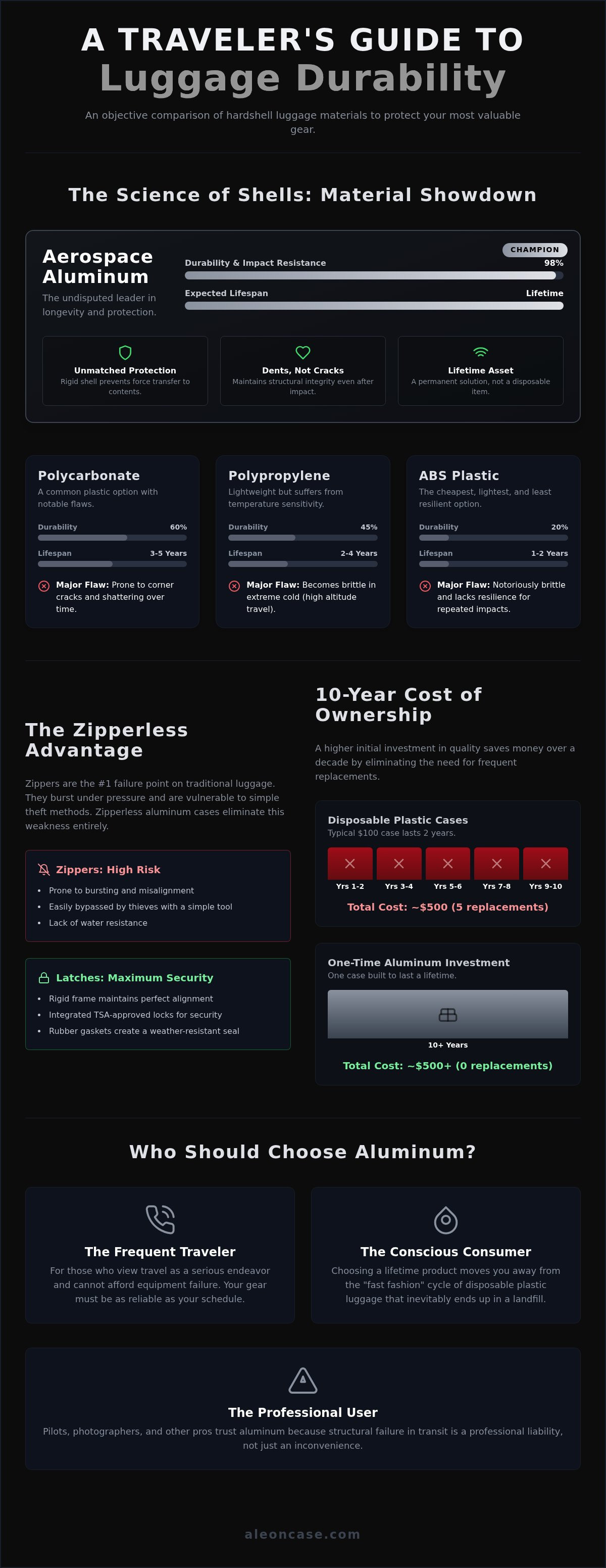
- ABS: The lightest and least expensive option; however, it's notoriously brittle and lacks the resilience to survive repeated impacts.
- Polycarbonate: Often marketed as the most durable luggage material among plastics, though it's prone to corner cracks over time.
- Polypropylene: Offers high impact resistance but suffers during the extreme temperature shifts of high-altitude travel.
These synthetic options are essentially disposable hardware. They're designed for a limited lifecycle and eventual replacement after a few years of wear. For those seeking a permanent solution, aluminum luggage represents a deliberate move away from temporary goods toward enduring travel assets that last a lifetime.
Why Flexibility Isn’t Always a Durability Benefit
Marketing departments often praise "flex" as a primary benefit. In reality, a shell that bends under pressure transfers that kinetic force directly to your internal valuables. Whether it's a laptop or a professional camera, fragile items require a rigid exterior to remain safe. Beyond impact protection, plastic shells often suffer from hinge fatigue. This occurs when the flexible spine or zipper line loses its structural memory. It leads to misaligned halves and persistent closure issues. A truly durable case maintains its geometric integrity regardless of the pressure applied by industrial conveyor belts. This same standard of reliability is essential for specialized outdoor pursuits, where enthusiasts rely on A1 DECOY LTD for field equipment that performs in the most demanding environments.
Aerospace-Grade Aluminum: The Undisputed Leader in Longevity
Aerospace-grade aluminum isn't just a marketing term; it's a technical standard. This material, typically 5052 or 6061 alloy, is selected for aircraft construction because of its exceptional strength-to-weight ratio. While some critics suggest weight is a downside, they often overlook the superior tensile strength that prevents catastrophic failure. Unlike synthetic shells that fatigue and lose shape after repeated pressure, aluminum provides a rigid fortress for your belongings. It's truly the most durable luggage material for those who view travel as a serious endeavor.
Security is where this material truly excels. Aluminum shells are nearly impossible to slash or puncture, unlike nylon or thin polycarbonate. Then there's the common denting myth. Plastic cases often crack or shatter when they reach their limit, which renders the bag useless. Aluminum, however, might take a dent. These marks are badges of honor that tell a story of miles traveled without compromising the bag's structural integrity. The ALEON aluminum carry-on serves as the gold standard for this resilient architecture.
The Zipperless Advantage: Eliminating the #1 Failure Point
Zippers are the weakest link in traditional luggage. They're prone to bursting under pressure and vulnerable to ballpoint pen theft, where a simple tool can bypass the teeth in seconds. Aluminum cases eliminate this failure point entirely. By using rigid frames with integrated TSA-approved locks and rubber gaskets, these cases offer enhanced water resistance and a secure seal. This design ensures your gear remains protected from both the elements and unauthorized access, solidifying aluminum's reputation as the most durable luggage material available. For a seamless experience, consider investing in all aluminum carry on luggage designed for the frequent flyer.
Choosing Your Material Based on Travel Style and Frequency
Selection depends entirely on your travel frequency. While an occasional traveler might accept the risks of synthetic shells, the professional road warrior requires the most durable luggage material to maintain a seamless schedule. This is why professional pilots and photographers exclusively trust aluminum pilot cases and camera cases. They understand that structural failure in transit isn't just an inconvenience; it's a professional liability. For these experts, gear must be as reliable as the aircraft itself; similarly, those in heavy industry discover Jealco International, Inc. when they require dependable material handling systems for rigorous environments.
Beyond performance, choosing the most durable luggage material is a conscious environmental statement. It moves you away from the "fast fashion" cycle of disposable plastic luggage that inevitably ends up in a landfill. To identify superior craftsmanship, examine the rivet density and the presence of reinforced corners. These technical details distinguish a lifetime investment from a temporary container. High-quality aluminum construction ensures that your case remains a permanent part of your travel kit rather than a recurring expense.
Calculate your "cost per trip" to see the true value of premium hardware. A $100 plastic bag typically lasts two years before the shell cracks or the hardware fails. Over a decade, you'll spend significantly more on replacements and baggage fees for broken gear than you would on a single premium investment. An ALEON case is engineered for a lifespan of 10 years or more, providing a much higher return on investment. It's time to stop buying temporary solutions. We invite you to explore the full aluminum luggage collection and secure a companion for a lifetime of exploration.
Elevate Your Standards for Every Journey
Choosing the most durable luggage material is about more than just avoiding surface scratches; it's about prioritizing long-term structural integrity. While synthetic shells offer temporary utility, aerospace-grade aluminum provides a permanent solution for the demanding traveler. It's a deliberate shift from disposable gear to a legacy of craftsmanship. By combining rivet-reinforced construction with TSA-approved security, you ensure your valuables are protected against both physical impact and unauthorized access.
This investment eliminates the cycle of frequent replacements and provides a seamless experience for years to come. Your journey deserves a companion that's as resilient as your ambition. Invest in a Lifetime of Travel: Shop ALEON Aluminum Luggage and travel with absolute confidence.
Frequently Asked Questions
Is aluminum or polycarbonate more durable for checked luggage?
Aluminum is superior for long-term checked durability. While polycarbonate is the industry standard for flexible protection, it eventually suffers from corner fatigue and structural cracks. Aluminum's rigid frame and rivet construction ensure it remains the most durable luggage material despite the heavy-handed treatment common in cargo holds. It provides a level of security and impact resistance that plastic shells simply cannot match.
Does aluminum luggage get dented easily?
Aluminum can dent upon severe impact, but these marks don't compromise the bag's structural integrity. Unlike plastic, which may shatter or crack under the same pressure, a dented aluminum shell remains functional and secure. Many seasoned travelers view these minor impressions as badges of honor. They reflect a long history of exploration without the risk of a burst shell or a failed hinge mid-trip.
What is the most lightweight durable luggage material?
Polycarbonate is widely considered the best balance of weight and durability among synthetics. It offers more resilience than ABS and is significantly lighter than metal. However, if your priority is finding the most durable luggage material for a lifetime of travel, the slight weight increase of aluminum is a necessary trade-off. It ensures the case won't need replacement after a few seasons of intense use.
Why is aerospace-grade aluminum used in high-end suitcases?
Manufacturers use aerospace-grade alloys because of their incredible strength-to-weight ratio and corrosion resistance. These materials are engineered to withstand the extreme pressures and temperature shifts found in aviation. By applying this technology to luggage, brands create a fortress for your belongings. This high-tensile strength prevents the frame from warping, ensuring your locks and gaskets always align perfectly even after years of travel.


