


The most expensive ballistic nylon bag in the world cannot provide the one thing a modern traveler needs most; structural immunity. You likely value the reputation of a heritage brand that promises a lifetime of repairs. It's comforting to know a bag can be fixed after a zipper fails or a fabric corner scuffs during transit. However, when evaluating aleon vs briggs and riley for your 2026 travels, the real question isn't about who has the better repair shop. It's about whose construction prevents the damage from ever occurring.
We understand that your luggage is more than a container; it's a mobile office protecting high-end laptops and sensitive equipment. You'll discover whether the flexibility of nylon or the innovation of aerospace-grade aluminum better serves your professional needs. This guide provides a logical breakdown of impact resistance, security, and aesthetic longevity to ensure your next investment is a definitive one.
Key Takeaways
- Learn why the rigidity of aerospace-grade aluminum provides a superior shield for internal electronics compared to the yielding nature of high-density nylon fabrics.
- Explore the security benefits of frame-integrated TSA-approved locks that eliminate the failure points commonly associated with overpacked zippers.
- Analyze the aleon vs briggs and riley investment by weighing the long-term benefits of structural durability against the traditional model of lifetime repairability.
- Identify the specific professional scenarios where specialized aluminum cases, such as the 16-inch underseat unit, offer a distinct advantage in both protection and presence.
Material Performance: Ballistic Nylon vs. Aerospace-Grade Aluminum
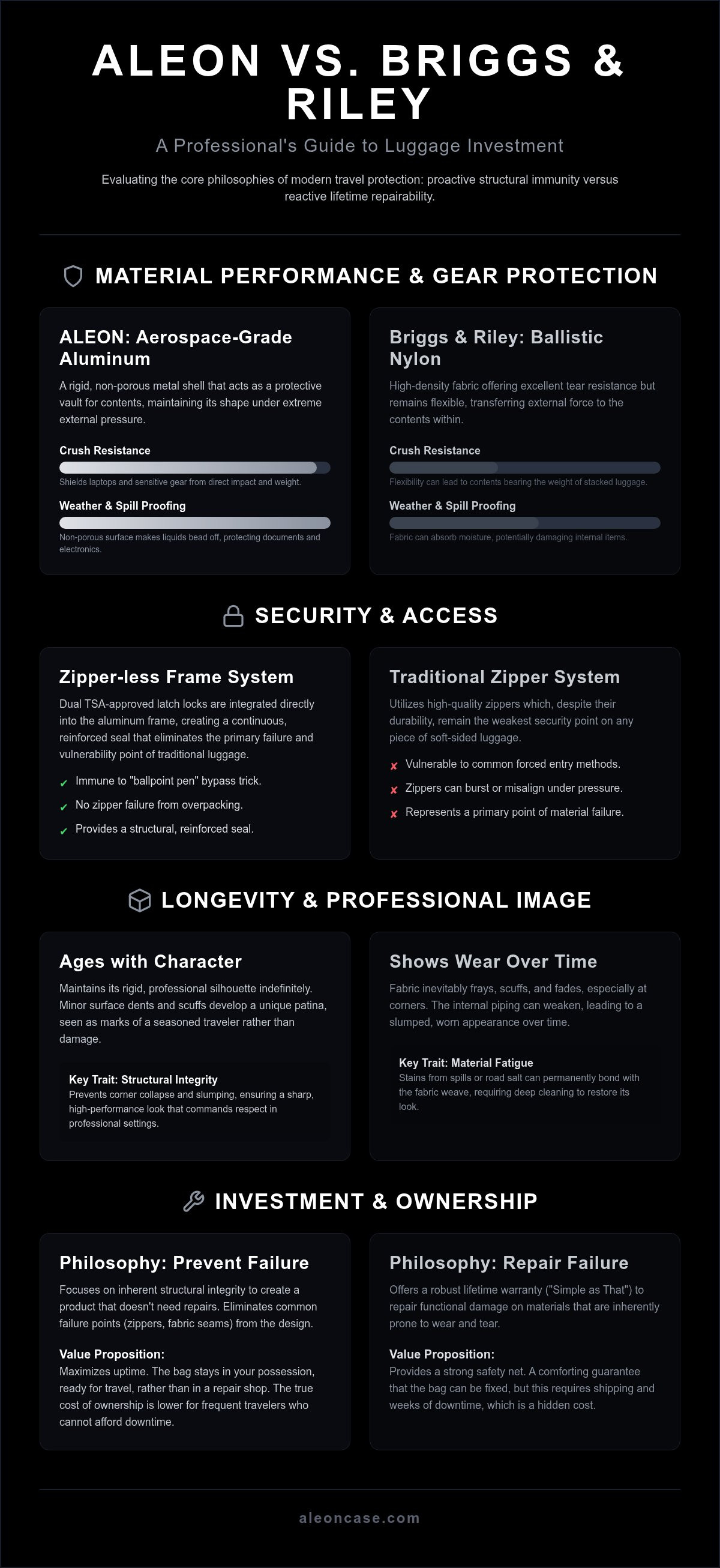
Choosing between Ballistic Nylon and aerospace-grade aluminum is a decision between flexibility and absolute fortification. Briggs & Riley utilizes high-density synthetic weaves that offer impressive tear resistance and a traditional professional aesthetic. However, ALEON takes a different path by utilizing structural metal. Aerospace-grade aluminum is a material designed for high-stress environments. This rigidity provides a literal shield for your belongings. While fabric yields under the weight of other bags in a cargo hold, aluminum remains unyielding and maintains its shape regardless of external pressure.
The crush factor is where the aleon vs briggs and riley comparison becomes most apparent for professionals carrying electronics. Soft-shell bags transfer external force directly to the contents. If a heavy trunk is stacked atop a nylon bag, your laptop screen bears that weight. Selecting aluminum luggage creates a protective vault. It's also entirely non-porous. Heavy rain or accidental spills simply bead off the surface rather than soaking into the fibers and potentially damaging your documents or gear.
Impact Resistance and Protection for Sensitive Gear
Security and Aesthetics: Beyond the Traditional Zipper
Zippers are the weakest point of any bag. Even the highest quality zippers used by Briggs & Riley can be bypassed by the "ballpoint pen trick" in seconds. This vulnerability is eliminated in a zipper-less design. ALEON uses a dual-latch system where TSA-approved locks are integrated directly into the metal frame. This creates a continuous, reinforced seal. Following the U.S. Department of Transportation baggage tips regarding secure locking is easier when the security is a structural component of the bag itself. For those prioritizing safety, aluminum luggage is the logical standard for secure professional transit.
The Professional Impression: Minimalist Aluminum in the Boardroom
The visual language of your gear matters during high-stakes meetings. Comparing aleon vs briggs and riley reveals two distinct philosophies. Heritage fabric bags suggest a traditional approach to travel. In contrast, minimalist metal projects an image of precision and technical savvy. It signals that you value organization and high-performance tools. Aluminum doesn't just look professional; it stays that way. Fabric inevitably frays and fades at the corners. Aluminum ages with a unique patina through minor surface dents that reflect a life of travel without compromising structural integrity. These marks are viewed as character rather than damage. If you want a bag that commands respect, invest in a case that maintains its professional silhouette for decades.
Evaluating the Investment: Lifetime Warranties vs. Structural Integrity
The debate regarding aleon vs briggs and riley often centers on the lifetime warranty. Briggs & Riley is famous for its "Simple as That" guarantee, which promises to repair any functional damage to your bag. It's a robust safety net for materials that are inherently prone to wear, such as nylon and plastic. ALEON operates on a different philosophy: building a bag that doesn't need to be sent back for repairs. A warranty is only valuable if you have the time to use it. Shipping a bag for fabric stitching or zipper replacement often results in weeks of downtime, forcing you to rely on inferior backups or purchase temporary gear.
The true cost of ownership includes this lost time. ALEON focuses on inherent structural integrity by using aerospace-grade aluminum that doesn't fray, tear, or puncture. By eliminating zippers and using a reinforced metal frame, the primary failure points of traditional luggage are removed. This approach prioritizes a seamless experience where the bag remains in your hands, not in a repair shop. Your choice should depend on your "downtime" tolerance; if you travel weekly, a bag that stays functional is more valuable than a bag that is easily fixed.
Choosing Your Travel Companion: Which Brand Matches Your Journey?
For the frequent domestic commuter, the 16-inch underseat luggage is a game-changer. It provides the professional presence of a metal case while fitting into spaces that soft-shell bags often struggle to navigate. International professionals will find the 21-inch aluminum carry-on superior to expandable fabric options. While fabric bags can bulge and exceed strict international overhead bin dimensions, the fixed aluminum frame ensures a predictable, compliant footprint every time you board.
Beyond the technical specs, ALEON supports solar energy initiatives with every sale. This commitment to social responsibility serves as a meaningful tie-breaker for the modern traveler who values both high-performance engineering and a positive global impact.
Elevate Your Professional Standard in 2026
The choice between aleon vs briggs and riley ultimately rests on your priorities as a modern traveler. While heritage nylon provides a flexible tradition, the shift toward aerospace-grade aluminum reflects a need for absolute security and structural immunity. You've seen how frame-integrated locks and rigid shells protect your digital assets from the physical stresses of global transit. It's a transition from a bag that can be repaired to a bag that is built to endure.
Investing in gear that eliminates common failure points like zippers ensures your focus remains on your professional objectives. With aerospace-grade durability and integrated TSA-approved locks, you can travel with the quiet confidence that your equipment is secure. We offer global shipping and professional support to ensure your transition is seamless. Explore the ALEON Aluminum Collection for Your Next Journey and embrace a travel companion that matches your ambition.
Frequently Asked Questions
Is aluminum luggage heavier than Briggs & Riley nylon bags?
Aluminum luggage generally carries more base weight than a comparable nylon bag. While ballistic nylon is lightweight, the structural rigidity of aerospace-grade aluminum justifies the difference for many professionals. The protection of a metal frame often offsets the few extra pounds by preventing damage to heavy internal electronics, making it a logical trade-off for high-stakes travel.
Do aluminum suitcases dent more easily than soft-shell luggage?
Aluminum doesn't necessarily dent easier, but it records impacts differently than fabric. When comparing aleon vs briggs and riley, remember that nylon flexes and transfers force directly to your belongings. Aluminum absorbs that energy by denting, which keeps the interior safe. These minor surface marks are considered a patina of travel rather than a failure of structural integrity.
Can ALEON luggage be repaired if it gets damaged during flight?
ALEON products are designed for longevity and can be serviced if functional components like wheels or TSA-approved locks fail. The brand offers a 10-year limited warranty covering materials and workmanship for the original purchaser. While cosmetic scratches are expected with metal gear, the focus remains on maintaining a case that stays operational without the frequent stitching repairs required by fabric.
Which brand is better for protecting laptops and camera equipment?
ALEON is the superior choice for high-value electronics and optics. The crush factor of soft-shell bags means that external pressure is passed directly to your gear. An All Aluminum Camera Case or laptop case provides a rigid, non-porous vault that protects against both impact and environmental moisture. This structural immunity is something even the highest-grade ballistic nylon cannot replicate.


