


An aluminum briefcase is not just a piece of luggage; it's a high-performance tool that demands the same precision maintenance as a luxury timepiece. You likely invested in aerospace-grade aluminum for its legendary durability and minimalist aesthetic, yet it's natural to worry about the first deep scratch or a stiffening lock. Knowing how to maintain an aluminum briefcase ensures that your investment retains its showroom-quality shine and mechanical integrity for a lifetime of travel.
We will explore the specific cleaning agents that protect the anodized finish, the secrets to keeping TSA locks fluid, and how to embrace the unique character your case develops over time. By following this professional care guide, you can transform routine maintenance into a ritual of longevity. Your briefcase should perform as flawlessly on its thousandth trip as it did on its first, serving as a dependable companion for every professional journey.
Key Takeaways
- Preserve the aerospace-grade finish by using pH-neutral cleaning solutions and non-abrasive cloths to prevent permanent surface damage.
- Learn how to maintain an aluminum briefcase by applying dry-film lubricants to hinges and keeping multi-directional wheel housings free of travel debris.
- Ensure the longevity of the interior organization units by identifying safe methods for removing ink spills and maintaining the high-quality lining.
- Protect the structural integrity of TSA-approved locks through regular inspections, ensuring your security systems remain responsive and reliable.
Routine Cleaning and Exterior Surface Care for Aluminum
Aerospace-grade aluminum is chosen for its exceptional strength to weight ratio; however, its surface requires a deliberate touch. Unlike soft-sided bags, premium aluminum luggage features a specialized finish that can be compromised by abrasive materials. Understanding how to maintain an aluminum briefcase starts with protecting this exterior. Avoid steel wool or stiff brushes. These tools can strip the protective layer and leave permanent dull spots on the metal. Precision matters here.
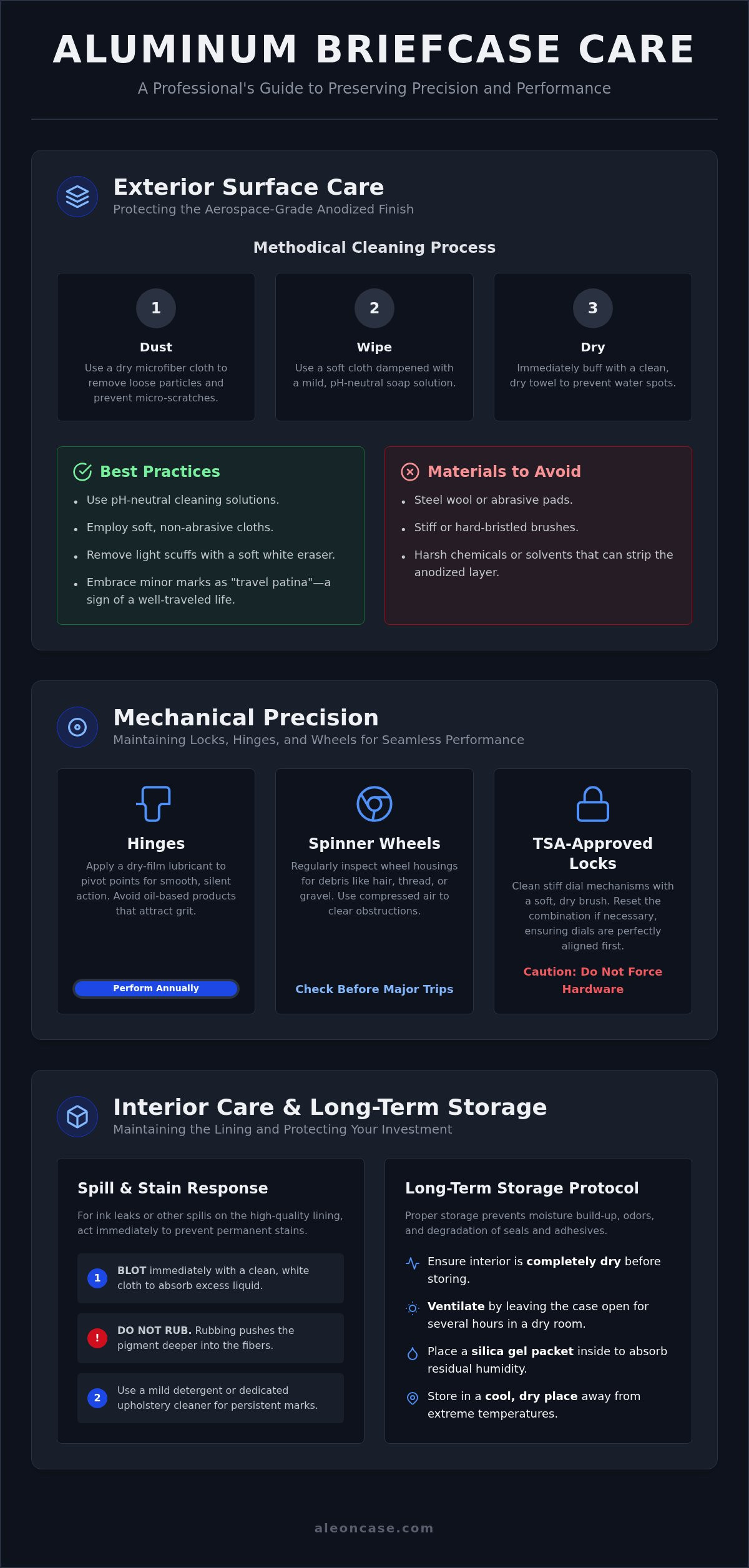
Follow this methodical cleaning process to preserve the minimalist aesthetic:
- Dust: Use a dry microfiber cloth to remove loose particles that could cause micro-scratches.
- Wipe: Use a soft cloth dampened with a mild, pH-neutral soap solution.
- Dry: Buff the surface immediately with a clean, dry towel to prevent unsightly water spots.
Distinguishing between surface scuffs and deep structural scratches is vital. A scuff is often just material from another object transferred onto your case. A scratch penetrates the metal itself. While cleaning maintains the shine, a well-traveled case will inevitably develop a patina. This wear reflects a life of professional movement. It serves as a testament to the case's enduring quality. Consistency is key.
Removing Scuffs and Managing the 'Travel Patina'
Surface marks don't have to be permanent. You can often remove light scuffs with a soft white eraser or a specialized metal polish designed for delicate surfaces. Anodized is a protective oxide layer that prevents corrosion. It's essential to avoid harsh chemicals that might dissolve this layer. By learning how to maintain an aluminum briefcase properly, you ensure it remains a sophisticated companion for years. Embrace the minor marks as part of your journey while maintaining the structural precision that defines the brand.
Mechanical Precision: Maintaining Locks, Hinges, and Wheels
Mechanical integrity is the heartbeat of any high-end case. While the exterior reflects your journey, the internal hardware ensures that journey remains seamless. To master how to maintain an aluminum briefcase, you must look beyond the surface. Hinges should move silently and without resistance. Don't use oil-based lubricants that attract grit and dust. Instead, apply a small amount of dry-film lubricant to the pivot points once a year. This keeps the action smooth without creating a messy residue that could damage your belongings.
Your wheels bear the brunt of every mile. ALEON's multi-directional spinner wheels are designed for effortless gliding, but they require occasional attention. Inspect the wheel housings for hair, thread, or gravel that can impede rotation. A quick blast of compressed air usually clears the track. Similarly, check the grooves of the aluminum shell. Removing debris from these channels ensures the case closes with a perfect, weather-resistant seal every time. If you travel frequently, these small checks preserve the refined performance of your aluminum luggage.
Troubleshooting and Resetting TSA-Approved Locks
Security depends on precision. If your TSA-approved locks feel stiff, use a soft, dry brush to clean the dial mechanism. This removes microscopic dust that causes sticking. If the mechanism remains stubborn, you might need to reset the combination. Ensure the dials are aligned perfectly before depressing the reset button. If hardware feels loose or significantly misaligned, contact professional support rather than forcing the metal. Forcing a lock can compromise the aerospace-grade integrity you rely on for protection.
Interior Organization and Long-Term Storage Solutions
The interior of a professional briefcase is a high-traffic environment that requires specialized attention. While the exterior is rugged, the high-quality lining and organization units demand a gentler approach. If you discover an ink leak or a spill from a commute, act immediately. Blot the area with a clean, white cloth to absorb the liquid. Don't rub the spot; this pushes the pigment deeper into the fibers. Use a mild detergent solution or a dedicated upholstery cleaner for persistent marks. Mastering how to maintain an aluminum briefcase means ensuring your documents and electronics remain in a pristine, professional environment.
Aluminum provides an excellent barrier, but it can trap residual humidity if the case is stored while damp. Before placing your case in long-term storage between business trips, ensure the interior is completely dry. Learning how to maintain an aluminum briefcase involves understanding that moisture is the enemy of any sealed metal environment. Open the case in a ventilated room for several hours. Placing a small silica gel packet inside helps absorb any lingering moisture that could lead to odors. Store the unit in a cool, dry place away from extreme temperature fluctuations. It's a small step that preserves the integrity of the rubber gaskets and internal adhesives.
Protecting Your Investment During Transit
External protection often begins with how you pack the interior. Position heavy electronics securely within the designated organization units to prevent them from shifting. This prevents internal denting from the inside out during turbulent transit. When checking your case, consider using a soft luggage cover to mitigate conveyor belt scuffs. For cases engineered with these protective needs in mind, explore the ALEON aluminum luggage collection. These thoughtful habits ensure your briefcase remains a reliable, showroom-quality companion for decades.
Investing in a Legacy of Travel
Learning how to maintain an aluminum briefcase is a commitment to enduring quality. By prioritizing pH-neutral cleaning and precision lubrication, you protect the aerospace-grade aluminum that defines your professional image. These simple rituals ensure that your TSA-approved security systems and multi-directional wheels remain as responsive as the day they were crafted. While travel will inevitably leave its mark, consistent care transforms these signs of wear into a distinguished patina of success. It's a small investment in your professional future that pays dividends with every journey.
Just as you invest in the longevity of your equipment, protecting your legal rights is a vital part of safeguarding your professional future; for expert counsel on employment or personal injury matters, visit Leon Legal Group.
Your journey deserves a companion built for the long haul. Shop the ALEON Collection of Premium Aluminum Briefcases to experience the intersection of lifetime durability and minimalist design. Embrace every mile with the confidence that your equipment is prepared for whatever lies ahead.
Frequently Asked Questions
Can I use Windex or glass cleaner on my aluminum briefcase?
You shouldn't use Windex or standard glass cleaners on your aluminum briefcase. These products often contain ammonia or harsh chemicals that can strip the protective anodized layer over time. Instead, stick to a mixture of warm water and a few drops of pH-neutral dish soap. This approach effectively removes fingerprints and grime without risking the aesthetic integrity of the metal's finish.
How do I remove a dent from an aluminum suitcase?
Removing a dent from an aluminum suitcase requires a delicate touch and is often best left to professionals. While minor impressions can sometimes be carefully pressed back from the inside using a rubber mallet and a soft cloth, forcing the metal can lead to structural cracking. Many owners choose to view these marks as a travel patina that documents their professional success and journey.
Is it possible to buff out scratches on aerospace-grade aluminum?
You can't buff out deep scratches because the anodized finish is a permanent part of the metal's surface. Attempting to sand or buff the area will likely create a dull spot that contrasts with the rest of the case. For light surface scuffs, a soft white eraser is often effective. Learning how to maintain an aluminum briefcase involves accepting that deeper scratches become part of its unique character.
How often should I lubricate the wheels and hinges of my ALEON case?
You should lubricate the wheels and hinges of your ALEON case approximately once a year. If you travel through harsh environments like salt air or dusty climates, you might need to do this more frequently. Always use a dry-film lubricant rather than oil-based products. This prevents debris from sticking to the moving parts and ensures your multi-directional wheels continue to glide silently across terminal floors.


