


A camera bag is a container, but a premium hard case for dslr camera and lenses is a structural fortress. You've likely felt that familiar surge of anxiety while watching a baggage handler toss your gear or worrying if a simple zipper provides enough security in a crowded international terminal. It's a common frustration for elite photographers who find that standard plastic utility cases look out of place in a professional boardroom or a luxury hotel lobby. You shouldn't have to choose between the rugged engineering your equipment requires and the sophisticated style your career demands.
This guide explores why aircraft-grade aluminum is the pinnacle of protection for your professional photography gear. We'll examine how anodized, torsion-resistant shells outperform plastic alternatives and provide a seamless travel experience through TSA checkpoints. You'll learn about the latest May 2026 FAA regulations for lithium-ion batteries and discover why the tactile "click" of a zipperless seal is the ultimate reassurance for your investment. From the $890 Aleon 21 inch carry-on to the expansive 30 inch Macro Traveler, we'll help you find a case that is built for life. This is where uncompromising safety meets executive elegance.
Key Takeaways
- Understand why aircraft-grade aluminum provides the structural integrity and torsion resistance required to shield delicate optical elements from heavy stacking pressure.
- Learn the security benefits of a zipperless, latch-and-seal system when choosing a hard case for dslr camera and lenses to prevent unauthorized access.
- Discover how to navigate international airline weight restrictions and TSA regulations while maintaining a seamless travel experience with your professional gear.
- Identify the specific design features, from reinforced corners to anodized finishes, that distinguish a "buy it for life" investment from temporary utility cases.
What is a Hard Case for DSLR Camera and Lenses?
A hard case for dslr camera and lenses is a rigid, impact-resistant enclosure designed to safeguard delicate optical and electronic components. It is a precision-engineered environment for high-value optics. While a traditional camera bag relies on soft fabrics and padding, a hard case provides a structural fortress that absorbs kinetic energy. Its primary mission is the total elimination of internal movement. When your gear is in transit, even a minor shift can lead to optical misalignment or scratched elements. A hardside case ensures that external pressure never reaches the fragile lens barrels or the sensitive camera body inside.
Choosing a "hard" shell over a soft one is a decision rooted in material physics. Soft bags are inherently susceptible to compression. If a heavy suitcase is stacked on top of a fabric bag, the force is transferred directly to your equipment. An aircraft-grade aluminum shell resists this torsion. It maintains its shape under significant weight, providing a level of security that fabric simply cannot match. For the professional photographer, this isn't just about storage; it's about maintaining the mechanical integrity of their most essential tools through a "buy it for life" philosophy.
The Evolution of Camera Protection
The history of gear transport has moved from basic leather satchels to modern aerospace-grade aluminum. Early professionals accepted the limitations of canvas and wood, but the rise of international air travel demanded a more robust solution. Modern mirrorless and DSLR sensors are more sensitive than the film cameras of the past. They require higher vibration dampening to protect internal stabilizers and high-resolution glass. This evolution reflects a shift from simple storage to high-velocity travel security, where the case is as much a piece of engineering as the camera itself.
Essential Components of a Professional Case
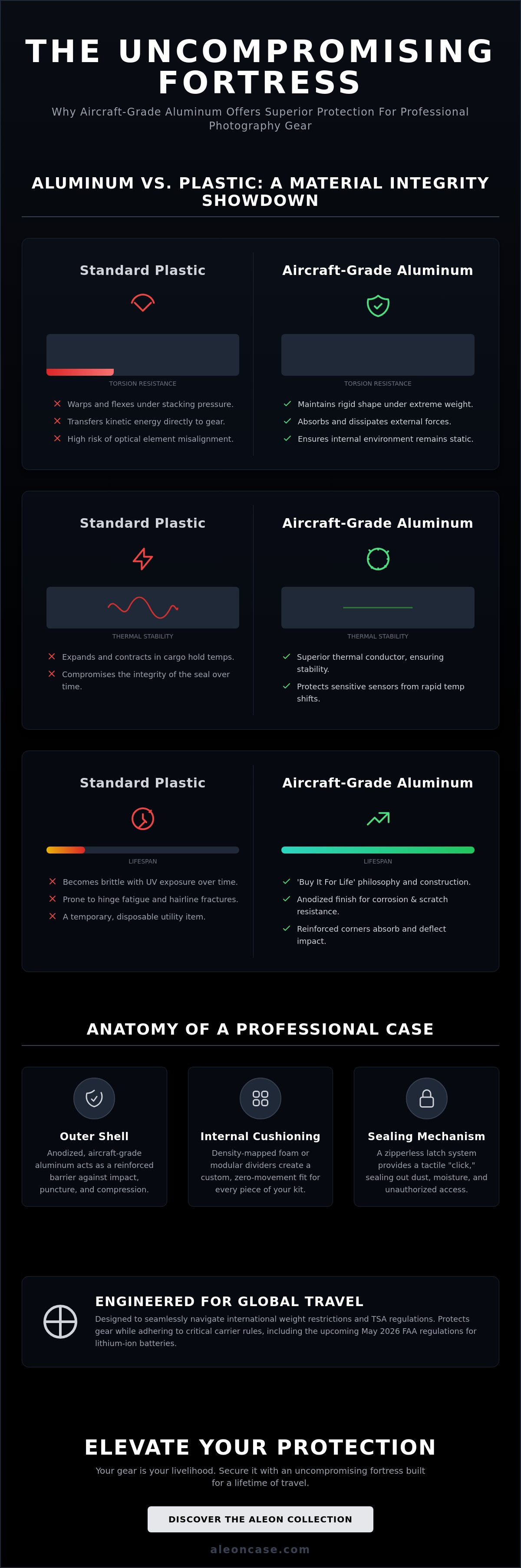
A professional-grade case is built on three pillars of engineering. The outer shell acts as a reinforced barrier against impact and puncture. It is typically crafted from anodized aluminum to ensure a finish that is both durable and sophisticated. Inside, internal cushioning uses density-mapped foam or modular dividers to create a custom fit for every lens. Finally, the sealing mechanism is critical. Instead of a vulnerable zipper, a professional case uses a latch system that creates a tactile "click" when closed. This seal keeps out dust, moisture, and fine particulates that could ruin a shoot. It's a seamless blend of functional benefit and aesthetic refinement.
Aluminum vs. Plastic: Which Hard Case Offers Superior Protection?
While plastic is often cited as the industry standard, aircraft-grade aluminum offers a level of material integrity that resin cannot match. A hard case for dslr camera and lenses must do more than just survive a drop. It must resist structural torsion. When multiple bags are stacked in a cargo hold, plastic shells can warp or flex. This flex transfers kinetic energy directly to your lenses, potentially misaligning delicate optical elements. Aluminum maintains its shape under heavy stacking pressure, ensuring the internal environment remains static and secure.
Temperature fluctuations are another critical factor for the traveling professional. Cargo holds reach extreme temperatures that cause plastic to expand or contract, which can compromise the seal over time. Aluminum provides superior thermal stability. It acts as a consistent barrier, protecting sensitive electronics from the rapid shifts experienced during long-haul flights. This is vital when adhering to TSA regulations for camera gear, which require careful handling of lithium-ion batteries and delicate sensors. The metal shell reflects heat and provides a more stable microclimate for your equipment.
The Engineering of Aircraft-Grade Aluminum
High-grade aluminum alloys are selected for their exceptional strength-to-weight ratio. These materials don't just look sophisticated; they're engineered for permanence. Reinforced corners are integrated into the design to act as crumple zones. They absorb high-impact forces that would otherwise shatter a plastic hinge or crack a resin shell. Anodized finishes provide a deep layer of corrosion resistance. This ensures the case remains as functional as it is beautiful for decades, moving away from the disposable nature of modern luggage.
The Plastic Pitfall: When Resin Fails
Resin cases often suffer from hinge fatigue after years of repeated use. Constant UV exposure makes polypropylene brittle, eventually leading to hairline fractures that compromise the case's integrity. To compensate for material weakness, plastic cases often require bulky external ribs. These ribs increase the exterior footprint while reducing actual internal storage capacity. Aluminum bypasses these flaws. It offers a slim, high-capacity profile that reflects a "buy it for life" philosophy. If you're ready to upgrade your equipment's protection, consider the refined engineering of an aluminum camera case that balances rugged security with executive style.
Key Features to Evaluate in a Camera Hard Case
Selecting a hard case for dslr camera and lenses requires a focus on precision components that go beyond basic storage. While most manufacturers rely on standard zippers, a professional-grade case utilizes a zipperless latch-and-seal system. Zippers are inherently vulnerable to punctures and mechanical failure. A latch system provides a structural lock that reinforces the case's torsion resistance. This design ensures that the seal remains airtight and dustproof, protecting your sensors from the fine particulates found in diverse shooting environments. It's a functional benefit that offers immediate peace of mind.
Integrated security is the hallmark of an elite case. Relying on flimsy external padlocks is a security risk that often draws unwanted attention. Built-in, TSA-approved locks provide a streamlined profile and enhanced protection. These locks are integrated directly into the aluminum shell, making them significantly harder to bypass than traditional hanging locks. This integration facilitates a seamless transition through security checkpoints, as agents can inspect the contents without damaging the case. It's a sophisticated solution for the high-frequency traveler who values both time and equipment safety.
Internal Architecture and Customization
The interior of your case must be as engineered as the exterior. High-density, pluck-and-pull foam allows for a bespoke fit that cradles every prime lens and camera body. This precision fit is essential for dampening micro-vibrations during transit, which can loosen internal lens elements over time. For photographers who frequently change their kit, modular padded dividers offer flexibility without sacrificing protection. A well-organized layout places heavier zoom lenses near the wheels to maintain a low center of gravity. Integrated lid organizers further refine the space, providing dedicated compartments for SD cards, filters, and spare batteries.
Security and Airport Logistics
Aluminum offers a hidden technical advantage: RF shielding. This material property helps protect sensitive electronic components from electromagnetic interference during airport scanning and transit. The tactile "click" of the latches serves as a sensory confirmation that the environment is sealed. Ergonomics also play a vital role in professional logistics. Multi-directional spinner wheels and telescopic handles allow for effortless movement through crowded terminals. These features ensure that your mobile studio is as agile as it is secure, reflecting a commitment to quality that lasts a lifetime.
Flying with High-End Gear: A Logistics Guide
Air travel is the ultimate stress test for any hard case for dslr camera and lenses. Navigating the logistics of international terminals requires a case that balances rigid protection with strict airline dimensions. Most global carriers adhere to specific size restrictions for overhead bins, making the choice of a 19" or 21" case critical for a seamless journey. By selecting a case designed for these standards, you ensure your equipment stays within reach throughout the flight, avoiding the unpredictable handling of checked baggage.
Weight management is a primary concern for the mobile professional. While aircraft-grade aluminum is celebrated for its strength-to-weight ratio, high-end glass and camera bodies add up quickly. It's essential to audit your kit before departure, prioritizing versatile zoom lenses over multiple primes if weight limits are tight. If a flight requires checking your gear, the structural integrity of an aluminum shell becomes your only true defense. The reinforced corners and torsion-resistant design provide the necessary security to survive high-impact sorting systems.
Mastering the Carry-On Game
The 19" International Carry-On and 21" Classic Carry-On represent the "sweet spot" for professional photographers. These dimensions are accepted by the vast majority of international airlines, providing a reliable footprint for your mobile studio. To maximize internal space, utilize high-density foam that is precisely cut to the dimensions of your gear. This prevents shifting and optimizes every square inch of the interior. Investing in a dedicated aluminum camera case ensures that your setup remains organized and protected from the micro-vibrations inherent in air travel.
Insurance and Documentation
Professional logistics extend beyond physical protection. For international assignments, carrying a Carnet de Passages or a detailed equipment registry is vital for clearing customs without delays. A rugged aluminum case does more than shield your gear; it satisfies the "proper packaging" clauses found in most high-value insurance policies. Using a professional case also simplifies the high-value declaration process at the check-in counter, as it communicates a level of care and value that agents immediately recognize. This authoritative presence reflects your status as a professional who values substance over trends. If you are preparing for your next global commission, explore the Aleon collection of professional camera cases to secure your legacy.
Climate control is the final piece of the logistics puzzle. Moving from a pressurized, cold cargo hold to a humid tropical environment can cause condensation to form inside lens elements. The airtight seal of an aluminum case helps mitigate these rapid shifts by maintaining a stable internal environment. This allows your gear to acclimate slowly, preventing moisture buildup that could lead to fungal growth or electronic failure. It's a level of detail that ensures your equipment is ready to perform the moment you land.
The Aleon Camera Case: Where Rugged Meets Refined
The Aleon design philosophy is rooted in the belief that utility does not require the sacrifice of elegance. For the modern professional, a hard case for dslr camera and lenses should be more than a utilitarian box. It is a reflection of your standards and a commitment to your craft. While others settle for plastic containers that look like industrial shipping crates, Aleon provides a sophisticated alternative. Our cases are built from aircraft-grade aluminum, offering a presence that commands respect in a high-stakes client meeting or a luxury hotel lobby.
Technical excellence is the foundation of our brand. Every Aleon case features reinforced corners and a torsion-resistant frame that ensures your equipment remains undisturbed by external forces. We use high-density foam that is specifically engineered to absorb impact and eliminate internal movement. Sustainability is also a core pillar of our manufacturing process. Our production facilities utilize solar energy initiatives to reduce our environmental footprint, ensuring that our "buy it for life" philosophy extends to the planet as well. This isn't fast fashion; it's a permanent solution for the discerning photographer.
Uncompromising Engineering
Aleon cases are defined by their seamless closure system. By eliminating zippers, we've removed a primary point of failure. The result is a more secure, weather-resistant environment for your optics. Our reset-capable TSA locks offer tactile superiority, providing a smooth, reliable mechanism that protects your investment during transit. This engineering precision is consistent across our entire line, including our aluminum carry on luggage. When you feel the weight and the precise "click" of the latches, you understand that this is a world-class tool designed for the elite traveler.
The Aesthetic of Authority
In a professional environment, image matters. Arriving at a shoot with gear housed in a worn plastic case can project a different message than intended. The minimalist, timeless look of our anodized aluminum finish provides an aesthetic of authority that aligns with your professional status. It's a clean, intentional design that values substance over fleeting trends. This case doesn't just protect your camera; it protects your reputation. It remains calm under pressure, much like the professional behind the lens. Whether you're navigating a busy terminal or setting up in a studio, the case reflects a quiet, understated elegance that suggests quality does not need to shout to be noticed.
Investing in an Aleon means choosing a product that is built to last a lifetime. Our "Buy it for Life" guarantee isn't just a marketing slogan; it's a commitment to permanence and reliability. You won't need to worry about hinges fatiguing or shells cracking after a few years of heavy use. To secure your gear with the pinnacle of protection, Explore the Aleon Camera Case Collection and discover the last hard case for dslr camera and lenses you'll ever need.
Secure Your Creative Legacy
Professional photography is an investment in precision, and your transport solution should reflect that same standard. We've explored how aircraft-grade aluminum provides the torsion resistance and thermal stability that plastic resins can't match over a lifetime of use. From the tactile reassurance of a zipperless seal to the seamless logistics of integrated TSA-recognized locks, the right equipment case is a foundational tool for the global traveler. It protects your sensors from micro-vibrations and your reputation from the unrefined look of standard utility plastic.
Choosing a hard case for dslr camera and lenses isn't just about utility; it's a statement of professional authority. Every Aleon purchase also supports a global solar initiative, ensuring your commitment to quality aligns with a broader vision for sustainability. You've worked hard to curate your kit. Now, give it the structural fortress it deserves. It's time to move beyond temporary solutions and embrace a "buy it for life" philosophy that safeguards your creative vision.
Invest in Aircraft-Grade Protection for Your Gear
Travel with unwavering confidence, knowing your career's most essential tools are encased in the pinnacle of security.
Frequently Asked Questions
Is an aluminum camera case heavier than a plastic one?
Aluminum cases are slightly heavier than their plastic counterparts, but they offer a significantly higher strength-to-weight ratio. This extra weight is the result of using a denser, more rigid material that provides superior torsion resistance. For the professional traveler, the trade-off is a case that maintains its structural integrity under heavy stacking pressure, which is something a lightweight plastic resin cannot guarantee. It is a choice for those who prioritize permanent protection over minimal weight.
Can I take my Aleon camera case as a carry-on on international flights?
Aleon's 19 inch and 21 inch camera cases are designed to meet most international carry-on standards. These dimensions ensure your gear stays in the overhead bin rather than the cargo hold. Always verify specific airline dimensions before departure, as regional carriers may have stricter limits. Using a high-end hard case for dslr camera and lenses allows you to keep your most valuable optics within reach throughout your journey, providing a seamless travel experience.
Do aluminum camera cases dent easily?
Aircraft-grade aluminum is designed to absorb impact by denting rather than cracking or shattering. While a severe blow might leave a mark on the shell, the internal contents remain protected because the material doesn't compromise its structural seal. These minor character marks are often viewed as a testament to the case's history of protection. Unlike plastic, which can become brittle and fracture over time, aluminum remains permanent and reliable throughout its life.
Are Aleon cases waterproof or just water-resistant?
Aleon cases are engineered to be highly water-resistant, utilizing a high-performance gasket seal that protects against rain, snow, and dust. While they aren't designed for deep-sea submersion, the zipperless closure system provides a superior barrier against environmental elements compared to traditional bags. This seal is essential for preventing moisture from entering the case during rapid transitions between different climates or during sudden downpours on location. It ensures your electronics remain in a dry, stable environment.
How do I customize the foam for my specific DSLR and lenses?
Customization is achieved through high-density, pluck-and-pull foam inserts that allow you to create bespoke cavities for your gear. You simply trace the outline of your camera body and lenses, then remove the corresponding foam cubes. This ensures a snug fit that prevents internal movement and dampens micro-vibrations during transit. For a professional layout, keep heavier items like telephoto lenses near the center of the case to maintain stability and balance during movement.
What happens if the TSA needs to inspect my locked camera case?
TSA agents use a universal master key to open the integrated locks on your Aleon case without causing damage. Our cases feature TSA-recognized locks that are built directly into the aluminum shell for a seamless, secure profile. This system allows for a smooth inspection process at the airport while keeping your equipment safe from unauthorized access by others. It eliminates the need for external padlocks that can be easily clipped or lost during transit.
Why is aircraft-grade aluminum better than standard metal for camera gear?
Aircraft-grade aluminum, specifically 5052-grade alloy, offers superior corrosion resistance and structural rigidity compared to standard metals. It's engineered to withstand the high-stress environments of aviation, making it the ideal shield for delicate electronic components. This material doesn't warp or degrade, ensuring that your hard case for dslr camera and lenses remains a "buy it for life" investment. It provides a level of manufacturing authority that standard aluminum or thin-walled metals simply cannot match.
Does the aluminum shell help with temperature regulation for my batteries?
The aluminum shell acts as a thermal barrier, helping to regulate internal temperatures and protect lithium-ion batteries from extreme fluctuations. Metal reflects radiant heat more effectively than plastic, which can trap heat and cause internal temperatures to spike. This thermal stability is crucial when traveling through diverse environments, as it helps maintain battery health and prevents the rapid discharge often caused by extreme cold or intense heat. It ensures your gear is ready to perform the moment you land.


