


The most expensive luggage you'll ever buy is the one you're forced to replace every two years. While many travelers view a cracked plastic shell or a snapped wheel as an unavoidable rite of passage, these issues are actually the result of specific design compromises. Understanding the common luggage failure points is the first step toward reclaiming your peace of mind during transit. Whether it's a zipper that splits at the gate or a telescopic handle that loses its rigidity, these frustrations are symptoms of an industry that often prioritizes cheap manufacturing over structural integrity.
You deserve a travel companion that works as hard as you do. We understand that for a professional, a suitcase is more than just a container; it's a shield for your electronics and a mobile office. This guide identifies the engineering flaws found in standard cases and explains how to choose a "buy-it-for-life" solution. We'll explore why replacing fragile components with aerospace-grade aluminum and frame-based closures is the only logical choice for the serious traveler. From our 21" aluminum carry-on to our 30" aluminum check-in case, we'll show you how to invest in equipment that survives the rigors of the road.
Key Takeaways
- Identify the three most vulnerable components, zippers, wheels, and handles, to understand exactly where standard gear is likely to fail.
- Learn how high-velocity baggage systems target common luggage failure points and why structural integrity is non-negotiable for frequent travelers.
- Discover why aerospace-grade aluminum provides superior protection compared to plastic shells by absorbing impact through structural memory.
- Explore how the zipperless revolution and dual-latch frames eliminate the most frequent cause of catastrophic suitcase failure.
- Shift your perspective from disposable travel gear to enduring investments like all-aluminum cases designed for professional-grade longevity.
The Anatomy of Failure: Identifying Common Luggage Failure Points
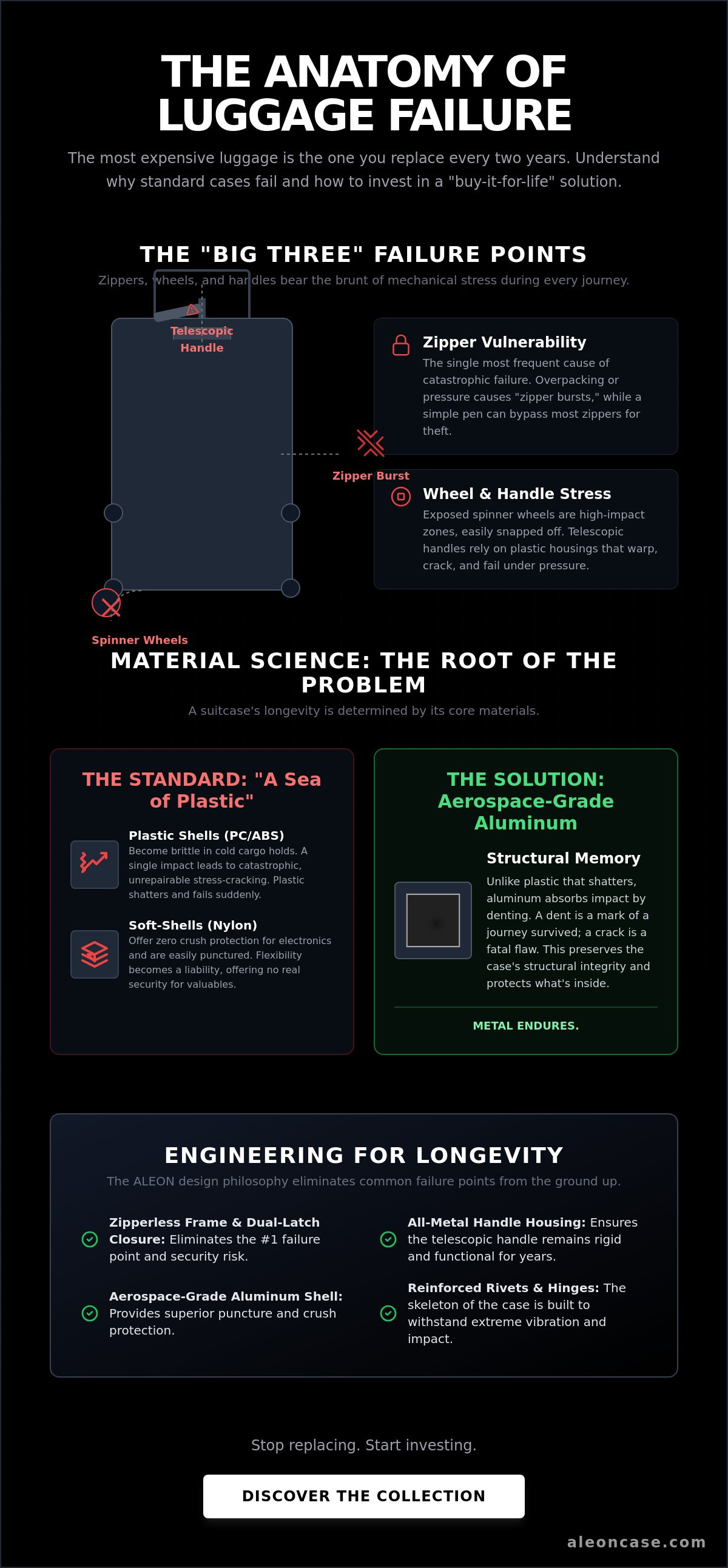
Standard luggage often fails because it's designed for the showroom, not the tarmac. When we examine common luggage failure points, we focus on the "Big Three": zippers, wheels, and telescopic handles. These components bear the brunt of mechanical stress during every journey. Luggage fatigue is the progressive weakening of structural components due to repeated impact and vibration. Understanding the Anatomy of Luggage reveals why these specific zones are targeted by modern logistics systems.
To visualize the physical toll taken on your gear during a typical flight, observe the reality of modern baggage handling:
The physics of transit are unforgiving. A suitcase may endure 10-foot drops or intense conveyor jams that apply hundreds of pounds of pressure to its weakest links. While many brands rely on a "Sea of Plastic," using polycarbonate or ABS shells, these materials are particularly vulnerable. In the sub-zero temperatures of a high-altitude cargo hold, plastic becomes brittle. A single impact at these temperatures often leads to catastrophic stress-cracking that renders the case unrepairable.
The Zipper Vulnerability: A Single Point of Failure
Coil zippers are the most frequent cause of a trip ending in disaster. They are the primary reason a suitcase becomes unusable mid-journey. A "zipper burst" occurs when overpacking or external pressure forces the teeth apart, leaving your belongings exposed. Beyond structural failure, zippers present a massive security risk. A simple ballpoint pen can bypass almost any luggage zipper in seconds, allowing unauthorized access without leaving a trace of entry.
Wheel and Handle Stress: The High-Impact Zones
Wheels and handles are the high-impact zones that dictate a case's lifespan. Exposed spinner wheels offer convenience but are highly susceptible to being snapped off during rough handling. Recessed wheels provide better protection but often lack the maneuverability professionals require. Similarly, the housing for telescopic handles is a critical failure point. While many brands use plastic sleeves that warp or crack, all-aluminum luggage utilizes metal housing to ensure the handle remains rigid and functional for years.
Material Science: Why Construction Methods Dictate Longevity
The choice of material determines whether a suitcase is a temporary purchase or a long-term asset. Understanding common luggage failure points requires a deep dive into the materials themselves. While we previously discussed mechanical failures, the shell often dictates the survival of your internal cargo. Aerospace-grade aluminum stands apart from the standard "Sea of Plastic" due to its unique physical properties. You can explore the durability of our aluminum luggage collection to see these engineering principles in action.
Unlike polycarbonate or ABS, aluminum possesses what engineers call structural memory. When a plastic shell hits a sharp corner at high velocity, it often suffers a catastrophic crack. Aluminum behaves differently. It absorbs energy by denting rather than shattering. A dent is a badge of travel that preserves the case's structural integrity, whereas a crack in plastic is an irreparable breach. This distinction is critical when evaluating common luggage failure points across different price tiers.
Hard Shell vs. Soft Shell: The Protection Gap
Soft-shell bags offer flexibility, but that flexibility is a liability for professional equipment. High-denier nylon might resist some abrasion, but it provides zero crush protection for laptops or high-end camera gear. A sharp object can easily puncture fabric, while metal luggage offers a literal shield against theft and environmental hazards. Hard shells made of plastic are better than fabric, but they lack the puncture resistance found in high-grade alloys. Plastic shells fail suddenly. Metal endures.
Rivets, Screws, and Hinges: The Skeleton of the Case
The longevity of a suitcase depends on the quality of its skeleton. Many manufacturers use cheap, hollow rivets that shear off under the vibration of a flight. We use reinforced rivets to ensure the frame remains square even when loaded to capacity. This precision prevents the misalignment that often causes latches to jam. A full-length piano hinge is another hallmark of durability. By distributing weight along the entire edge of the case, it avoids the concentrated stress points that cause two-hinge systems to fail. Investing in gear that prioritizes these details is the smartest way to avoid the stress of a mid-trip breakdown.
Engineering for Longevity: The Professional Solution to Travel Stress
The most effective way to eliminate common luggage failure points isn't to reinforce the zipper; it's to remove it entirely. The zipperless revolution represents a fundamental shift in travel engineering. By utilizing a dual-latch aluminum frame, we've replaced the most fragile part of a suitcase with a rigid, interlocking system. This design ensures that the case remains closed even under the extreme pressures of international transit. Discover why aerospace-grade aluminum is the standard for aluminum luggage and how it serves as the foundation for a seamless journey.
Aluminum is the material of choice for professional travel because of its exceptional strength-to-weight ratio. It provides the density required to protect sensitive electronics while remaining light enough to meet strict airline weight limits. Beyond its physical performance, aluminum is 100% recyclable. This makes it a responsible choice for the environmentally conscious professional. Our approach combines this "tank-like" build quality with a minimalist aesthetic, ensuring your gear looks as sophisticated as it is durable.
The Security Advantage of TSA-Approved Latches
Integrated TSA-approved locks on a zipperless frame offer a level of security that fabric bags simply cannot match. While zippers can be bypassed with a simple tool, a rigid aluminum frame with recessed latches provides a formidable barrier against theft. The user experience is equally refined. A one-click latch is intuitive and reliable; it eliminates the frustration of snagged fabric or broken zipper pulls that often occur at the most inconvenient moments during a trip.
Investing in a Seamless Experience
Choosing premium luggage is an investment in your professional success. High-quality gear reduces the chronic anxiety of potential equipment damage and the hidden costs of frequent replacements. We're committed to providing tools that reflect your standard of excellence. By prioritizing enduring quality and social responsibility, we ensure that your travel experience is defined by order and confidence rather than the failure of your equipment. From our 17" aluminum pilot case to our 32" check-in luggage, every piece is built to endure the rigors of the road.
Secure Your Journey with Enduring Quality
Travel is inherently unpredictable, but your equipment shouldn't be. We've examined how common luggage failure points like compromised zippers and brittle plastic shells create unnecessary stress for the professional traveler. By prioritizing materials with structural memory and replacing fragile coils with rigid frames, you shift from managing gear failure to enjoying a seamless experience. It's a strategic choice that values both form and function.
We invite you to Upgrade to an ALEON Aluminum Case and travel with confidence. Our designs utilize aerospace-grade aluminum construction and a zipperless entry system secured by dual TSA-approved locks. With multi-directional spinner wheels providing effortless movement, your focus remains on the destination rather than the luggage. Invest in a solution that reflects your standard of excellence and provides a dependable companion for every mile. Your next journey begins with the peace of mind that only true craftsmanship can provide.
Frequently Asked Questions
What are the most common reasons for luggage to break during a flight?
High-impact drops and conveyor belt snags are the primary culprits. These physical stresses target common luggage failure points such as exposed wheels, protruding handles, and weak zipper coils. When a bag falls from a height or gets caught in automated sorting systems, the sudden force often exceeds the structural limits of lower-quality materials. Investing in gear with recessed components and reinforced housing helps mitigate these risks.
Is aluminum luggage more durable than polycarbonate or plastic?
Yes, aluminum offers superior puncture resistance and structural integrity compared to plastic-based shells. While polycarbonate is designed to flex, it can crack under extreme pressure or in the sub-zero temperatures found in cargo holds. Aluminum absorbs impact through minor deformation rather than shattering. This ensures your sensitive equipment remains protected throughout the journey, even when the case is subjected to rough handling.
Can a broken zipper on a suitcase be repaired easily?
Most zipper failures, such as burst coils or missing teeth, require a full replacement of the entire zipper assembly. This process is often costly and technically difficult. A broken zipper mid-trip is a catastrophic failure that usually renders the case unusable. In contrast, a latch-based system provides a more robust and reliable closure that eliminates this specific vulnerability entirely, offering a "buy-it-for-life" solution for frequent travelers.
What happens if my aluminum luggage gets dented?
A dent in an aluminum shell is a cosmetic change that typically has no impact on the bag's structural performance. Unlike plastic, which may crack and compromise the internal safety of your belongings, aluminum maintains its protective qualities. Many seasoned travelers view these marks as a testament to the case's history and its ability to shield contents from severe handling. It’s a functional trade-off that prioritizes protection over perfection.
How do TSA-approved locks prevent luggage failure and theft?
TSA-approved locks on a zipperless frame prevent the common entry methods used to bypass standard zippers. By integrating these locks directly into the aluminum frame, the case becomes significantly harder to tamper with. This dual-latch system also ensures the case won't burst open during transit, addressing one of the common luggage failure points seen in overpacked soft-sided bags. It provides both security and structural stability in one design.
Are four-wheel spinner suitcases more prone to breaking than two-wheel versions?
Spinner wheels are more vulnerable to impact because they protrude from the case's body. However, high-quality multi-directional wheels with reinforced housing mitigate this risk. While two-wheel versions are more protected, they lack the effortless maneuverability required for professional travel. Choosing a case with high-grade, ball-bearing wheels ensures both longevity and ease of movement. It's about finding the balance between convenient mobility and robust engineering.


