


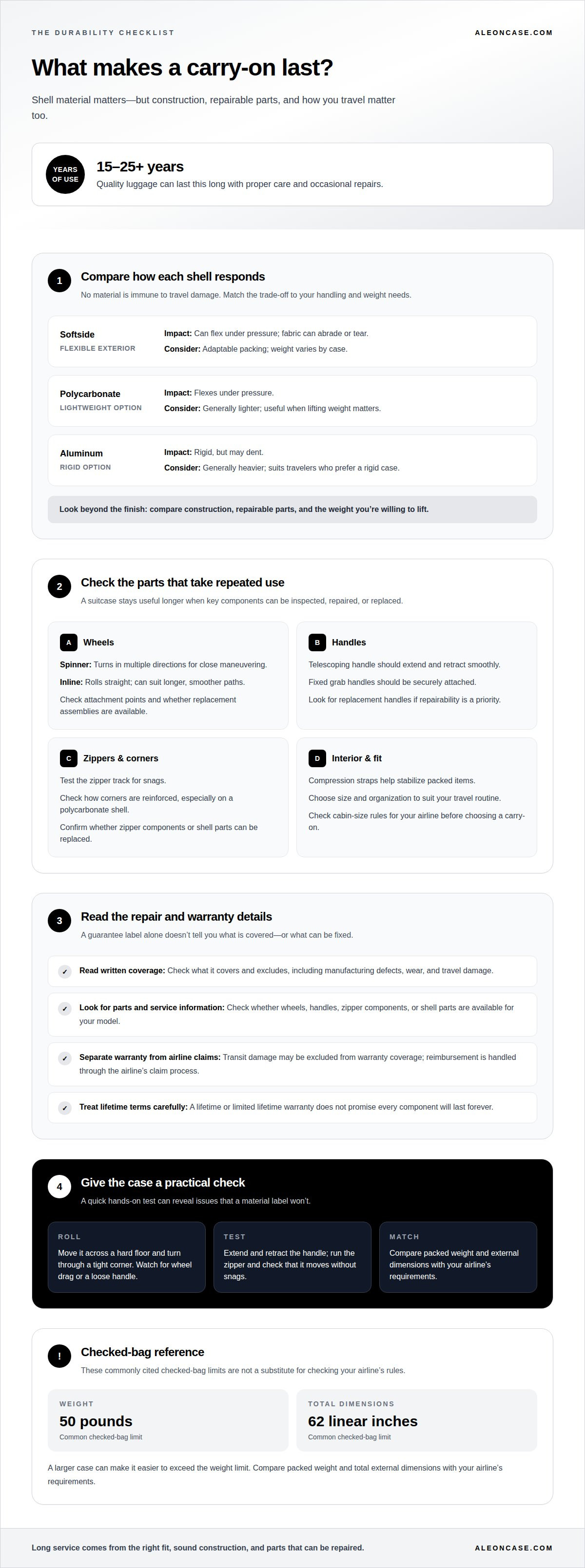
The longest-lasting carry-on isn’t defined by shell material alone. Quality luggage can last 15-25 years or more with proper care and occasional repairs, making buy-it-for-life luggage a question of construction as much as material. Hardside and softside each have trade-offs, but a suitcase’s ability to withstand use and be repaired matters just as much.
It’s reasonable to expect a dependable carry-on to handle years of travel without becoming a source of frustration. This guide explains what affects luggage lifespan, how hardside compares with softside for durability, and which repairable details deserve attention, from wheels and handles to the case itself. You’ll also find a practical way to compare options and choose a carry-on suited to your travel routine.
Key Takeaways
- Choose a shell based on the wear your trips involve, not on material alone; construction and repairability also shape long-term value.
- Look closely at wheels, zippers, and corner protection, since these details affect how a carry-on handles repeated use and repairs.
- Match your carry-on’s size and organization to your travel routine, while accounting for airline baggage limits.
- For an aluminum carry-on, ALEON offers 21-inch options, including a model with a suiter, alongside a smaller underseat case.
Is hardside or softside luggage more durable?
Neither shell wins in every situation. For frequent flyers, durability depends on handling, weight, repairs, and the type of checked bag you need.
Hard-Sided Checked Bags
Hardside suitcases create a firm barrier around packed items, but impacts can crack a shell or damage a corner. Softside bags can flex under pressure, yet fabric may abrade or tear. For frequent checked travel, consider how each case handles rough handling and whether its wheels, handles, and shell can be repaired. Quality luggage can last 15-25 or more years with proper care and occasional repairs.
Aluminum and Polycarbonate Cases
Aluminum is a rigid option that can dent on impact; polycarbonate is generally lighter and flexes under pressure. That makes weight a meaningful trade-off for travelers who lift a case often or pack close to an airline limit. Neither material is immune to damage. Compare construction and repairable parts, not just a luxury finish. Explore aluminum luggage as one material category.
| Option | Impact response | Weight consideration | Best fit |
|---|---|---|---|
| Softside | Flexible; fabric can abrade | Varies by case | Travel with adaptable packing |
| Polycarbonate | Flexes under pressure | Generally lighter | Weight-conscious packing |
| Aluminum | Rigid; may dent | Generally heavier | Rigid-case preference |
Choose by handling needs, repairability, and the weight you’re willing to lift.
No brand automatically offers a lifetime warranty. Compare the written coverage, including what it covers and excludes.
On a strict budget, prioritize sound construction, repairable parts, and clear warranty terms rather than relying on the brand name alone.
Warranty terms vary by brand. They often distinguish manufacturing defects from accidental or airline damage, so read the specific exclusions.
Airline damage and warranty coverage are separate issues. A warranty may exclude damage in transit, while reimbursement is handled through the airline’s claim process.
Checked bags commonly have limits of 50 pounds and 62 linear inches. Medium, large, and trunk-style cases offer different packing capacity, but a larger case can make it easier to exceed the weight limit. Compare the packed weight and total external dimensions with your airline’s requirements before choosing.
Replaceable wheels, zippers, and reinforced corners
Small components can determine whether a suitcase stays useful after repeated trips. Prioritize repairable or replaceable parts, along with handles and corners designed to withstand routine handling.
Spinner Wheels Versus Inline Wheels
Spinner wheels rotate in multiple directions, making an expandable spinner easier to guide through narrow airport aisles. Their exposed wheels can take direct knocks, so replaceable wheel assemblies matter. Inline wheels sit beneath the case and roll in a straight line, which can suit wheeled duffels on longer, smoother paths. For either style, inspect attachment points and confirm replacement parts are available before purchase.
A telescoping handle should extend and retract smoothly, and fixed handles should be securely attached. Backpack straps allow hands-free carrying, but may add little value if you usually roll a heavy checked case. Interior compression straps help stabilize packed items; they don’t protect zippers or corners from impacts.
Repair Versus Replacement
Repair options depend on the brand, model, type of damage, and warranty terms. Don’t rely on a guarantee label alone: review the written coverage and check whether replacement wheels, handles, zipper components, or shell parts are available. Warranty terms may distinguish manufacturing faults from travel damage, so read the details.
For easier repair access in the U.S., look for published information about repair services and parts. Support can vary by model, so a clear route to replacement parts is more useful than a general durability claim. Reinforced corners help protect high-contact areas. Check how they’re made, as well as the zipper track, particularly on a polycarbonate shell.
Choose spinner wheels for close maneuvering, inline wheels for straight rolling, and repairable components for longer service. For a rigid option, explore aluminum carry-on luggage.
Carry-on luggage
A durable carry-on earns its place through frequent use, not capacity alone. Choose one designed to fit your airline’s cabin-size rules, that rolls smoothly and remains comfortable to lift when full. When considering buy it for life luggage, start with a case suited to your routes and packing habits, not appearance alone.
Check the parts you handle on every trip: wheels, zippers, grab handles, and the telescoping handle. Roll the case across a hard floor and turn it through a tight corner; uneven movement can reveal wheel drag or a loose handle. Test the zipper for snags, and consider whether expansion provides useful space or simply encourages overpacking.
Shell materials involve trade-offs. Polycarbonate flexes under pressure, while fabric can provide an adaptable exterior with accessible pockets. Neither is automatically resistant to every kind of travel damage. For frequent flyers, repairable components and sturdy construction matter more than the material label alone.
Read the warranty before buying. A lifetime or limited lifetime warranty sets out coverage terms; it doesn’t promise that every component will last forever. Look for clear language about manufacturing defects, wheels, handles, and exclusions for wear or transit damage. A practical test for buy it for life luggage is whether the case suits your airline, routine, and maintenance expectations.
ALEON
ALEON gives travelers who prioritize aluminum construction several carry-on formats to consider. Its range includes a 21-inch aluminum carry-on, a version with a suiter, and 16-inch underseat luggage, alongside a 17-inch aluminum pilot case. These options help match case format to how you pack and travel, rather than treating every carry-on as interchangeable.
For a closer look at aluminum luggage options, consider how often you fly, what you need to carry, and whether a suiter or compact underseat format better suits your routine. Those practical priorities make it easier to choose a case aligned with your needs.
For help choosing among ALEON’s carry-on options, contact ALEON.
Choose a Carry-On for the Journeys Ahead
A buy-it-for-life luggage choice should suit the way you travel now and remain useful if your routine changes. Consider how you pack, lift, and move your case, as well as its materials. A good fit can make a durable carry-on a more practical companion over time.
ALEON’s range includes 16-inch underseat luggage, a 17-inch aluminum pilot case, and a 21-inch aluminum carry-on. These formats offer different ways to organize travel essentials, whether you prefer a compact case or a traditional carry-on. Let your travel habits guide the decision, rather than choosing based on appearance alone.
Ready to explore a carry-on suited to your next journey? Ask ALEON about durable luggage, and take the next step toward traveling with confidence.
Frequently Asked Questions
How long should quality luggage last?
Quality luggage can last 15-25 or more years with proper care and occasional repairs. The useful measure isn’t age alone: consider how often you travel, how the case is handled, and whether worn components can be repaired. For example, replacing a damaged wheel can keep a sound suitcase in service instead of retiring the entire case.
What is the best checked bag for durability?
The best durable checked bag combines a well-built shell with sturdy handles, secure closures, and wheels suited to your travel routine. Check its packed weight and external dimensions against your airline’s baggage requirements before choosing. A roomy trunk-style case may suit longer trips, while a medium case can help limit excess packing and make lifting more manageable.
What is the best luggage for frequent flyers?
Frequent flyers benefit from luggage that is easy to maneuver, comfortable to lift, and practical to maintain. Consider how often you use overhead bins, whether you prefer spinner wheels, and how you organize work or travel essentials. A carry-on can reduce reliance on checked baggage, but its dimensions must suit your airline and route.
What's the Best Value?
Good value balances purchase cost with useful service life, repairability, and features you’ll use on every trip. A polished finish or extra expansion adds little if the case is awkward to lift or difficult to repair. Compare construction and warranty terms, then choose a case suited to your travel habits without paying for capacity you don’t need.
Which carry-on suitcases are most durable for frequent travel?
Look for a carry-on with a resilient shell, securely attached handles, dependable wheels, and serviceable components. Durability also depends on how you pack: don’t force a zipper closed around an overfilled case, and distribute heavier items evenly. These habits reduce strain during regular travel and help preserve smooth rolling and reliable closure.


