


What if the bag meant to simplify your business trip is the one that slows you down at the gate? Choosing the best underseat luggage for business travel means balancing quick access to your laptop and documents with dimensions that suit your airline and aircraft. A bag that fits one flight may be a tight squeeze on another, and wheels, handles, and packed contents all affect its full exterior size.
You need a compact setup that keeps work essentials organized without adding friction to airport transitions. This guide explains what to check before choosing an underseat bag, how to arrange important items for quick access, and how to pack efficiently while allowing for differences in airline rules and underseat space. The result is a more considered choice and a smoother travel day.
Key Takeaways
- Choose the best underseat luggage for business travel by comparing your airline’s personal-item rules with the bag’s full exterior measurements.
- Check aircraft-specific guidance before departure, since underseat space can vary between flights.
- Match capacity, compartments, and carrying or rolling options to the way you work and move through the airport.
- Pack meeting necessities and travel-day items in a deliberate order, leaving room for essentials you’ll need in transit.
Why underseat luggage can make business travel more comfortable
Underseat luggage is a compact personal item designed to travel beneath the seat in front of you, keeping selected essentials close rather than in an overhead bin. Airline limits vary, and the space available can differ by aircraft and seat location, so a bag’s convenience doesn’t guarantee it will fit every flight.
For a work trip, quick access matters. A laptop, documents, or charger within reach can make airport transitions simpler, especially when you need to check a schedule or prepare for a meeting. For general context on cabin baggage, see Hand luggage. Travelers comparing materials can also explore aluminum luggage options, while checking specific underseat product details separately.
For a visual overview of underseat bag considerations, watch this comparison:
Which work essentials belong within easy reach?
Start with the items you may need between check-in and arrival, rather than treating the bag as a smaller version of your main case. A practical shortlist might include:
- Laptop and charger
- Meeting materials or documents
- Medication and other immediate necessities
- One light layer for changing cabin temperatures
Clothing for the rest of the trip and belongings you won’t need in transit can stay in your larger luggage. Convenient access depends on both thoughtful packing and a bag layout that puts frequently used items within reach. When considering the best underseat luggage for business travel, prioritize how it supports your work routine, then verify its full dimensions against the airline’s current guidance and the aircraft details for your flight.
How to choose underseat luggage for business travel
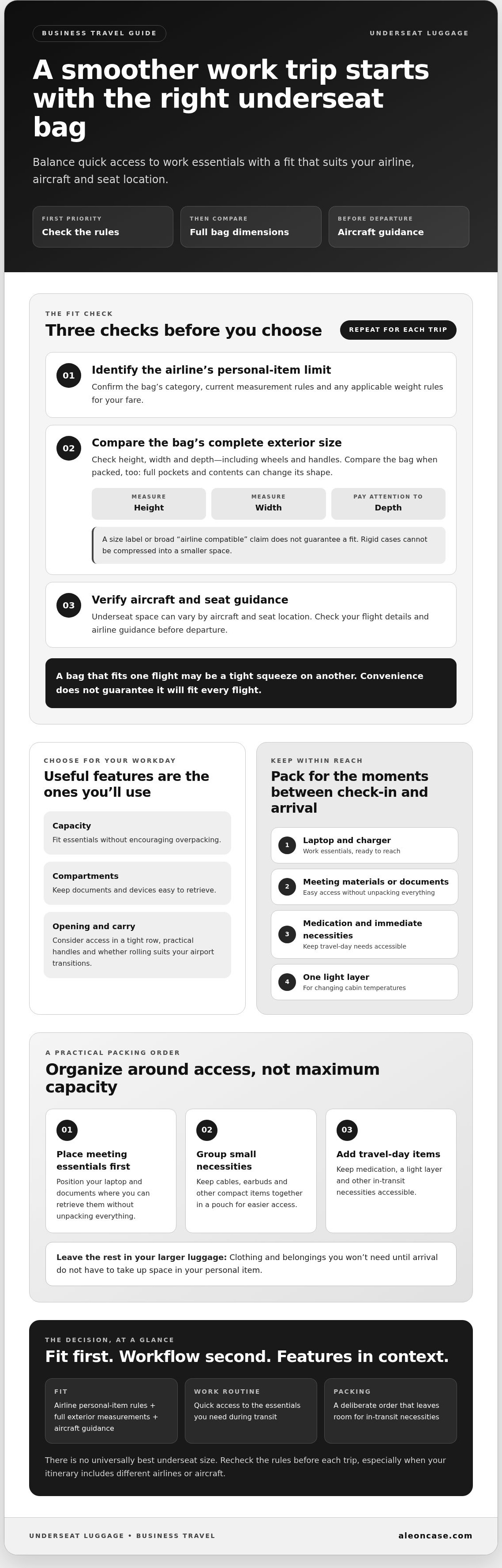
The best underseat luggage for business travel is the bag that fits your route and work routine, not a universal size or feature list. Use this three-step check before deciding:
- 1. Identify the airline’s limit. Confirm that your bag counts as a personal item, and note the current measurement and any applicable weight rules for your fare.
- 2. Check the bag’s exterior dimensions. Compare its full height, width, and depth, including wheels and handles, with those rules. Check the measurements with the bag packed, too, since overfilled pockets or contents can affect its shape. Don’t assume a size label or a broad “airline compatible” claim guarantees a fit.
- 3. Verify the aircraft guidance. Underseat space can vary by aircraft and seat location, so check your flight details and airline guidance before departure.
Then assess the bag against your actual workday. Capacity should accommodate essentials without encouraging overpacking; compartments should make documents and devices easy to retrieve. Consider whether the opening works in a tight row, whether the handles feel practical to carry, and whether rolling convenience suits your airport transitions. If you are considering a rigid case, pay particular attention to its depth because it cannot be compressed to fit a smaller space. A feature is useful only if it supports the way you travel.
What should travelers verify before selecting a bag?
Confirm the personal-item category and applicable limits directly with the airline, then compare them with the bag’s complete exterior measurements. Check a product’s dimensions and any fit claims against its current product details before purchasing. If toiletries are part of your work kit, consult TSA's travel checklist for carry-on packing guidance.
There’s no universally best underseat size. Recheck the rules before each trip, especially when your itinerary includes different airlines or aircraft. If you’re also comparing materials across travel cases, explore ALEON’s aluminum luggage.
How to pack and use underseat luggage on a business trip
A clear packing order turns a compact personal item into a practical workday companion. Pack for the moments when you’ll need to reach something, not simply to fit as much as possible. Keep the items required during transit near the opening, and leave clothing or belongings you won’t use until arrival in your larger case.
Build a simple personal-item packing routine
Use this sequence as a starting point, adjusting it to the bag’s actual layout:
- Place meeting essentials first: Position your laptop and documents where you can retrieve them without unpacking everything.
- Group small necessities: Keep cables, earbuds, and other compact items together in a pouch, so they’re easy to find during airport transitions.
- Add travel-day items: Set medication, a light layer, and anything else you may need in transit in an accessible area.
- Preserve some open space: Avoid filling every corner. Room to reposition items can make it easier to reach essentials and stow the bag beneath the seat.
Before packing, identify what you’ll need between the terminal and your meeting. If an item can stay in your larger luggage until arrival, leave it there. A streamlined load makes the bag easier to manage and reduces the chance that important work materials end up buried.
ALEON lists 16-inch underseat luggage among its offerings. Check the current product details, including dimensions and construction, before deciding whether it suits your trip. Don’t assume features or airline fit without verifying them. If material is part of your decision, explore the aluminum luggage collection and assess each item according to its specific details.
Make your next business trip more streamlined
The best underseat luggage for business travel supports a calm, organized journey: choose a bag based on your work essentials, verify its full dimensions against current airline guidance, and pack frequently used items where they’re easy to reach. A thoughtful setup can reduce the friction of airport transitions without assuming every bag will fit every aircraft.
ALEON lists 16-inch underseat luggage among its offerings and specializes in premium aluminum travel goods. Check the underseat model’s current dimensions, construction, and compatibility details before deciding whether it suits your itinerary. For a closer look at ALEON’s travel range, explore ALEON luggage for your next business trip.
With a well-considered bag and a simple packing routine, you can keep work essentials close and move through travel day with greater confidence.
Frequently Asked Questions
Will underseat luggage fit under every airline seat?
No, underseat luggage isn’t guaranteed to fit beneath every airline seat. Personal-item limits and available space can differ by airline, aircraft, and seat location. Before departure, check the current rules for your flight and compare them with the bag’s full exterior measurements, including wheels and handles. A product’s size label alone doesn’t confirm a fit.
What should I pack in underseat luggage for a business trip?
Pack the items you may need before reaching your destination: a laptop, charger, meeting documents, medication, and a light layer. Keep frequently used essentials easy to reach, and group small items such as cables to avoid searching in transit. Leave clothing and belongings you won’t need until arrival in your larger luggage to preserve space.
How do I choose the right underseat luggage for work travel?
Choose the best underseat luggage for business travel by checking your airline’s personal-item rules first, then comparing the bag’s complete exterior dimensions with those limits. Consider whether its capacity, opening, compartments, handles, and rolling convenience suit your work routine. Verify current product details and aircraft guidance before deciding; no single size is right for every itinerary.
Can underseat luggage replace a carry-on for a business trip?
It can, if the bag holds what you need and the airline permits it as your personal item. Underseat luggage is intended to fit beneath the seat, while a carry-on is generally stored in the overhead bin. For a short trip with minimal belongings, one bag may be enough. For longer travel, you may need additional space, subject to your airline’s allowance.


