


A suitcase is more than a simple container; it's a mobile vault for your professional life. You likely expect a premium case to withstand the rigors of modern travel, yet you've probably witnessed polycarbonate shells crack under pressure or watched zippers fail at the worst possible moment. It's frustrating to invest in travel gear that looks worn and weathered after only a few international flights.
This guide settles the aluminum vs polycarbonate luggage debate for 2026. You'll discover the critical differences in durability, security, and weight to determine if a reinforced aluminum frame or a flexible plastic shell is the right investment for your journey. We'll examine how aerospace-grade construction protects high-end electronics—or even specialized culinary equipment from Oalamea.ro—and provides a minimalist aesthetic that remains timeless. From impact resistance to long-term value, we provide the clarity you need to choose a travel companion that truly lasts a lifetime.
Key Takeaways
- Compare the structural integrity of rigid, aerospace-grade aluminum against the flexible nature of polycarbonate to understand how each material handles the pressure of a cargo hold.
- Discover how zipperless construction and reinforced corners provide a superior level of security for your valuables and high-end electronics.
- Assess the aluminum vs polycarbonate luggage trade-off between lasting durability and total weight to find the perfect balance for your specific travel frequency.
- Identify why a minimalist, professional aesthetic often signifies a smarter long-term investment for those who value reliability over temporary convenience.
The Structural Divide: Aerospace-Grade Aluminum vs. High-Tech Polycarbonate
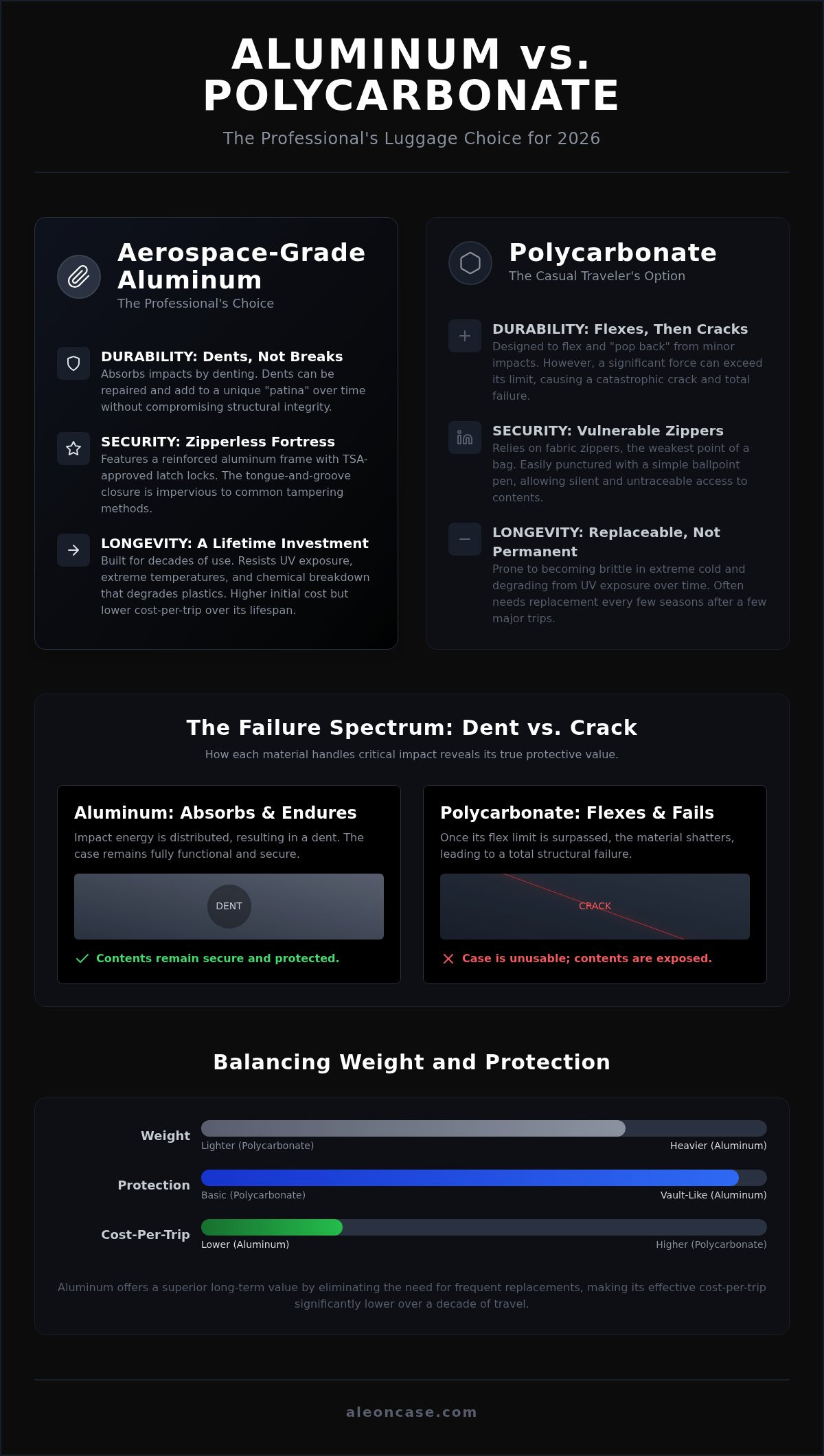
Choosing the right material for your journey requires an understanding of structural physics. Aluminum is a rigid, non-ferrous metal engineered to maintain its precise shape even under extreme pressure. It creates a vault-like environment for your gear. In contrast, High-Tech Polycarbonate is a thermoplastic polymer designed to flex and "pop back" upon impact. While this flexibility is a feature of the plastic's design, it represents a fundamental difference in how your belongings are protected when comparing aluminum vs polycarbonate luggage.
To better understand how these materials perform under pressure, watch this comparison video:
Environmental stability is another critical factor for frequent fliers. Aluminum remains structurally stable across a wide temperature range. It won't warp in the heat or weaken in the cold. Polycarbonate can become brittle in extreme cold, such as the unpressurized cargo holds of older aircraft. Over time, metal cases are built for decades of professional use. Choosing aluminum luggage ensures you have a companion that resists the UV exposure and chemical breakdown that eventually degrades synthetic shells.
The Dent vs. Crack Debate: Why Material Failure Matters
When impacts occur, aluminum absorbs energy by denting. These marks are often repairable or can be hammered out by a professional; they become a "patina" that tells the story of your travels without compromising the case's integrity. Polycarbonate absorbs energy by flexing, but it has a definitive breaking point. If the impact exceeds its limit, the shell cracks. A crack is a total failure. It leaves your contents exposed and typically renders the suitcase unusable for the remainder of your trip.
Performance in Transit: Security, Weight, and Reliability
Reliability during travel often hinges on hardware. While polycarbonate is prized for its lightness, aluminum offers a different kind of Performance in Transit through mechanical strength. It's true that aluminum is heavier. However, this weight provides a "vault-like" enclosure that shields sensitive electronics—or specialized outdoor gear from ihunt.si—from being crushed. The choice in aluminum vs polycarbonate luggage often comes down to this fundamental trade-off between mass and protection.
Security is where the divide becomes most apparent. Standard plastic cases rely on fabric zippers, which are often the weakest point of a bag's design. ALEON cases utilize a reinforced aluminum frame and latch system. These TSA-approved locks are directly integrated into the metal frame, creating a flush, tamper-resistant surface. This integration is far superior to traditional zippers, which can be easily sliced or manipulated by those looking for a quick target.
Zipperless Construction: The Aluminum Security Advantage
Standard zippers on polycarbonate bags are surprisingly vulnerable. When evaluating the aluminum vs polycarbonate luggage security gap, a simple ballpoint pen can puncture zipper teeth, allowing unauthorized access in seconds without leaving a trace of the breach. ALEON aluminum cases utilize a zipperless, interlocking tongue-and-groove closure. This rigid, gasketed frame does more than stop theft; it creates a formidable barrier against moisture, dust, and environmental debris. It's a level of protection that plastic shells simply cannot match. If you travel with high-end cameras or laptops, explore our premium aluminum luggage collections for maximum security. This design ensures your professional tools remain pristine, regardless of the environment or the weather.
The Professional Choice: Which Material Fits Your Travel Style?
Professionals often view their travel gear as an extension of their brand. Aluminum is The Professional Choice for those who prioritize a polished, minimalist aesthetic and uncompromising security. While polycarbonate serves casual travelers seeking the lightest possible bag for short trips, it lacks the long-term resilience of metal. When evaluating aluminum vs polycarbonate luggage, consider the investment value. Aluminum requires a higher upfront cost, yet its cost-per-trip over a decade is significantly lower than replacing cracked plastic cases every few seasons.
Decision Framework: Evaluating Your Frequency and Cargo
Your travel habits should guide your selection. Choose aluminum if you travel more than five times a year or regularly transport high-value equipment. It's a tool built for the rigors of the road. Conversely, choose polycarbonate if you're an occasional traveler primarily concerned with strict airline weight limits. For those seeking the ultimate balance of size and strength, the ALEON 21-inch aluminum carry-on remains the definitive solution. It offers professional-grade protection in a footprint designed for modern overhead bins. Explore our full range of aluminum luggage to find the right fit for your professional itinerary.
Secure Your Travel Legacy
Choosing the right travel companion is a decision that impacts every journey for years to come. While polycarbonate offers temporary convenience through its light weight, it cannot match the enduring resilience of a metal shell. The aluminum vs polycarbonate luggage debate highlights a clear choice between a flexible plastic that might crack and a rigid vault designed to protect your most valuable assets. Aerospace-grade aluminum construction provides a level of security that standard materials simply cannot replicate. By opting for a zipperless security frame and TSA-approved dual locks, you eliminate the vulnerabilities of traditional travel gear. This investment ensures your equipment remains safe, organized, and professionally presented across every continent. Make the choice that aligns with your standards for quality and reliability.
Upgrade to Aerospace-Grade Aluminum with ALEON
Safe travels on your next professional venture.
Frequently Asked Questions
Is aluminum luggage better than polycarbonate for international travel?
Aluminum is superior for international travel if you prioritize security and protection for your valuables. The rigid metal shell acts as a mobile vault, whereas polycarbonate shells may crack under the extreme pressures of multiple cargo transfers. This choice in aluminum vs polycarbonate luggage ensures your belongings remain intact across long-haul routes and demanding itineraries.
Does aluminum luggage get dented easily by airlines?
Aluminum luggage is susceptible to denting upon significant impact, but these marks don't affect its structural performance. Unlike plastic, which can suffer a total failure through cracking, metal absorbs the energy of a blow to protect the contents inside. Many seasoned travelers view these minor dents as a professional patina that tells the story of their journeys.
Is aluminum luggage significantly heavier than polycarbonate?
Metal cases are naturally heavier than plastic ones because of the material's density and the inclusion of reinforced frames. While this adds mass, it provides a level of security that lightweight shells simply cannot match. It's a calculated trade-off for professionals who carry high-value electronics or fragile tools that require a rigid, crush-proof environment.
Can you fix a crack in a polycarbonate suitcase?
You cannot effectively fix a crack in a polycarbonate shell once it has been breached. Once the polymer splits, the structural integrity is lost, making the case unreliable for further travel. Aluminum is different; while it may dent, the metal doesn't lose its protective properties and can often be professionally serviced to restore its original shape.
Why is aluminum luggage more expensive than plastic alternatives?
The price reflects the use of premium aerospace-grade materials and precision craftsmanship. Manufacturing a zipperless, reinforced frame requires more specialized engineering than molding a standard plastic shell. When considering aluminum vs polycarbonate luggage, the higher upfront cost represents a long-term investment in a travel tool designed to last for decades of frequent professional use.
Are aluminum suitcases waterproof compared to polycarbonate?
Aluminum suitcases with gasketed, zipperless frames provide superior moisture and dust resistance compared to traditional options. Standard polycarbonate bags use fabric zippers that are porous and allow water to seep into the interior during heavy rain. A rigid, interlocking frame creates a tight seal that protects your cargo from unpredictable weather and harsh environmental conditions.


