


A standard ballpoint pen is the only tool a thief needs to bypass your suitcase zipper in under five seconds. If you're traveling with high-end electronics or sensitive documents, relying on a nylon shell and a plastic coil is a gamble you can't afford to take. You already know the feeling of anxiety that sets in as your bag disappears behind the carousel curtains; you worry about rough baggage handling crushing your gear or, worse, arriving at your destination to find your locks intact but your valuables missing. Learning how to protect valuables in luggage isn't just about packing better; it's about upgrading your defense to a professional standard that prioritizes structural integrity over convenience.
This guide will teach you how to master the art of travel security through engineering-grade strategies. You'll gain a systematic approach to shielding your equipment, moving beyond basic locks to the technical superiority of aircraft-grade aluminum. As airlines like Southwest and Delta enforce $35 checked bag fees and the TSA introduces the $45 ConfirmID verification for 2026, the cost of travel is rising. Your peace of mind shouldn't be another expense. We'll examine why a torsion-resistant, zipperless closure is the only way to ensure a seamless "click and seal" every time you close your case.
Key Takeaways
- Understand why even locked zippers offer zero security and how to replace them with a penetration-resistant, aircraft-grade aluminum barrier.
- Learn how to protect valuables in luggage by utilizing recessed locking mechanisms designed to survive the high-impact environment of international transit.
- Master the "Floating Center" packing principle to suspend fragile gear in a protective zone away from the case's impact-prone edges.
- Develop a strategic security layer by combining disciplined digital documentation with the covert placement of GPS tracking devices within the lining.
- Discover the engineering behind the ALEON "click" and why a zipperless, torsion-resistant shell is the professional choice for a permanent, airtight seal.
Table of Contents
The Physical Barrier: Why Material and Closure Systems Matter
Your luggage is your first line of defense. If you're wondering how to protect valuables in luggage, you must look past the aesthetic and examine the engineering. Most travelers rely on external locks, but the material of the case and the method of closure determine whether your gear survives the journey. A professional setup treats the suitcase as a vault, not just a container. This requires a shift from flexible, vulnerable fabrics to rigid, impenetrable structures that can withstand both intent and accident.
The Vulnerability of Zippers
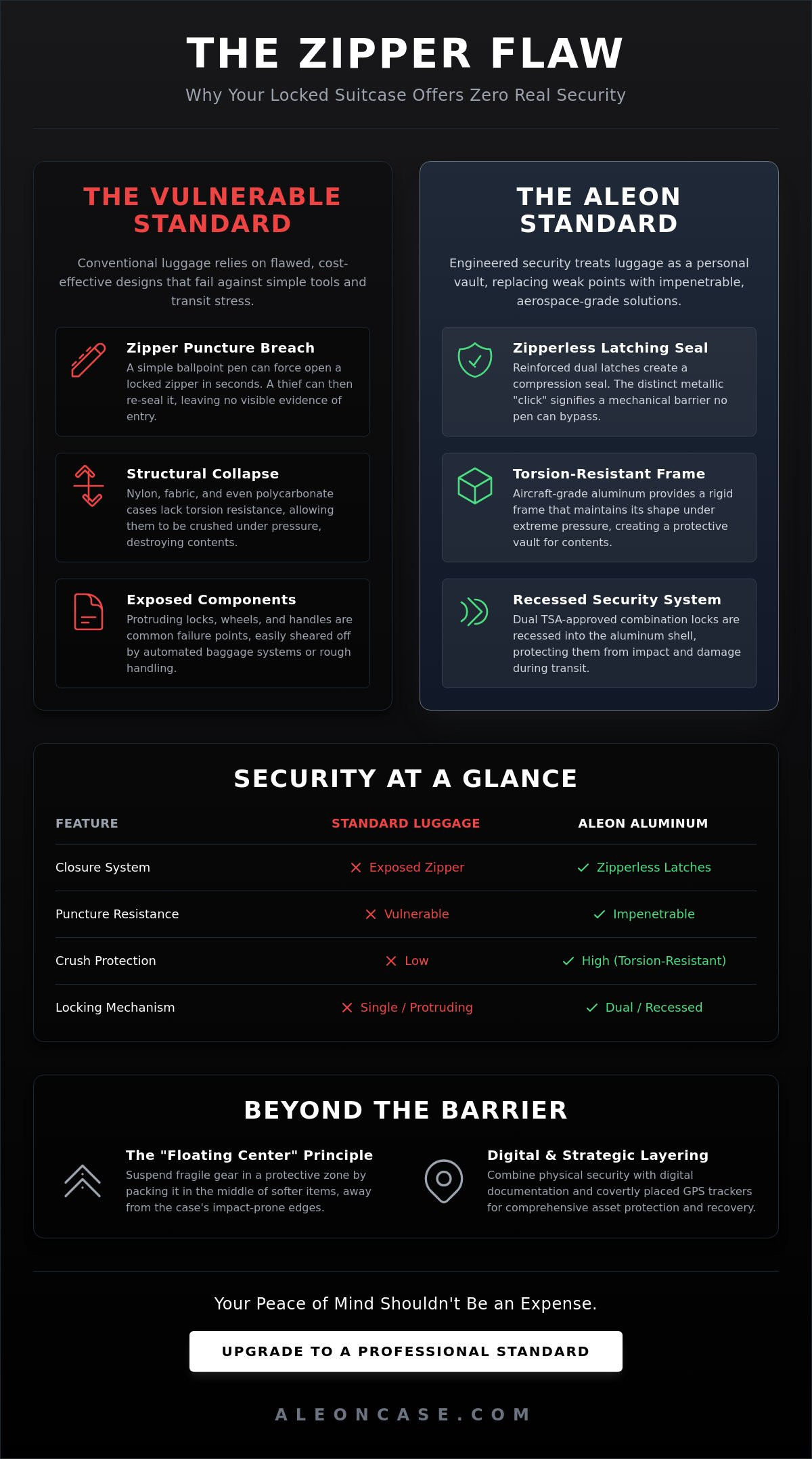
Zippers are the industry standard because they're cost-effective, not because they're secure. A common ballpoint pen can puncture the teeth of a nylon zipper in seconds, regardless of how heavy the fabric is. Once inside, a thief can move the locked pullers over the puncture to reseal the track, leaving no visible evidence of the breach. This "zipper trick" is a well-documented flaw that renders most soft-shell bags useless for high-value transit. Even advanced "anti-theft" zippers are merely a temporary deterrent for a determined actor. While many people invest in TSA-approved locks, these only secure the pullers while the track remains exposed. A true professional security system utilizes a compression seal, which acts as the ultimate moisture and dust barrier while eliminating the zipper's structural weakness entirely.
Aluminum: The Aerospace-Grade Fortress
Moving beyond plastic and fabric is essential for the high-frequency traveler. Soft-shell bags offer zero puncture resistance, and even high-end polycarbonate shells can crack or be sliced open with a standard utility knife. Aircraft-grade aluminum, specifically high-strength alloys like A380, provides a rigid frame that prevents the crushing of internal electronics. This material is torsion-resistant, meaning it won't twist or warp under the 50-pound pressure of stacked baggage in a cargo hold. Unlike plastic, which can shatter in cold temperatures or deform under heat, aluminum maintains its structural integrity for a lifetime.
- Impact Resistance: Absorbs kinetic energy without compromising the interior contents.
- Puncture Protection: Cannot be bypassed with a blade or pen, unlike nylon or polycarbonate.
- Rigid Frame: Maintains its shape under extreme vertical pressure, protecting sensitive camera gear or laptops.
The engineering of a zipperless entry relies on a reinforced dual-latch system. These latches pull the two halves of the aluminum shell together into a tight, interlocking fit. This design creates a fortress-like perimeter that is physically impossible to "poke" open. When you hear the distinct, metallic "click" of the latches, you're hearing the sound of a mechanical seal that no pen or pocketknife can bypass. It's a sophisticated solution for the modern professional who views their luggage as an essential tool rather than a mere accessory.
Hardening the Perimeter: Locks and Structural Reinforcements
Structural security is a game of millimeters. Once you've selected a superior material, the next step in how to protect valuables in luggage is hardening the points of entry and impact. A suitcase is only as strong as its weakest latch or its most exposed corner. Professional-grade cases don't just rely on a single lock; they utilize a synchronized perimeter defense that remains functional even after the most aggressive baggage handling. This systematic approach ensures your gear arrives in the same condition it was packed.
The Role of Dual TSA-Approved Locks
Relying on a single latch creates a pivot point that thieves or rough machinery can exploit. Using dual TSA-approved locks distributes the latching pressure evenly across the frame, ensuring the gasket remains compressed and the seal stays airtight. This redundancy is a core tenet of keeping your luggage safe, as it forces an intruder to bypass two independent security points rather than one. While these locks allow security personnel access, they serve as a powerful deterrent against opportunistic theft by airport staff or handlers.
Recessing these locks into the aluminum shell is equally critical for long-term reliability. Protruding locks are frequently sheared off by automated conveyor belts or high-speed sorting machinery. A recessed design keeps the locking mechanism flush with the surface, protecting it from external forces while maintaining a clean, sophisticated aesthetic. When setting your combination, avoid obvious sequences like 0-0-0 or 1-2-3. A unique, non-obvious code provides the final layer of defense for your internal cargo.
Impact Protection and Corner Engineering
The corners of a suitcase endure the highest kinetic energy during transit. A 10-foot drop onto concrete can generate enough force to crack standard plastic shells or pop open traditional zippers. Reinforced corners act as crumple zones for your valuables, absorbing the initial shock before it reaches your sensitive electronics. This engineering choice is vital for maintaining the bag's geometry over years of use.
Aleon’s square-corner design maximizes internal volume while providing the structural rigidity needed to resist torsion. Torsion resistance is the bag's ability to maintain its shape when twisted or under uneven pressure; without it, a bag can flex enough to create a gap in the seal. For those carrying professional gear, a torsion-resistant aluminum case ensures the perimeter stays locked and the contents remain undisturbed. This level of detail is what separates a mere accessory from a professional tool, providing the unwavering confidence that your belongings are encased in the pinnacle of protection.
Internal Defense: Strategic Packing for Sensitive Gear
External armor is only half the battle. While a reinforced aluminum shell provides a formidable boundary, the internal physics of your bag determines whether your gear survives a tumble or a targeted search. Mastery of how to protect valuables in luggage requires a sophisticated approach to the interior environment. You must treat the inside of your case as a precision-engineered suspension system where every item has a calculated position to minimize movement and maximize concealment.
The "Floating Center" principle is the gold standard for high-value transit. This strategy involves placing heavy, durable items like shoes or travel tools along the perimeter of the case, directly against the aluminum walls. You then suspend fragile items, such as lenses or high-end electronics, in the geometric center of the bag. This creates a natural buffer zone that absorbs kinetic energy before it reaches your most sensitive equipment. For specialized gear, relying on high-density foam inserts or a dedicated Camera Case ensures that your optics remain immobile and isolated from external vibrations.
Shock Absorption for Electronics
Electronics don't just need protection from theft; they need protection from G-forces. You can create a professional-grade buffer zone by layering soft, compressible items like cashmere or high-density cotton around your tech. Integrated laptop sleeves found in a Pilot Case or Business Case provide a primary layer of defense, but surrounding these with a "floating" layer of clothing adds a critical secondary shock absorber. This method ensures that even if the bag experiences a sudden impact, the internal cargo remains decelerated and secure.
Discreet Organization
A clean, organized interior is a security feature in itself. When your belongings are haphazardly tossed into a bag, it's impossible to tell at a glance if a small item like a watch or a passport has been removed. Utilizing multi-level Packing Cubes prevents items from shifting and colliding during transit, which reduces the risk of internal "scuffing" damage. It also allows for surgical precision during security checks; you can remove a single cube without exposing the rest of your valuables to prying eyes.
- Compression Boards: Use these to hide flat valuables like documents or currency. They provide a rigid surface for packing while acting as a false bottom or hidden compartment.
- The Double-Bag Method: Secure jewelry and small high-value items within internal zippered pockets, then place those pockets behind a compression board for dual-layer security.
- Tactile Assurance: A well-organized bag ensures that the internal contents don't interfere with the perimeter seal, allowing for that perfect, secure "click" every time you close your case.
By treating the interior of your luggage as a secure vault, you move beyond basic packing toward a systematic defensive strategy. This level of detail isn't just about order; it's about maintaining total control over your belongings from the moment you leave your home until you reach your final destination.
Digital and Strategic Layering: Tracking and Documentation
Physical armor prevents the breach; digital layering ensures recovery. While an aircraft-grade aluminum shell provides the ultimate deterrent, true security is multi-dimensional. When you're considering how to protect valuables in luggage, you must look beyond the metal exterior. A professional strategy includes a rigorous documentation workflow and covert tracking to manage the risks that occur outside your immediate control. This systematic approach transforms your case from a simple container into a traceable, insured asset that remains under your digital surveillance even when it's out of sight.
The Pre-Flight Documentation Checklist
A disciplined five-minute routine at the check-in counter is your best defense against insurance disputes. Airline liability is often limited by strict international treaties; providing concrete evidence is the only way to ensure full replacement value for high-end gear. Follow this three-step protocol before every departure:
- Step 1: Photograph the exterior and the interior contents of your bag at the check-in counter. This establishes the condition of the case and proves the items were present at the time of transfer.
- Step 2: Log serial numbers for all high-end electronics, such as cameras and laptops, in a cloud-based folder. This data is essential for police reports and manufacturer tracking.
- Step 3: Keep a digital copy of your original luggage purchase receipt. Most premium insurance policies require proof of the case's value to process a total loss claim.
Precision Tracking Technology
GPS trackers like AirTags or Tile are only effective if they remain undiscovered. Most thieves check exterior pockets and internal mesh organizers immediately upon gaining access. To maximize security, place your tracker within the internal lining or tucked deep between the structural ribs of the case where it's difficult to locate by touch. Integrated tracking complements physical security by providing real-time location data while the reinforced frame prevents unauthorized access to the device itself. Ensure your "Left Behind" alerts are active on your smartphone to receive immediate notifications if your bag deviates from your expected route.
Strategic layering also involves the "Plain Jane" strategy. While the sophisticated aesthetic of an aluminum case is a hallmark of status, it can occasionally attract unwanted attention in high-risk transit hubs. Using a specialized Luggage Cover protects the anodized finish from scuffs while masking the luxury nature of the contents from prying eyes. This understated approach, combined with private travel insurance that exceeds standard airline liability, provides the quiet confidence required for high-frequency travel. You've engineered the exterior for protection; now, you've engineered the strategy for total peace of mind.
The ALEON Standard: Uncompromising Security by Design
True security isn't found in a catalog; it's forged in an engineering lab. When you're determining how to protect valuables in luggage, you're looking for a solution that transcends the temporary. Aleon Case represents the pinnacle of this philosophy, utilizing aircraft-grade aluminum to create a hardside fortress for the high-frequency traveler. This isn't just about aesthetics. It's about a commitment to permanent, reliable protection that ignores fleeting trends in favor of substance and surgical precision.
The hallmark of an Aleon case is the "click." It's a sensory assurance of a perfect, tamper-proof seal. Unlike the soft, unreliable slide of a zipper, our dual-latch system provides a tactile and audible confirmation that your perimeter is secure. This zipperless closure, combined with a torsion-resistant frame, ensures that your belongings are encased in a vacuum of safety. It's a sophisticated design for the modern professional who views their luggage as a critical tool, not a mere accessory.
Specialized Protection for Professionals
Generic solutions fail when the stakes are high. The Aleon Camera Case is engineered to outperform standard plastic cases, which often crack or warp under extreme heat and high-impact tests. For the mobile executive, the Vertical Business Unit provides a secure, organized environment for laptops and sensitive documents, maintaining a seamless professional appearance. These cases are anodized and reinforced to ensure they remain as functional on their thousandth flight as they were on their first. Explore Aleon's specialized equipment cases to find the right fit for your gear.
Sustainability and Social Responsibility
Investing in quality is an act of responsibility. Aluminum is a "buy it for life" material, serving as a durable, eco-friendly alternative to disposable plastic bags that clutter landfills. Your security investment also carries a global impact; Aleon supports solar energy initiatives in Honduras, bringing clean power to communities in need. This blend of luxury engineering and social conscience defines the modern elite traveler. You're not just choosing a suitcase; you're choosing a legacy of performance and permanence. Secure your journey with Aleon’s aircraft-grade aluminum luggage and experience the standard of uncompromising security.
Elevate Your Travel Security Standard
Travel security is a deliberate engineering choice. You've learned to bypass the inherent vulnerability of zippers and the structural fragility of plastic shells. By implementing the "floating center" packing strategy and maintaining a rigorous digital documentation routine, you've already surpassed the security standards of the average traveler. Understanding how to protect valuables in luggage is the difference between a successful mission and a compromised journey. It requires a shift from passive hope to active, structural defense.
True peace of mind comes from a case that refuses to compromise. Aleon’s aerospace-grade aluminum construction and TSA-recognized dual locking systems provide a permanent barrier against both theft and impact. Our reinforced corners and torsion-resistant frames ensure your high-value gear remains encased in the pinnacle of protection. It's time to move away from disposable luggage and embrace a philosophy of permanence. Upgrade to Aircraft-Grade Security: Shop Aleon Aluminum Luggage. Travel with the unwavering confidence that your belongings are secure.
Frequently Asked Questions
Is it safe to put jewelry in checked luggage?
Checking high-value jewelry is never a professional recommendation. Most major airlines limit their liability for lost or damaged items to $3,800 per passenger on domestic flights; this rarely covers the cost of fine jewelry or luxury watches. It's best to keep these items in your 19" International Carry-on or an Aleon Backpack where they remain under your immediate control throughout the flight.
Can someone open a TSA lock without me knowing?
Yes, a TSA lock can be bypassed without your knowledge if your bag has zippers. A thief can use a ballpoint pen to puncture the zipper track and reseal it by sliding the locked pullers over the gap. This is why learning how to protect valuables in luggage requires moving to a zipperless, aircraft-grade aluminum system that relies on mechanical latches rather than vulnerable coils.
Do aluminum suitcases get targeted more by thieves?
Aluminum suitcases act as a powerful deterrent rather than a target. Professional thieves look for opportunistic breaches, such as soft-shell bags that can be sliced open or zippered bags that can be poked. An anodized aluminum shell signals a time-consuming and loud entry process, which most airport thieves avoid in favor of easier, less protected targets.
How do I protect my laptop if I'm forced to check my carry-on?
Use the "floating center" technique if you must check a carry-on containing a laptop. Place the device in a padded sleeve inside a rigid 21" Classic Carry-on, surrounding it with soft clothing to create a four-inch buffer zone. This protects the internal circuitry from the high-impact forces of automated sorting systems and the 50-pound pressure of stacked cargo.
What should I do if I find my luggage has been tampered with?
Report any signs of tampering to the airline’s baggage service office immediately. You should take detailed photos of the damage before leaving the airport and file a formal claim within the 24-hour window required by most carriers. Having a digital folder with your pre-flight photos and serial numbers makes this process seamless and increases the likelihood of a successful insurance payout.
Is a hard-shell case better than a soft-shell for fragile items?
Aluminum hardside cases are vastly superior to soft-shell bags for fragile items. Soft-shell luggage offers zero crush resistance, meaning your gear bears the full weight of other bags in the cargo hold. A torsion-resistant aluminum frame provides a rigid fortress that maintains its shape even when subjected to the maximum 50-pound weight limit of standard checked baggage.
How do AirTags work inside an aluminum suitcase?
AirTags function within aluminum cases, though the metal shell can slightly reduce the signal's effective range. Aluminum is a conductive material that can partially shield radio frequencies; however, the signal usually escapes through the rubber gaskets and seals. For the best results, place your tracker near the latch or the perimeter seal rather than deep in the center of your gear.
What are the most common items stolen from luggage at airports?
Small electronics, designer clothing, and prescription medications are the most common items stolen from airport luggage. These items are easy to conceal and have high resale values on secondary markets. Understanding how to protect valuables in luggage involves using a specialized unit like the Vertical Business Unit to keep these high-target items organized and behind a reinforced, zipperless barrier.


