


Choosing between a fabric bag and a plastic casing is a compromise that seasoned travelers no longer need to make. It's frustrating to watch a suitcase crack after a single flight or find your electronics crushed because a soft-sided bag couldn't withstand the weight of a heavy cargo load. You deserve a travel companion that lasts a decade. This guide provides the definitive breakdown of hard shell vs soft shell luggage pros and cons to help you protect your investment and elevate your travel experience. We will analyze the structural integrity of traditional materials and explain why aerospace-grade aluminum has become the gold standard for security. From zipperless entry systems to reinforced impact zones, you will discover how the right material choice ensures your valuables remain secure and intact throughout your journey.
Key Takeaways
- Understand how the choice between "trunk" and "clamshell" opening styles dictates your packing efficiency and protects your gear.
- Evaluate the hard shell vs soft shell luggage pros and cons to see why zipperless, reinforced frames offer superior security against theft.
- Discover why aerospace-grade aluminum represents the peak of luggage evolution, providing a protective "kill zone" that fabric cannot offer.
- Learn how to select a suitcase that evolves with your travels, maintaining its integrity for a decade while developing a storied aesthetic.
Hard Shell vs. Soft Shell: Structural Fundamentals and Packing Logic
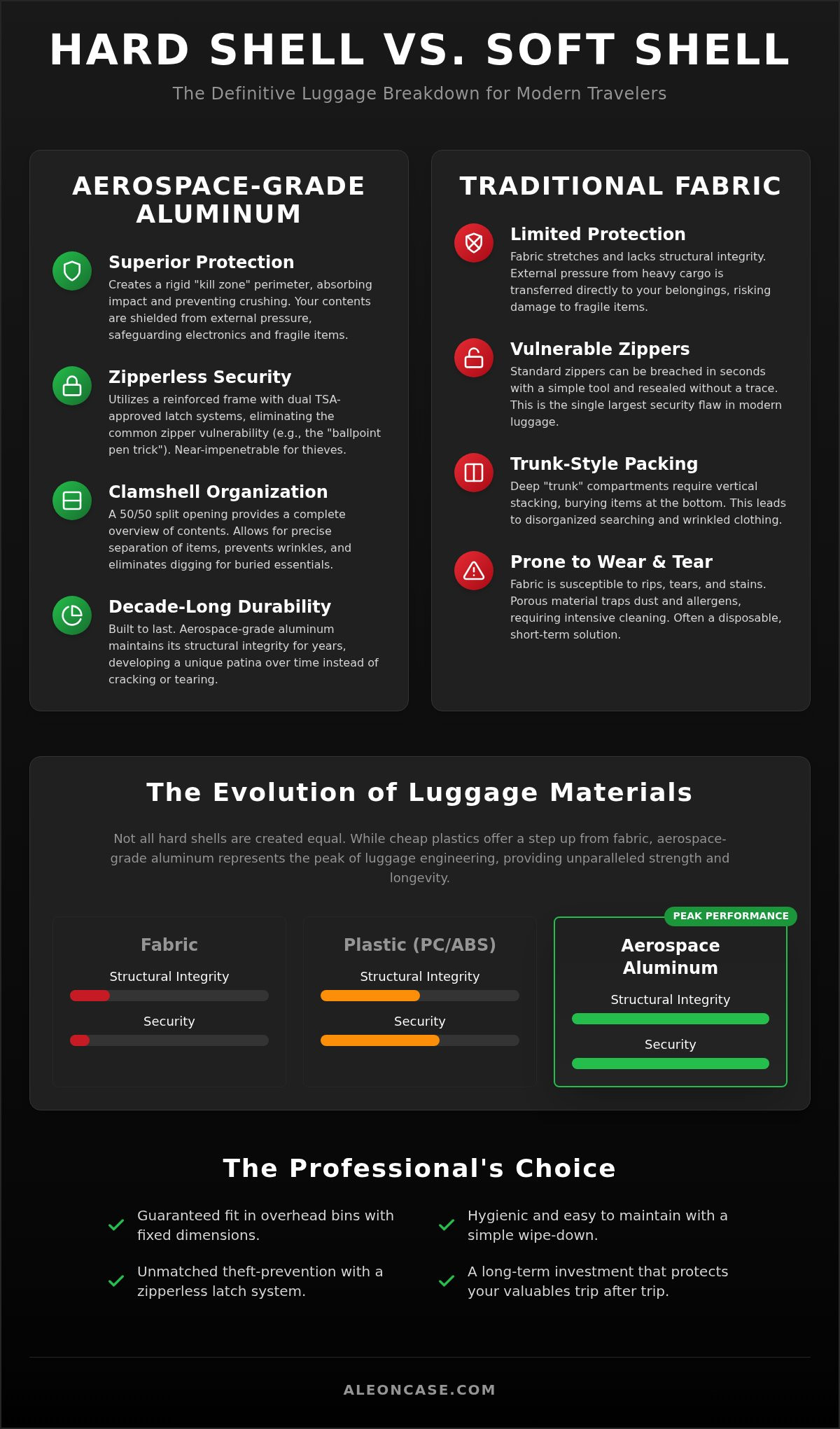
The structural debate between trunk and clamshell designs is central to any analysis of hard shell vs soft shell luggage pros and cons. Soft bags typically utilize a deep "trunk" opening. This requires you to stack items vertically, often burying essentials at the bottom. In contrast, most hard shells employ a clamshell split. This architectural choice changes how you interact with your belongings. It provides a clear overview of your entire wardrobe at once, making it easier to locate specific items without disturbing the rest of your pack.
To better understand these material and structural differences, watch this helpful comparison:
Material memory defines how your bag handles the physical pressures of transit. Fabric stretches. While this seems beneficial for overpackers, it lacks structural integrity. Hard shells maintain a protective "kill zone" for your contents. This rigid perimeter ensures that external pressure from stacked cargo doesn't crush delicate electronics or professional equipment. Your valuables remain shielded within a fixed volume that does not yield to outside force.
Many travelers choose soft bags for their supposed flexibility. However, an overstuffed fabric bag often bulges beyond standard airline sizers. This makes it a primary target for gate-checking by airline staff. A hard shell case, particularly one from a premium aluminum luggage collection, maintains its exact dimensions. It forces a disciplined packing approach that guarantees your bag will fit in the overhead bin every time.
Clamshell Design: The Professional’s Approach to Organization
The 50/50 clamshell split allows for precise categorization and effective wrinkle prevention. You can separate clean attire from laundry or business tools from personal items in two distinct compartments. This design eliminates the frustrating "bottom-of-the-bag" search common with soft-sided luggage. Integrated compression systems further secure the load. These systems ensure that even a partially full case remains organized and balanced, preventing your items from shifting during a long-haul flight.
Analyzing the Pros and Cons: Protection, Security, and Weight
A comprehensive look at hard shell vs soft shell luggage pros and cons reveals that protection is often the deciding factor for the professional traveler. Soft-sided bags offer flexibility, yet they fail to provide a true shield for high-end electronics or professional equipment. Hard shells create a rigid perimeter that absorbs impact. This ensures that the contents are never the primary shock absorbers during baggage handling. Beyond physical safety, maintenance is a significant advantage. Wiping down a hard shell is inherently more hygienic than the labor-intensive deep-cleaning required for porous fabric bags that trap dust and allergens.
Weight is a traditional critique of hard-sided cases. However, modern engineering has effectively neutralized this concern. High-quality materials like aerospace-grade aluminum offer an exceptional strength-to-weight ratio. This allows for a robust build that remains manageable for the global traveler. You don't have to sacrifice durability for portability. Selecting a case with reinforced corners provides high-impact protection without adding unnecessary bulk. This precision in design reflects a brand that values both order and functional necessity.
Security Beyond Zippers: The Latch System Advantage
Standard zippers represent a significant security vulnerability. The "ballpoint pen trick" allows a thief to breach a zipper track in seconds and reseal it without a trace. Zipperless aluminum luggage eliminates this risk by replacing zippers with a reinforced frame and latch system. These systems are nearly impossible to bypass quickly or quietly. The integration of dual TSA-approved locks provides a seamless security experience. It ensures your belongings are only accessible to you and authorized personnel. For those seeking total security, considering an all-aluminum check-in case is a logical step toward a worry-free journey.
The Aluminum Advantage: Why Not All Hard Shells Are Created Equal
Most discussions regarding hard shell vs soft shell luggage pros and cons fail to distinguish between cheap plastic and aerospace-grade aluminum. Polycarbonate and ABS plastics are essentially disposable materials that crack under the weight of heavy airline cargo loads. Aluminum represents the peak of luggage evolution. It provides a level of structural integrity that petroleum-based products cannot replicate. As you travel, your aluminum case develops a unique patina. These small surface impressions tell a story of global exploration without ever compromising the internal protection of your valuables. To celebrate your favorite destinations alongside your durable gear, you can explore travel-inspired apparel from Let's Go Again.
Choosing metal over plastic is a strategic decision for the long-term traveler. The cost-per-trip of a bag that lasts a decade is significantly lower than that of a case replaced every two years. This durability also addresses the growing demand for sustainability. Aluminum is an infinitely recyclable material, making it a responsible alternative to the "fast fashion" cycle of the luggage industry. You aren't just buying a bag; you're securing a permanent solution for your transit needs.
Aerospace-Grade Integrity for the Modern Professional
The precision engineering of aluminum cases involves forming high-strength alloys into a seamless, rigid frame. Reinforced corners are a critical feature. These areas absorb the brunt of high-impact collisions, preventing the catastrophic fractures seen in plastic shells. This level of protection is why professionals rely on specialized aluminum camera cases to safeguard mission-critical equipment. Whether you carry sensitive electronics or expensive lenses, the metal shield provides a definitive barrier that fabric and plastic simply cannot provide.
Elevate Your Journey with Lasting Protection
Analyzing the hard shell vs soft shell luggage pros and cons reveals that true value lies in structural integrity. While soft-sided bags offer minor flexibility, they can't provide the "kill zone" protection necessary for high-end electronics. Aerospace-grade aluminum represents the peak of this evolution. It offers a rigid, impact-resistant shield that petroleum-based plastics simply can't replicate. By opting for a zipperless design with TSA-approved dual latch locks, you ensure your valuables remain secure against both physical damage and theft. This is an investment in a decade of seamless travel, not just a single trip. It’s about choosing a companion that evolves with you—a philosophy shared by those who carefully research Mini Bernedoodle puppies for sale to find a loyal addition to their home.
Experience the ultimate in travel security with ALEON’s Aerospace-Grade Aluminum Collection. With our 10-year limited warranty, you can step into your next destination with quiet confidence and the assurance that your gear is perfectly protected.
Frequently Asked Questions
Is hard shell luggage better for international travel?
Hard shell luggage is generally superior for international travel because it offers enhanced protection against theft and physical damage. Long-haul flights involve multiple transfers and rigorous handling. A rigid case ensures that high-end electronics remain safe from crushing. Additionally, the integrated locking systems common in hard shells provide a higher level of security during extended transit periods across global borders.
Do aluminum suitcases get dented easily during baggage handling?
Aluminum cases are designed to absorb impact, which may occasionally result in minor dents or surface impressions. Unlike plastic shells that crack or fabric that tears, aluminum maintains its structural integrity despite these markings. These small shifts in the metal tell a story of your journeys. They don't affect the case's ability to safeguard your gear or the functionality of the latch systems.
Can I fit more in a soft shell or a hard shell suitcase?
Soft shell suitcases offer more flexibility for overpacking because the fabric stretches to accommodate extra items. However, when evaluating hard shell vs soft shell luggage pros and cons, consider that hard shells enforce a disciplined packing strategy. The fixed volume prevents the bag from bulging, which ensures it stays within airline size limits. This avoids the risk of being forced to gate-check your luggage.
Are hard shell suitcases more likely to be stolen?
Hard shell suitcases are less vulnerable to theft, particularly when they feature a zipperless aluminum frame. Soft-sided bags can be easily breached with a sharp object or by manipulating the zipper track. A reinforced metal frame with dual TSA-approved locks creates a formidable barrier. This sophisticated security system deters opportunistic theft and ensures that your professional equipment remains exactly where you packed it.


