


Buying the most recognizable name in the airport terminal doesn't always mean you've purchased the most resilient shield for your belongings. You've likely felt the frustration of watching an expensive suitcase emerge from the baggage carousel with a fresh crack or a compromised zipper. It's disheartening to invest heavily in a legacy brand like Tumi only to realize that prestige doesn't always equate to the impenetrable protection your high-value electronics require. You deserve a suitcase that reflects your professional standards and protects your investments without compromise.
We understand that frequent travelers prioritize reliability over marketing. This article will help you discover how ALEON’s specialized aerospace-grade aluminum compares to more mainstream designs to help you choose the ultimate travel companion. We'll examine the technical differences in construction, security features, and long-term value. By comparing structural integrity and specialized engineering, you'll see why a dedicated aluminum specialist often outperforms a luxury generalist. It's time to move beyond the brand name and focus on the craftsmanship that ensures your luggage lasts a lifetime.
Key Takeaways
- Understand how the Tumi 19 Degree collection compares to specialized aerospace-grade aluminum designs for the modern executive.
- Learn why aerospace-grade aluminum provides superior dent resistance and structural integrity for your most sensitive professional equipment.
- Discover the security advantages of moving away from traditional zippers in favor of precision-engineered latch locks and rivet-mounted hinges.
- Explore how a specialist's focus on aluminum craftsmanship results in a more durable travel companion than mass-market alternatives.
- Identify how a minimalist design philosophy enhances both your professional image and the safety of your high-value items.
Evaluating the Premium Luggage Standard: Tumi and the Aluminum Evolution
Tumi has long stood as the benchmark for executive travel. For decades, the brand built its reputation on rugged ballistic nylon that survived the rigors of global transit. This evolution mirrors the broader history of the suitcase, where materials have constantly shifted to meet the changing demands of the journey. While soft-shell bags once offered necessary flexibility, the preference in 2026 has shifted toward hardside security. Professionals now prioritize the absolute protection of their gear over the expandable nature of fabric.
The Legacy of Ballistic Nylon vs. The New Aluminum Standard
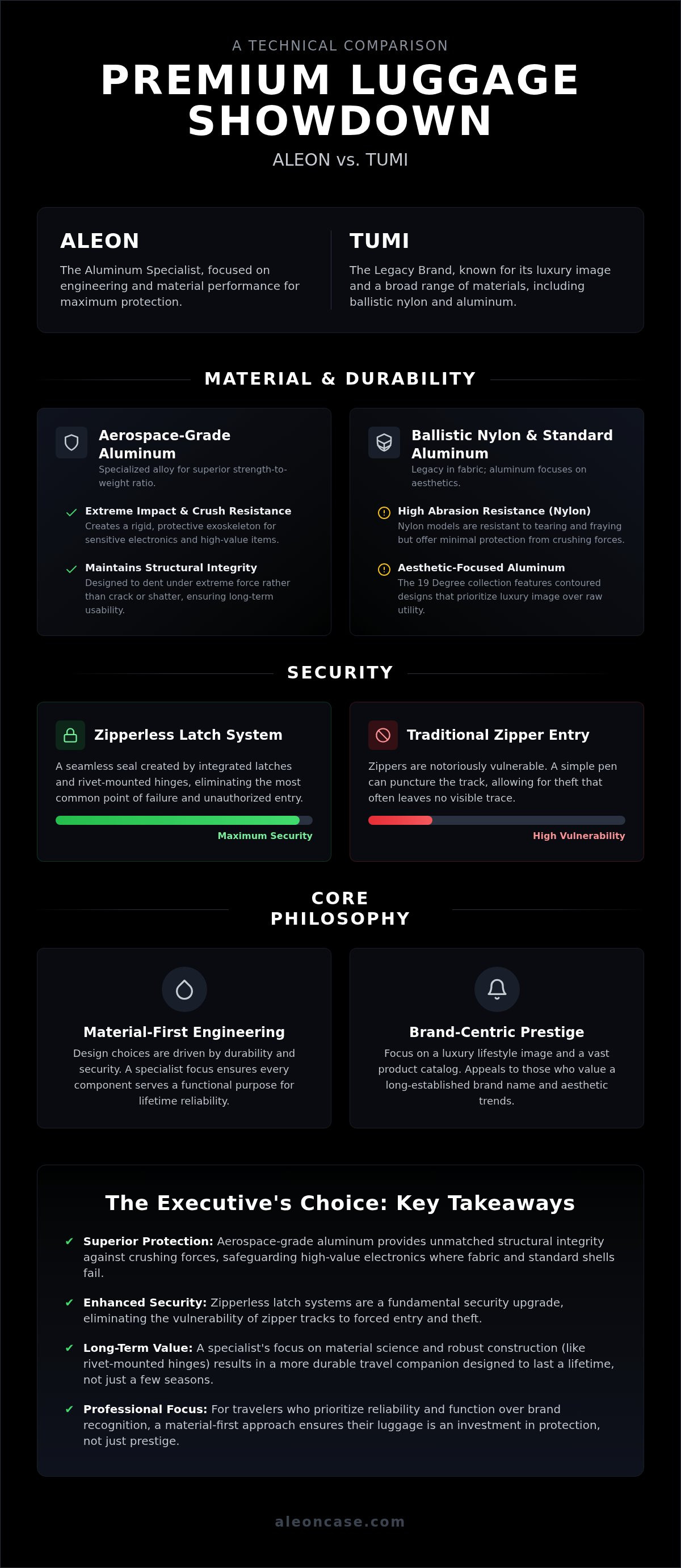
Tumi’s FXT Ballistic Nylon became famous for its extreme abrasion resistance. It was designed to withstand the conveyor belts of the world without tearing or fraying. However, fabric has a fundamental limitation: it doesn't shield contents from crushing forces. In an era where travelers carry expensive laptops and sensitive electronics, soft-shell bags often fail to provide a sufficient safety margin. Many travelers are now choosing aluminum luggage because it creates a rigid, impenetrable exoskeleton. This represents a move from brand-centric loyalty to a material-first priority.
Tumi’s Approach to Aluminum Design
The 19 Degree collection marked a serious entry into the aluminum market for the brand. It features a contoured, fluid aesthetic that is undeniably premium. While visually striking, these designs often focus on a luxury lifestyle image rather than specialized utility. The price-to-prestige ratio remains high, appealing to those who value a legacy name. For the traveler who seeks specific engineering over a massive catalog, however, the choice becomes about finding a specialist who lives and breathes aluminum construction. This focus ensures that every design choice prioritizes durability over decorative trends.
Material Performance: Aerospace Aluminum vs. Industry Standards
The transition toward metal hardside cases marks a significant shift in the evolution of luggage. While legacy brands like Tumi offer aluminum options, understanding the technical specifications of the metal itself is crucial for long-term protection. Aerospace-grade aluminum isn't just a marketing term; it represents a specific alloy designed to withstand extreme pressure and temperature fluctuations. This material provides a level of structural integrity that polycarbonate or nylon simply cannot match, ensuring your belongings remain shielded from the crushing forces of modern air travel.
Why Aerospace-Grade Aluminum Matters for Durability
Generic aluminum alloys can be prone to excessive denting or cracking under stress. ALEON utilizes high-performance aerospace aluminum to ensure a superior strength-to-weight ratio. These cases don't just protect against physical impact. They also act as a natural Faraday cage, providing a layer of protection for sensitive electronic equipment against certain types of interference. While a nylon bag might fray and a polycarbonate shell might crack, an aluminum case develops a unique patina over time, maintaining its structural core for decades. You can explore the full range of these specialized aluminum cases to see the difference in construction firsthand.
The Security Factor: TSA-Approved Locks and Zipperless Entry
Security is perhaps the most compelling reason to move away from traditional bags. Zippers are notoriously vulnerable. A simple pen can be used to puncture a zipper track and gain entry in seconds, often leaving no trace of the theft. Aluminum cases eliminate this weakness by utilizing a zipperless latch system. These integrated latches, combined with rivet-mounted hinges, create a seamless seal that is nearly impossible to bypass without specialized tools. When paired with TSA-approved locks, this construction offers a level of peace of mind that standard luggage cannot provide. It's a methodical approach to security that reflects a professional mindset.
Weight is a common concern when choosing metal over fabric. While aluminum is heavier than nylon, the use of precision-engineered spinner wheels offsets this heft. These wheels allow the case to glide effortlessly across terminal floors, requiring minimal physical effort from the traveler. It's a logical trade-off when compared to the standard offerings from Tumi or other luxury retailers: a few extra pounds of material for a lifetime of security and durability.
The ALEON Difference: Why Specialization Wins in Aluminum Travel Gear
ALEON positions itself as an aluminum specialist, prioritizing refined engineering over the vast product variety found in Tumi's history and brand. While mass-market leaders must cater to every type of traveler, a specialized focus allows for deeper innovation in metal construction. This dedication results in a minimalist aesthetic that favors clean lines and functional necessity. It's a choice for the professional who values quiet confidence over flashy logos. Every sale also contributes to a larger purpose, as ALEON supports solar energy initiatives to balance the environmental impact of manufacturing. This commitment ensures that your pursuit of quality also aligns with a sustainable future.
Tailored for the Professional: 16" Underseat and Pilot Cases
For the modern executive, the 16" underseat luggage is a game-changer for short-haul travel. It provides the security of a hardside case while fitting perfectly in the limited space beneath an airplane seat. Similarly, the 17" aluminum pilot case remains a staple for flight crews and those who operate mobile offices. These aren't just smaller versions of standard bags; they're precision tools designed for specific professional workflows. They offer immediate access to documents and electronics without the need to open a full suitcase in a public space. You can explore our full range of aluminum luggage to find the exact dimensions for your travel style.
Minimalism Meets Function: Spinner Wheels and Interior Organization
True luxury lies in the details of the experience. ALEON's multi-directional spinner wheels are engineered for silent, seamless navigation through crowded terminals. Inside, the rigid space of the aluminum shell is maximized through intelligent internal compression systems. These dividers ensure that your suits remain crisp and your gear stays organized, regardless of how many times the bag is handled during transit. While a brand like Tumi offers a broad catalog of styles, choosing a specialist ensures that every component is optimized for the specific weight and balance of a high-performance metal case. This methodical approach to design creates a sense of calm and efficiency, reflecting a brand that values order in both communication and product design.
Choosing Your Lifetime Travel Companion
Selecting the right luggage is an investment in your professional peace of mind. While a legacy brand like Tumi offers an extensive catalog, choosing an aluminum specialist ensures your gear is protected by precision engineering rather than just a recognizable label. We've examined how aerospace-grade aluminum construction provides an impenetrable shield for your electronics and why zipperless latch systems offer far superior security compared to fabric alternatives. A minimalist, material-first approach simplifies your journey while reinforcing a sophisticated professional image.
It's time to prioritize reliability and enduring quality for your future travels. Upgrade to Aerospace-Grade Aluminum with ALEON to enjoy the security of TSA-approved locks on every model. Every purchase also supports solar energy initiatives, ensuring your travel gear aligns with modern sustainability standards. Your next successful journey deserves a companion that is built to last a lifetime.
Frequently Asked Questions
Is aluminum luggage better than Tumi’s ballistic nylon?
Aluminum luggage offers superior structural protection and security compared to ballistic nylon. While Tumi is well known for its abrasion-resistant fabric, nylon cannot protect internal contents from crushing forces or puncture-based thefts. Aluminum's rigid shell and zipperless entry provide an impenetrable barrier that fabric simply cannot match. It's the logical choice for professionals carrying sensitive electronics or high-value items.
How does the weight of an ALEON aluminum carry-on compare to Tumi?
Aerospace-grade aluminum cases are naturally heavier than ballistic nylon bags, but they remain highly maneuverable. A 21" aluminum carry-on provides a level of durability that justifies the additional weight. To offset this heft, precision-engineered spinner wheels ensure the case glides effortlessly across terminal floors. This trade-off results in a suitcase that lasts a lifetime rather than one that requires frequent replacement due to wear.
Are ALEON suitcases equipped with TSA-approved locks?
Yes, every model in the collection features integrated TSA-approved locks for maximum security. These locks are built directly into the aluminum frame to eliminate the vulnerabilities associated with traditional zippers. This design allows security officials to inspect your belongings without damaging the locking mechanism. It provides a seamless, professional aesthetic while ensuring your high-value items remain secure throughout your journey.
Does aluminum luggage dent more easily than polycarbonate?
Aluminum is more prone to minor surface denting than polycarbonate, but it offers significantly better structural integrity. While polycarbonate can crack or shatter under extreme stress, aluminum absorbs impact by deforming slightly without compromising the shell. Many seasoned travelers appreciate the unique patina that develops over time. Unlike plastic alternatives, an aluminum case will never crack, remaining a dependable companion for decades of frequent air travel.


